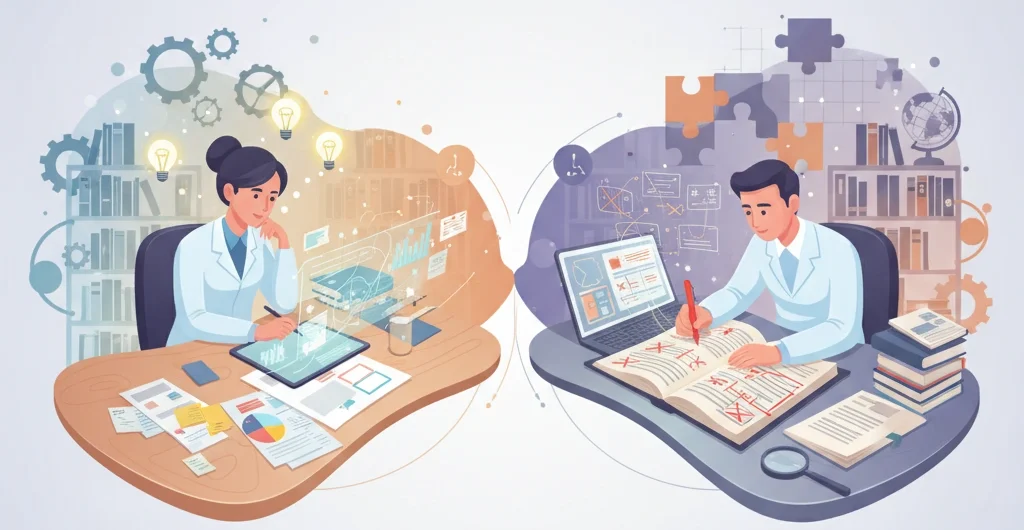
The process of bringing a research idea to a published paper is an exciting and challenging task. To most researchers, the mechanism might not appear so complicated. They just carry out the study, present the report and send it to a journal. Yet, as any person could guess after going through the academic publishing life, the process is much more subtle. Two phases are specifically vital in determining the quality and the effect, they are: writing and editing. Although the two use interchangeable terms, understanding the difference between the two can result in a good publication. At Fast Publications, we take these two steps with the researchers so that they will not only produce scientifically rigorous work, but also polished and convincing work.
Stage 1: Writing – Developing the Foundation
Writing a research paper is not merely a matter of putting words on a page. It is the process of organising your thoughts, explaining your facts and telling your research story in a persuasive manner. It is the writing phase that makes the researcher bring the study to life.
Stating the Research Problem
A clear research problem is at the heart of any good paper. In the writing phase, the researchers are concerned with the articulation of the problem, the gap and the research objectives. Problem statement is a good articulation of the problem that prepares the rest of the paper and gives the researcher and reader a guideline.
Structuring the Paper
Writing entails the arrangement of the content in the traditional categories: the Introduction, the Literature Review, the Methodology, the Results, the Discussion, and the Conclusion. The sections have their purpose: the introduction presents the research question, the methodology explains how the researchers conducted the research, and the results describe the findings. The coherence of the sections facilitates the flow of the story, helping the reader comprehend the logic and meaning of the study.
Providing Arguments and Evidence
In order to write effectively, it is necessary to balance the rigour of science and readability. Researchers should be able to present data correctly, give the right interpretation of the results, as well as relate the findings to the existing literature. In this case, it is important to have clarity of thought, to divide complicated ideas without simplifying them, and to ensure the paper conveys profundity and accuracy.
Creation is what writing is all about. It is where one develops ideas, structures them and communicates.You only need errors and crude notes; it is only important for you to get the content of the research in a comprehensive manner.
Stage 2: Revising – Refining the Message
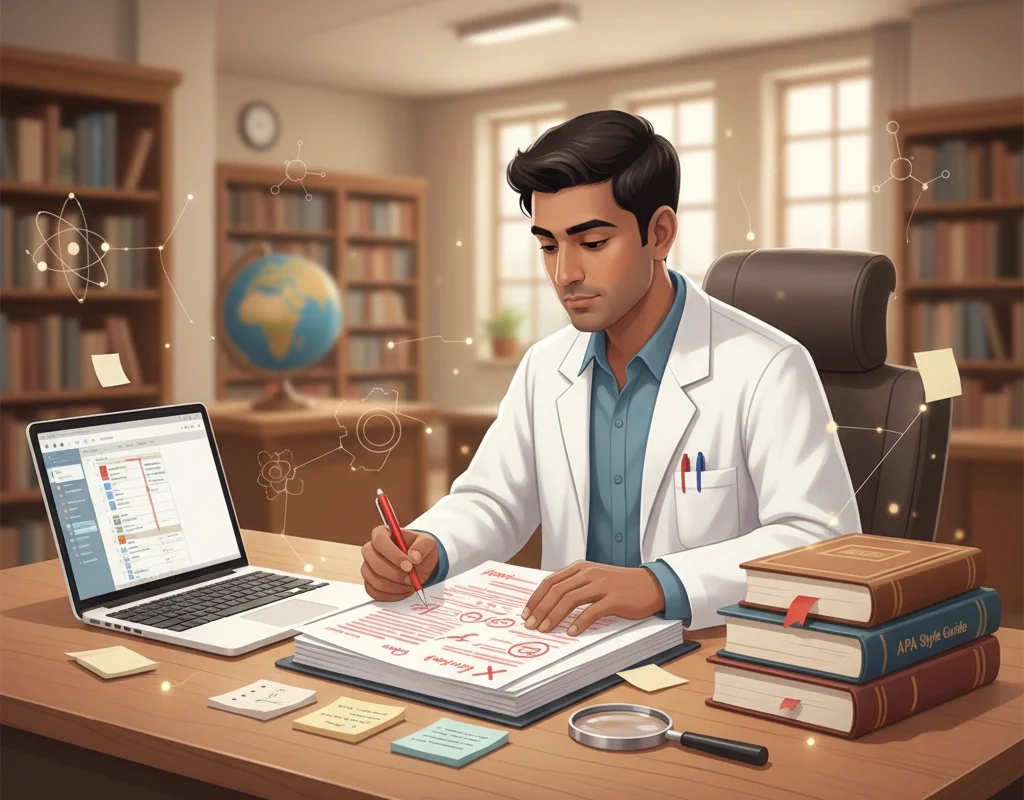
After completing the writing, the editors subject the manuscript to the editing phase, which is not the same process as writing but whose importance is also paramount. Editing is concerned with the perfection of the paper, making it clearer, and at the same time, aligning it with academic standards. It turns a draft into a submission-ready manuscript.
Enhancing Clarity and Flow
Editing is a process of checking the structure of sentences, coherence of paragraphs and the general readability of the work. Editing involves checking the structure of sentences, coherence of paragraphs, and the general readability of the work. Even innovative work can disappear when writers produce poor writing. Through editors, they logically present arguments, make connections between parts, and keep the reader entertained all the way through.
Fixing Language and Style
There exist conventions that are related to academic writing. Checking grammar, punctuation and following the preferred style guide of the journal. It also ensures the consistency of technical terminologies and correct citations and references are made in a proper format.
Strengthening Argumentation
In the process of editing, logical lapses, unsubstantiated arguments or ambiguous conclusions are discovered. This step enables the researcher to strengthen his arguments, demystify and make the findings of the research work persuasive.
Legal and Ethical Issues
Another control measure is editing, which ensures that the ethical standards, plagiarism verification, and the submission of journals are met. These details may be paid attention to to avoid desk rejection and increase the chances of being accepted by the peer review.
The importance of Separating Writing and Editing
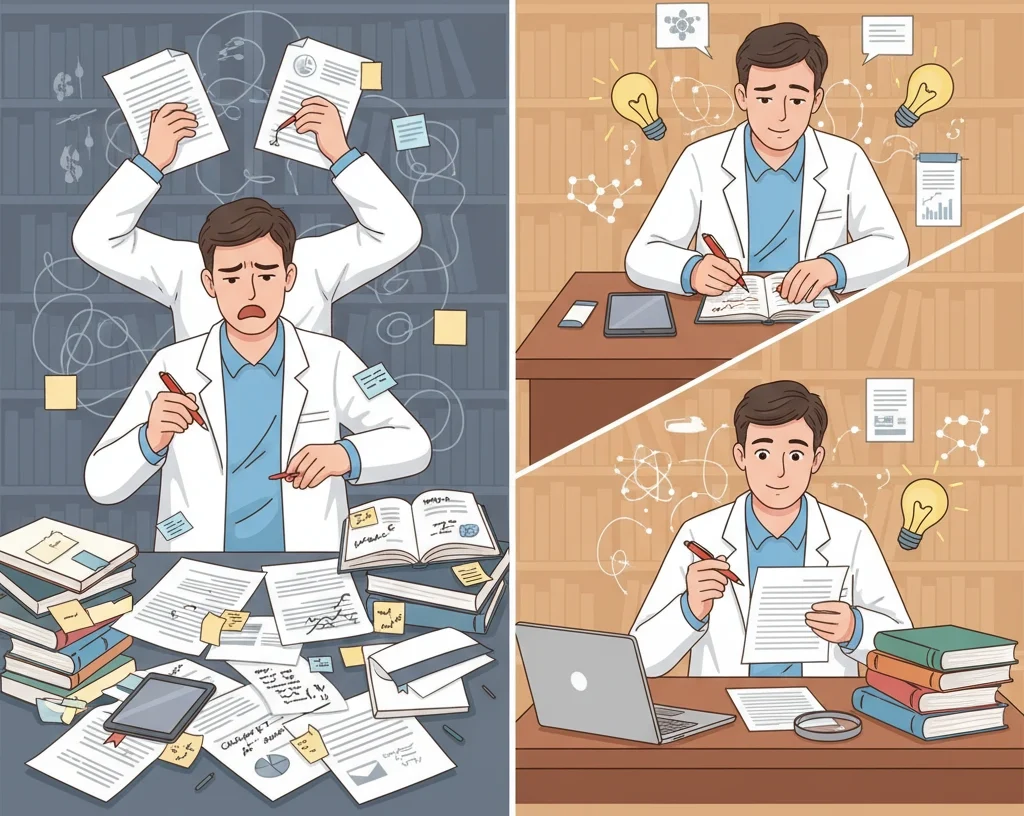
Various researchers will write and edit concurrently, believing that this will save them time. Although this can be considered effective, it is a strategy that can create overly cautious writing, make the writing lose momentum or even fail to notice any possible errors. The division between the two steps allows the researcher to concentrate on the full capture of ideas (writing) and later transition to refining, polishing and perfecting the manuscript (editing).
The way Fast Publications promotes both stages
At Fast Publications we understand that writing and editing need to be done with different skills. Our consultancy offers customized counseling of both phases:
- Writing help: Assistance to writers in order to organize papers, formulate research issues, and make their findings persuasive.
- Editing Services: Typical editing that includes polishing of language, application of structure, checking of compliance and finalizing the manuscript.
We make sure that the researchers do not simply write papers, but publishable and high-quality manuscripts that are of international standards.
Conclusion
Writing and editing are two different concepts that every researcher should understand as a way of publishing. The act of writing is creating ideas and putting them into some form and the act of revising is the clarifying, cohering, and using ideas which make up a sentence. Both phases are essential and the quality in one cannot be made up of the negligence on the other.
When writing and editing are viewed as complementary and independent operations, scholars can make the best out of their work to date and proceed with the publishing process with ease. In Fast Publications, we are the ones who offer the skills and advice on how to be the best in both, and how to get the manuscripts into publications.