Academic publishing is no grey territory in terms of plagiarism; it is a black-and-white line. Similarity checks of your research are automatic before the research reaches a peer reviewer. Similarity score with a high score leads to an automatic desk rejection. It is not the editors who send nice e-mails asking people to clarify something, but they reject and move on because their journal is intact.
This is what destroys paper the fastest: accidental or badly managed plagiarism. The urge to publish fast should not be sacrificed for the sake of originality. Professional Scientific and Technical Editing serve as a strict guardian, offering you expert consultation to not only make your manuscript technical but also morally aboveboard.
What Is Plagiarism?
Plagiarism refers to the act of passing the work or ideas of another person as your own without due credit. It takes several forms:
- Direct Plagiarism: When the text is copied verbatim and without quotation marks.
- Paraphrasing: Rewriting the ideas of a source in a structure and words too closely, citing it.
- Self-Plagiarism: Using a large portion of your own already published work without acknowledgement.
- Accidental plagiarism: This happens when the failure to give a citation was unintended due to poor note-taking or misinterpreting the rules.
More importantly, intent is not important to editors. The inclusion of non-original text, regardless of its manner of introduction, is a violation of the ethics of publication.
The reason why Journals take plagiarism seriously
In the case of journals, plagiarism poses a direct risk to the credibility that forms the basis of their main asset. The consequences are severe:
- Legal/ Copyright Risk: Publishers are the owners of copyright; duplication of texts violates copyright.
- Ethical Omission: It breaks the primary trust of academic communication.
- Career Damage: The writers are subject to retractions, bans, and lifetime reputational damage.
- Editorial Burden: The examination of claims requires huge resources and time.
The journals with high-speed publication processes consider tight, automated screening, and dependability as well. The only type that is submitted is a clean one.
Typical Reasons of Plagiarism in Research Writing
The majority of research on plagiarism is not intentional but is a result of an ineffective process:
- Weak Paraphrasing: This is only by replacing the synonyms, but not altering the structure of the sentence.
- Patchwriting: Writing based on a few original syntheses by stitching phrases together using several sources.
- Citation Gaps: Having forgotten about a reference in the course of composition or writing.
- Language Barriers: Non-native speakers can be too dependent on the phraseology of the source text.
- Time Pressure: Writing under the rush creates corner-cutting in both synthesis and citation.
It is this that scientific and technical editing fills. An editor does not simply fix language, but recognises and rewrites passages that get too close to their sources and maintain an original expression and a correct scholarly tone.

How to prevent plagiarism step-by-step?
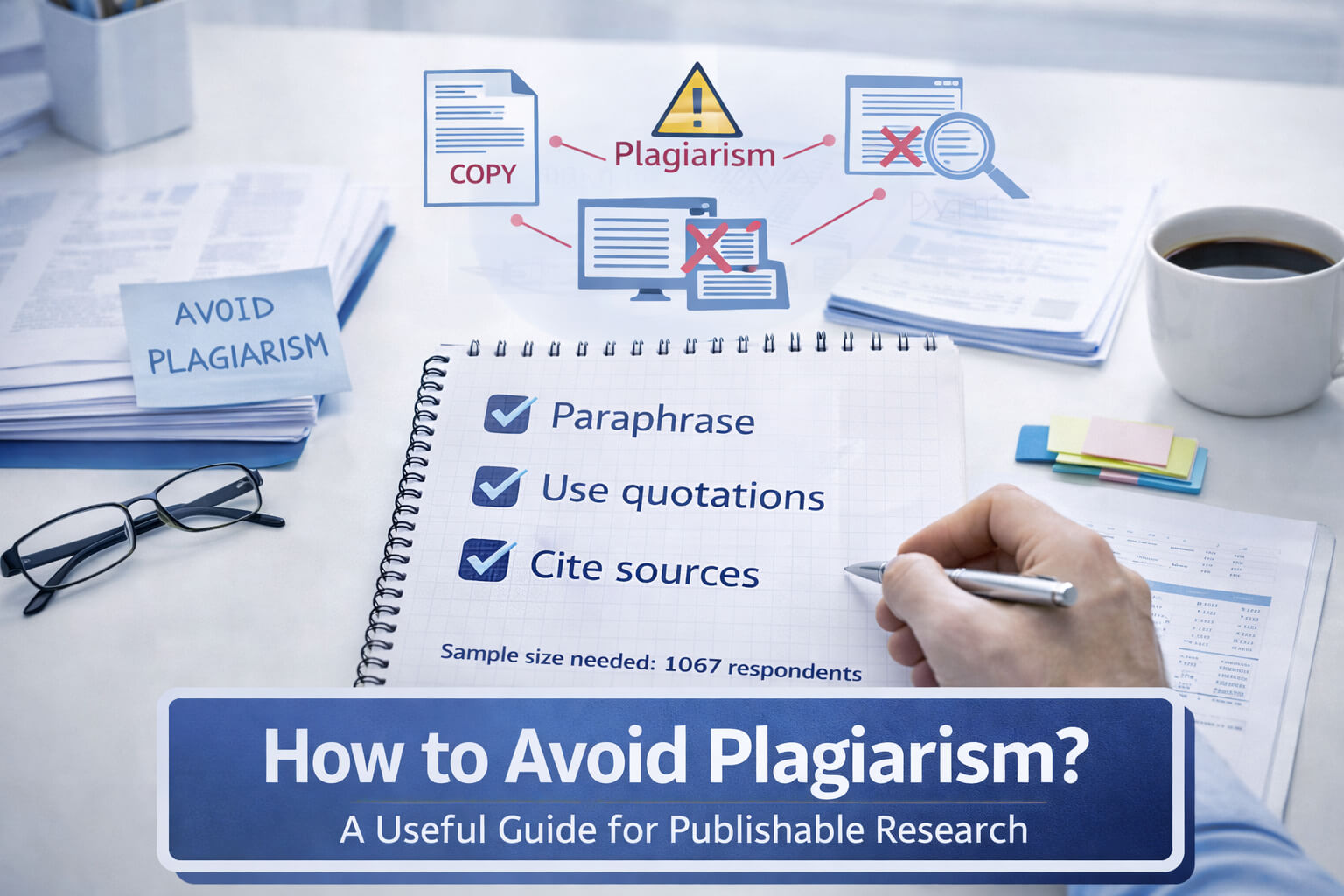
Take Notes in Your Own Words
You should not copy-paste into your notes when reading sources. Explain in your own words what you look at in only a few words. This makes interpretation hard and, in the first place, generates an original text.
Summarising Decisely, Not Monotonically
Complete paraphrasing implies the restructuring of the idea completely. Read the original, leave it aside and describe the concept as you would to a colleague. After that, acknowledge the source of the idea.
Brown bagging All Ideas Not Your Own
A citation should be provided in case an idea, a fact or a certain phrase was only borrowed. It is a safe rule to cite it when in doubt.
Maintain Good Records of Sources
Bibliographic data can be captured automatically by using a reference manager (Zotero, Mendeley). You should place holder citation in your drafts [Author, Year] in order to leave no idea without a parent.
Good paraphrasing vs Bad paraphrasing (Using mini-examples)
- Original Author: “Rapid Oxidation of glucose: A major cause of cell metabolic flux.
- Bad Paraphrase (Plagiarism): This is because oxidation of glucose is a primary cause of metabolic flux in cells.
- Correct rephrasing (Acceptable): Cellular metabolism is heavily influenced by the pace of oxidation of glucose.
This textual perfection is a fundamental role of scientific and technical editing to make the derivative text a clear, original and citable scholarly text.
Checking Similarity Pre-submission Tools
Never submit blindly. Use pre‑submission tools:
- iThenticate: The scholarly standard in the industry
- Turnitin: It is usually accessible via university web portals
- Grammarly Premium: It has a plagiarism checker
Read on reports prudently: per 10-15% similarity is usually normal (methodology descriptions, properly quoted definitions), but an unflagged text should be original prose on your part. This preventive measure is vital in meeting the clean-submission criteria of expedited journals.
The Guide to Correctly Citing the Sources in Your Paper
Accuracy is key. Make sure that all the in-text citation lists are perfect matches in your reference list. Adhere to your target journal style guide (APA, MLA, Chicago) in terms of punctuation, sequence of authors and DOI resource format. Misleading or lost references may cause the impression of laxity, which destroys confidence.
Conclusion
Finally, publishable research is based on ethical, original writing. It establishes direct credibility with reviewers and editors and has shown respect to the scholarly community. It is much easier to avoid plagiarism through a careful process rather than dealing with the repercussions once it is discovered. There is only one type of manuscript that will slip through the review easily, and that is a clean original one. With strict writing practices and with the help of professional editors, you guard your text, your image and your means to publication.