Few emails disappoint researchers more than a journal rejection. You spend weeks or months developing the study. You analyze the data, write the manuscript, format the references, and submit it with confidence.
Then the decision arrives.
Rejected.
The first reaction often involves frustration. However, rejection does not necessarily mean your research lacks value. Academic publishing involves many factors. Journal fit, methodology, novelty, writing quality, reviewer expectations, and editorial priorities can all influence the final decision.
Some manuscripts receive rejection because they do not fit the journal’s scope. Others receive detailed reviewer comments that point toward major improvements. In some cases, the editor invites a complete resubmission after substantial revision. The important thing is what you do next.
Fast Publications help researchers approach manuscript rejection as part of the publishing process rather than its endpoint. A careful response can turn a disappointing decision into an opportunity to strengthen the research.
This guide explains what to do after rejection, how to interpret editorial feedback, when to appeal, when to revise, and when to submit elsewhere.
First, Do Not React Emotionally
A rejection email can feel personal. It should not. Editors evaluate manuscripts against specific criteria.
Their decision does not necessarily reflect your ability as a researcher. Take time before responding.
Do not immediately email the editor with an angry message. Do not argue with reviewers on social media. Also, do not submit the same manuscript to another journal without reading the decision carefully.
Instead, step back. Read the decision again after a few hours or the next day. A calm response allows you to make better publishing decisions.
Step 1: Identify Why the Journal Rejected Your Manuscript
Not every rejection means the same thing. Understanding the reason should become your priority. Most journal rejections fall into several categories.
Scope Mismatch
The manuscript does not fit the journal’s subject area.
Lack of Novelty
The editor believes the study does not offer enough new knowledge.
Methodological Concerns
Reviewers identify problems with research design, sampling, analysis, or interpretation.
Poor Presentation
The research may have potential, but the manuscript lacks clarity or organization.
Insufficient Evidence
The findings may not adequately support the conclusions.
Journal Priorities
The study may fit the journal but fail to match its current editorial priorities.
Understanding the specific reason changes your next step.
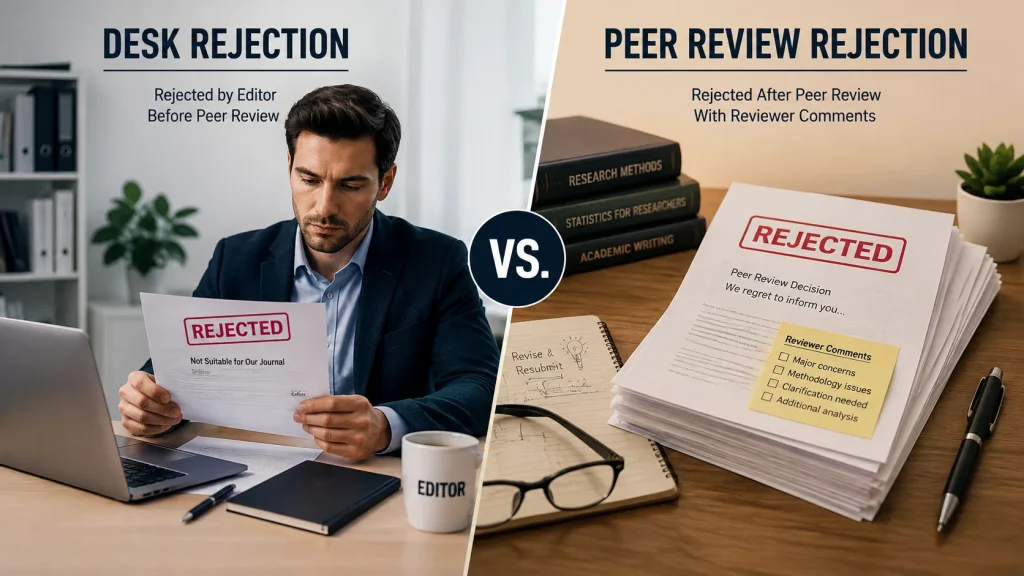
Desk Rejection vs. Peer Review Rejection
This distinction matters.
A desk rejection happens before external peer review.
The editor decides without sending the manuscript to reviewers.
Common reasons include:
- Poor scope fit
- Weak novelty
- Formatting problems
- Incomplete submission
- Language concerns
- Insufficient priority
A peer review rejection happens after reviewers evaluate the manuscript.
This type of decision usually includes more detailed feedback.
Reviewers may identify methodological weaknesses, unclear analysis, missing literature, or unsupported conclusions.
The next step should depend on which type of rejection you received.
Step 2: Read the Editor’s Letter Carefully
The editor’s letter usually contains important information.
Look for phrases that indicate the seriousness of the concerns.
For example:
“Outside the scope of the journal.”
This usually indicates a journal selection problem.
“The manuscript lacks sufficient novelty.”
This suggests that you need to strengthen the contribution or choose a different journal.
“Major methodological concerns.”
This requires deeper research revision.
“The reviewers raised substantial concerns.”
Read every reviewer comment carefully before deciding what to do.
Do not focus only on the word “rejected.”
Focus on the reasoning behind the decision.
Step 3: Separate Major and Minor Problems
Reviewer reports can contain dozens of comments.
Not every comment deserves the same response.
Create two categories.
Major Issues
These may include:
- Research design problems
- Sampling limitations
- Statistical concerns
- Weak theoretical framework
- Missing analysis
- Unsupported conclusions
- Major literature gaps
Minor Issues
These may include:
- Grammar
- Formatting
- Typographical errors
- Citation inconsistencies
- Figure labels
- Small terminology issues
Address major issues first.
Fixing commas will not solve a flawed methodology.
Step 4: Look for Patterns in Reviewer Comments
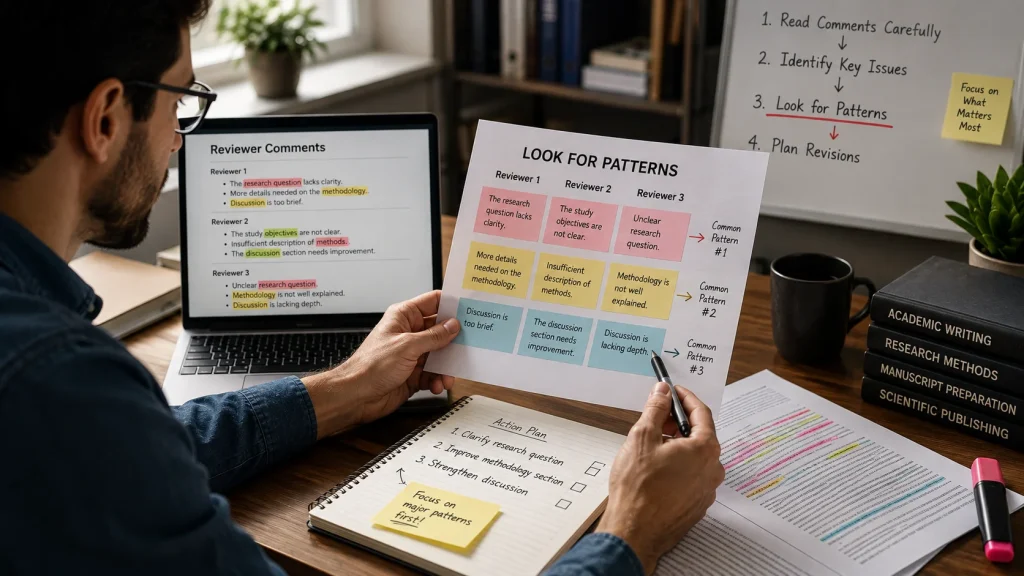
Sometimes reviewers use different language to identify the same problem.
One reviewer may say the research question lacks clarity.
Another may say the introduction does not establish the study’s contribution.
These comments point toward the same underlying issue.
Look for recurring themes.
Ask:
- Did multiple reviewers identify the same weakness?
- Have they questioned the same section?
- Did they make similar recommendations?
- Has the editor emphasized one particular concern?
Repeated criticism deserves serious attention.
Step 5: Decide Whether to Appeal
Not every rejection deserves an appeal.
An appeal makes sense when you believe the decision resulted from a clear misunderstanding, factual error, or serious procedural problem.
For example, a reviewer may claim that your study lacks a particular analysis even though the analysis appears clearly in the manuscript.
In that situation, an appeal may be reasonable.
However, disagreement with reviewers does not automatically justify an appeal.
You should provide evidence.
A professional appeal should remain concise and respectful.
Explain the specific issue.
Reference the relevant manuscript section.
Avoid emotional language.
When Should You Not Appeal?
An appeal usually makes little sense when:
- The journal clearly does not fit your topic.
- Multiple reviewers identify major methodological problems.
- The editor states that the manuscript lacks sufficient novelty.
- The journal has already rejected an appeal.
- You simply dislike the reviewers’ opinions.
Sometimes the best decision is moving forward.
Another journal may provide a better audience and stronger fit.
Step 6: Decide Whether to Revise the Manuscript
A rejection allows you to reconsider the manuscript. Do not automatically submit the same version elsewhere. Ask whether the reviewer feedback identifies genuine weaknesses. If several reviewers question the methodology, address it. A stronger manuscript has a better chance at the next journal.
Step 7: Create a Revision Plan
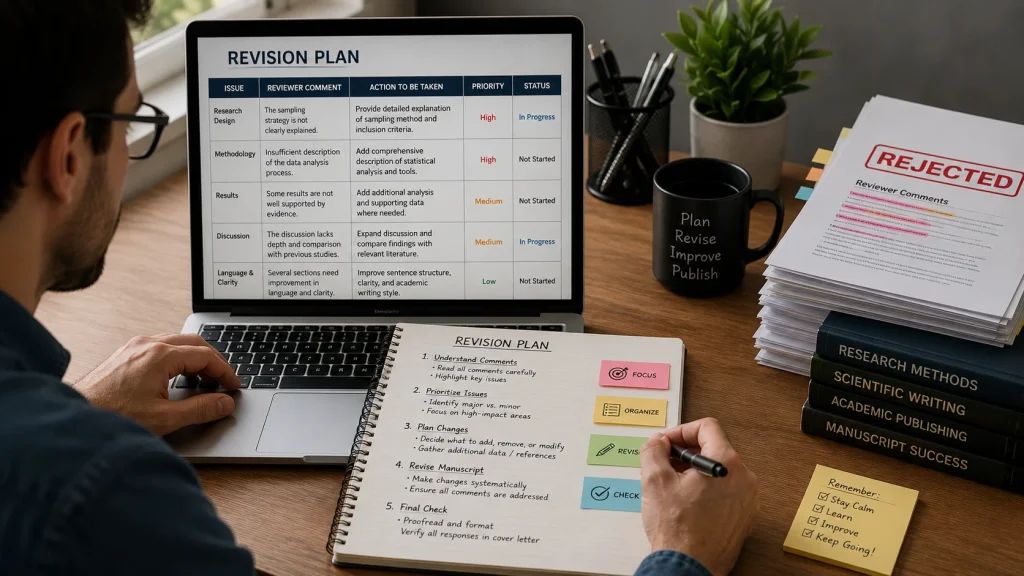
Do not revise randomly.
Create a structured plan.
| Problem | Action | Priority |
| Weak research gap | Rewrite the introduction. | High |
| The reviewer questioned sampling. | Explain the sampling method. | High |
| Literature outdated | Add recent studies. | High |
| Grammar problems | Professional editing | Medium |
| Reference inconsistencies | Reformat citations | Medium |
| Figure labels are unclear. | Revise figures. | Low |
This approach makes revision easier.
It also prevents important reviewer concerns from being forgotten.
Step 8: Consider Professional Resubmission Support
Some rejected manuscripts need more than basic editing.
Researchers may need help interpreting reviewer feedback, identifying suitable journals, revising the manuscript, and preparing a new submission.
A Resubmission Support Service can support this process by helping researchers evaluate the rejection, revise the manuscript, and identify a more appropriate publication target.
The goal should never involve sending the same paper blindly to another journal. Instead, the manuscript should improve before its next submission.
At Fast Publications, resubmission support should focus on practical improvements rather than unrealistic publication promises.
Step 9: Reconsider Your Journal Choice
Sometimes rejection exposes a journal selection problem.
Your manuscript may be strong but unsuitable for the original journal.
Review the journal’s:
- Scope
- Recent publications
- Target audience
- Article types
- Methodological preferences
- Indexing
- Publication model
Compare these factors with your research. If the mismatch remains obvious, choose another journal. Do not keep submitting to journals simply because they have high rankings. Fit matters.
Step 10: Build a New Journal Shortlist
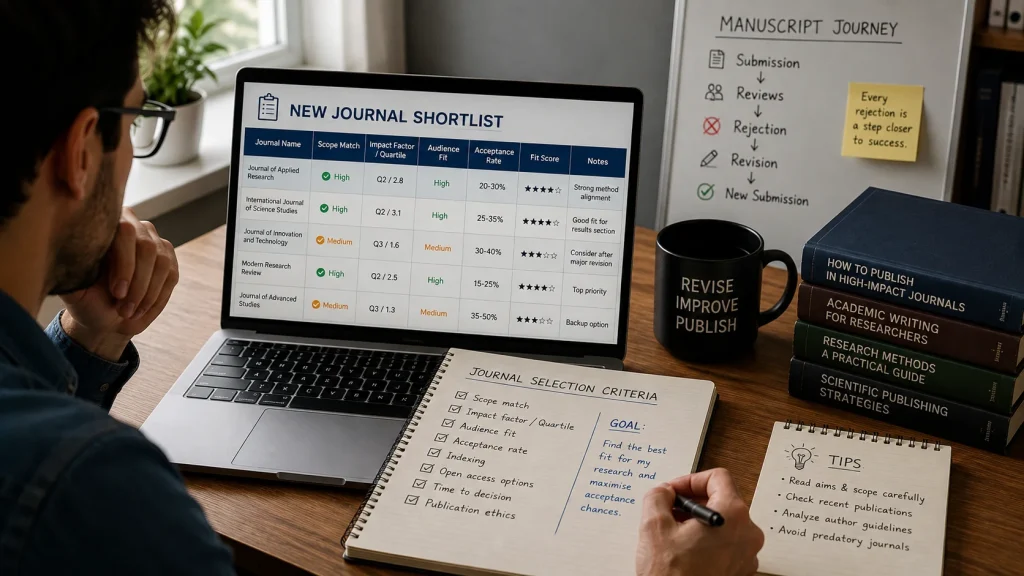
Create several potential targets.
Rank them based on:
- Scope match
- Audience
- Indexing
- Reputation
- Review timeline
- Publication fees
- Article type
- Research methodology
A structured shortlist prevents rushed decisions. It also reduces the risk of repeating the same mistake. Researchers who need help comparing options can consider Journal Selection Support before submitting the revised manuscript.
Step 11: Respond to Reviewer Comments Constructively
Reviewer comments can feel harsh. However, they often contain useful information. Read every comment without assuming the reviewer misunderstood your research.First, identify the underlying concern.
Then decide how to address it. For each major comment, you can:
- Explain what you changed.
- Identify where you made the change.
- Explain why the change addresses the concern.
- Provide a reason if you disagree.
Avoid defensive responses.
Instead of writing:
“The reviewer is wrong.”
Write:
“We appreciate this observation. We have clarified the methodology in Section 3.”
Professional responses demonstrate maturity.
They also make the revised manuscript easier to evaluate.
Step 12: Strengthen the Research Question
A vague research question can weaken the entire manuscript. Reviewers need to understand what your study investigates. Your research question should connect directly with your objectives and methodology.
For example, instead of:
“This study examines social media.”
Consider:
“This study examines how social media use influences research collaboration among doctoral students.”
The second question identifies the population, topic, and relationship.
Clear questions create clearer papers.
Step 13: Strengthen the Literature Review
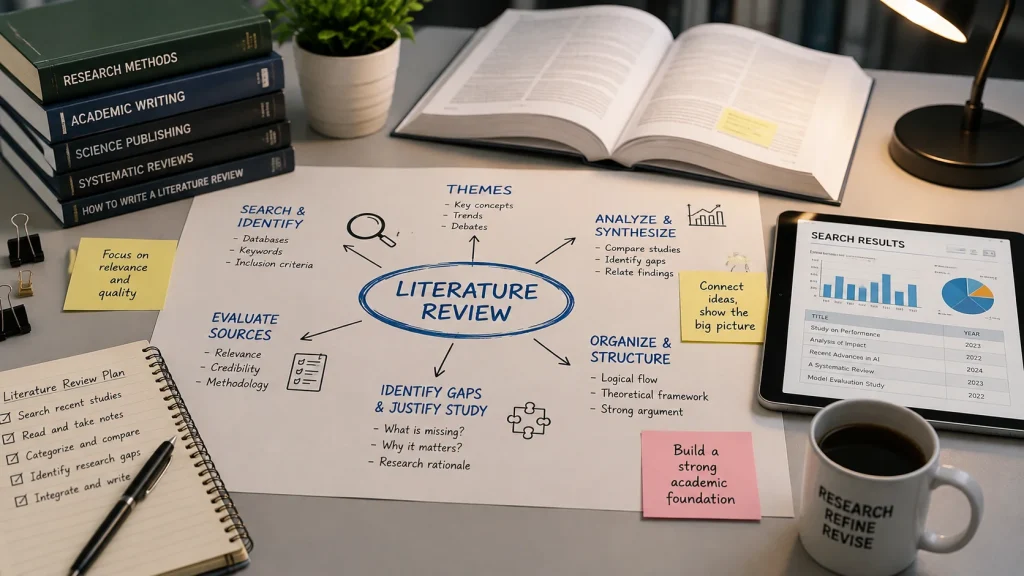
A literature review should do more than summarize previous studies. It should establish the research context. A strong literature review should:
- Identify established knowledge.
- Highlight disagreements.
- Identify gaps.
- Explain relevant theories.
- Connect previous research with your study.
After rejection, review your sources carefully.
Are they current?
Do they represent important studies?
Have you overlooked competing findings?
Have you explained the research gap clearly?
Updating the literature can substantially strengthen a revised manuscript.
Step 14: Reconsider the Methodology
Methodological concerns often cause serious rejection.
Researchers should review the study design carefully.
Ask:
- Was the sample appropriate?
- the sampling method justified?
- the variables clearly defined?
- the instruments appropriate?
- Was the analysis suitable?
- Were ethical requirements addressed?
Do not change methodology simply to satisfy one reviewer. Changes should remain scientifically justified. If the original design contains a genuine weakness, explain how you addressed it.
Step 15: Improve Statistical Reporting
Quantitative manuscripts often receive criticism because of incomplete statistical reporting.
Researchers should verify:
- Sample size
- Statistical tests
- Confidence intervals
- Effect sizes
- Significance levels
- Assumptions
- Missing data
- Software used
Statistical claims should match the analysis. Avoid overstating results. For example, statistical association does not automatically prove causation. Precise reporting strengthens credibility.
Step 16: Strengthen Qualitative Research Analysis
Qualitative studies face their own challenges. Reviewers often question sampling, coding, researcher reflexivity, or analytical transparency. Researchers should clearly explain:
- Participant selection
- Data collection
- Coding procedures
- Theme development
- Analytical framework
- Researcher role
- Trustworthiness measures
If reviewers questioned the analysis, provide more detail. Readers should understand how raw data became the reported themes. Clear methodological reporting makes qualitative findings more credible.
Step 17: Improve the Manuscript’s Language
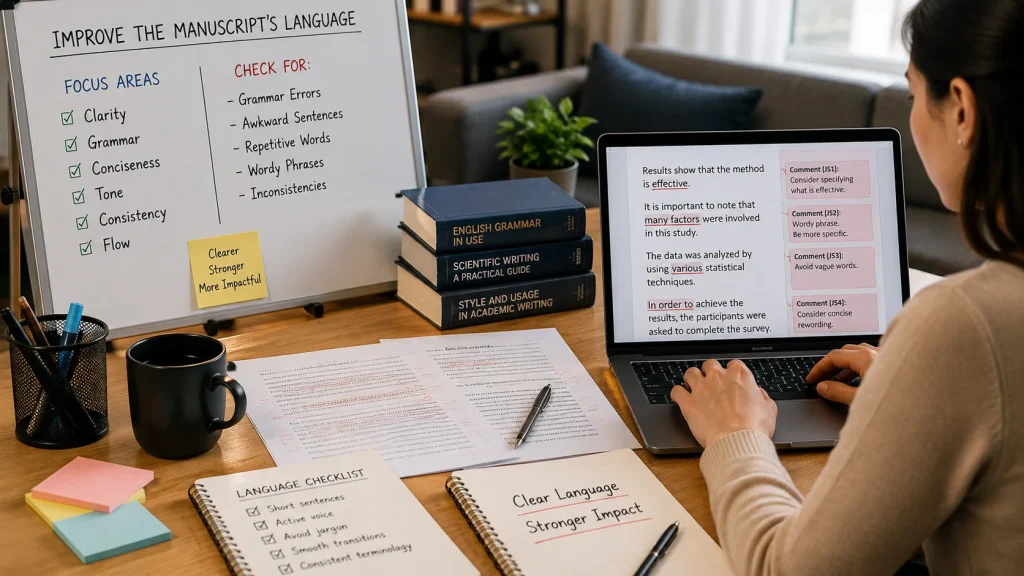
Sometimes reviewer feedback repeatedly mentions clarity. This problem deserves attention.
Researchers may understand every sentence because they wrote the manuscript. Reviewers do not have that advantage. They encounter the research for the first time.
A professional Manuscript Editing Service can help identify unclear sentences, repetition, awkward transitions, and inconsistent terminology. This becomes especially useful after substantial revisions. Changes to methodology and discussion can introduce new language problems.
Step 18: Check Every Citation Again
Major revisions often create citation inconsistencies. Researchers may add new sources while removing older ones. As a result, references can become mismatched.
Before resubmission, verify:
- Every in-text citation appears in the references.
- Every reference appears in the manuscript.
- Author names remain accurate.
- Publication years remain correct.
- Journal titles follow the required style.
- DOI information remains accurate.
- Citation formatting matches journal guidelines.
Small checks can prevent avoidable technical problems.
Step 19: Prepare a Strong Cover Letter
A resubmission needs a professional cover letter. Explain that the manuscript has undergone substantial revision. Highlight the most important changes.
For example:
- Revised methodology
- Expanded literature review
- Improved statistical reporting
- Clarified research contribution
- Addressed previous reviewer concerns
Keep the letter concise. Do not criticize the previous journal. Do not mention that another journal rejected the manuscript unless disclosure is required. The goal is to introduce the revised manuscript confidently.
Step 20: Do Not Submit the Same Manuscript Everywhere
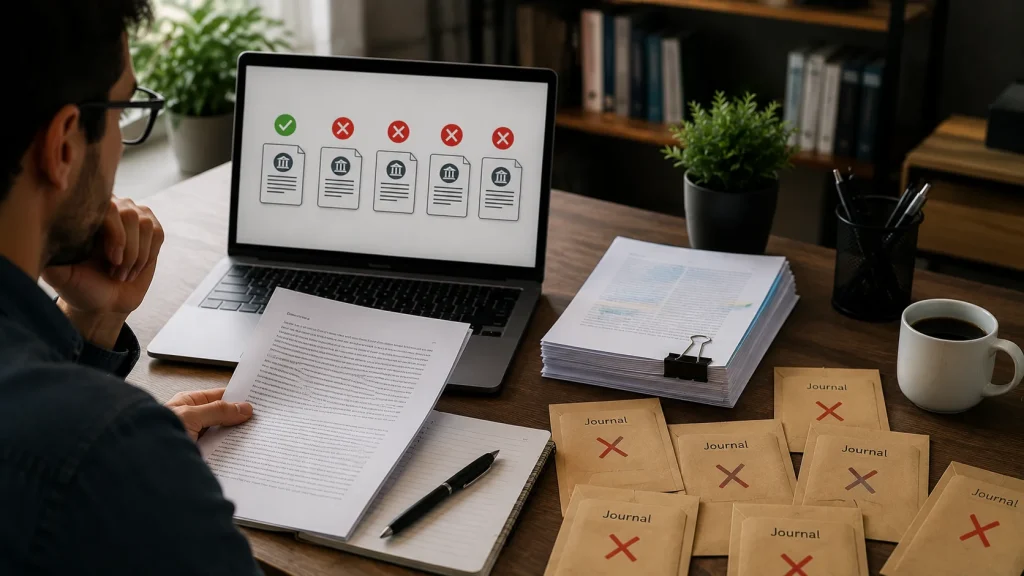
Repeated submission without meaningful revision creates a cycle. The manuscript gets rejected. The researcher changes the journal. Same problems remain. The next journal rejects it again. This process wastes valuable time.
A Resubmission Journal Service can help researchers break this cycle by combining manuscript assessment with journal selection and resubmission planning.
The focus should remain on improving the paper before targeting another journal.
When Resubmission Makes Sense?
Resubmission can work well when the manuscript has strong research potential.
Consider resubmitting when:
- The research question remains relevant.
- Reviewer comments identify fixable weaknesses.
- The methodology remains defensible.
- The research offers a meaningful contribution.
- Another journal matches the manuscript better.
A rejection does not mean the project has failed. Sometimes the manuscript simply needs a better publication strategy.
When Should You Consider Major Changes?
Some rejection decisions reveal deeper problems. You may need substantial revision when reviewers identify:
- Weak research design
- Insufficient sample size
- Missing analysis
- Unsupported conclusions
- Major theoretical gaps
- Serious methodological limitations
In such cases, simple editing will not solve the problem. Researchers may need to revisit the research itself. That process can take time. However, meaningful revision can produce a much stronger study.
Resubmission Is Not Duplicate Submission
Researchers must understand this distinction. You should never submit the same manuscript to multiple journals simultaneously unless the journals explicitly permit that practice. Duplicate submission violates standard publishing ethics. If one journal has rejected the manuscript, you can normally submit it elsewhere after making appropriate revisions. Keep careful records.
Track:
- Previous journal
- Decision date
- Reviewer comments
- Revisions completed
- New target journal
- Submission date
Good records prevent confusion.
How Fast Publications Supports Resubmission?

A rejected manuscript often needs a fresh strategy.
At Fast Publications, we help researchers assess what went wrong before moving toward another submission. Our support can include manuscript revision, journal evaluation, scientific and technical editing, and qualitative research analysis.
Researchers may also benefit from a Resubmission Journal Service when they need help identifying a suitable next journal after rejection.
The objective remains practical.
- Strengthen the manuscript.
- Address legitimate concerns.
- Choose a better publication target.
- Then submit again.
We do not promise guaranteed acceptance because journal decisions remain independent. Instead, we focus on improving the factors researchers can control.
Conclusion
A journal rejection can feel like the end of a research project.
It rarely has to be. The decision can reveal weaknesses that were difficult to see during writing. Reviewer comments can expose gaps in methodology, literature, analysis, or presentation.
- The key is to respond strategically. Read the decision carefully.
- Separate major concerns from minor issues.
- Look for recurring feedback.
- Then revise the manuscript honestly.
If the original journal remains unsuitable, identify another publication venue that matches the research more closely.
A Resubmission Journal Service can provide useful support during this stage by helping researchers evaluate the manuscript, address publication concerns, and identify suitable journals.
Fast Publications strongly believes rejection should become a learning point rather than a stopping point. Researchers can use editorial feedback to strengthen their work and improve their next submission.
Sometimes the second submission succeeds because the research changed. Sometimes it succeeds because the manuscript became clearer. And sometimes it succeeds because the researcher finally found the right journal. The important thing is to keep improving the work instead of simply submitting it again.
Frequently Asked Questions
Does journal rejection mean my research is bad?
No. Rejection can result from journal scope, editorial priorities, methodology concerns, limited novelty, or presentation issues.
Should I submit the rejected manuscript to another journal?
You can, but revise it first. Address legitimate reviewer concerns before sending it elsewhere.
Should I appeal a journal rejection?
Appeal when you can identify a clear factual error, misunderstanding, or procedural problem. Avoid appealing simply because you disagree with the decision.
How long should I wait before resubmitting?
There is no universal waiting period. Focus on completing meaningful revisions before choosing another journal.
Can a Resubmission Journal Service guarantee acceptance?
No. No ethical service can guarantee acceptance. Editorial decisions remain with the journal.
Should I change the title after rejection?
Sometimes. A clearer title can improve relevance and discoverability. However, do not change it simply because the manuscript received a rejection.
Can editing help after rejection?
Yes. Editing can improve clarity, structure, terminology, and presentation. It cannot fix fundamental research weaknesses.
How many times can I resubmit a rejected paper?
There is no fixed limit. However, repeated rejection should encourage researchers to reassess the manuscript and publication strategy.