If you’re a researcher looking to publish your work, you’ve probably heard about Q1, Q2, Q3, and Q4 journals. But what do these quartiles mean? And why are they important for your academic career?
This guide will break down journal quartiles in simple, clear terms—so you can confidently choose the right journal for your research.
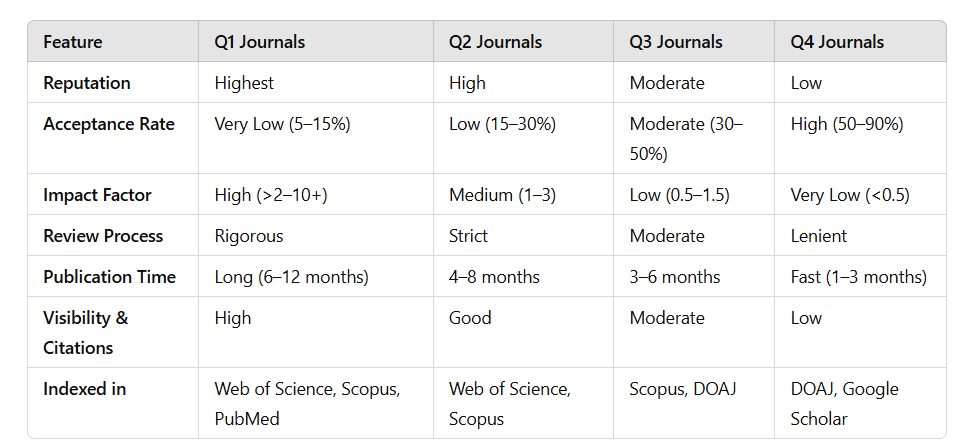
What Are Journal Quartiles (Q1–Q4)?
Academic journals are ranked into four quartiles (Q1–Q4) based on how influential and frequently cited they are. Here’s what each category means:
✅ Q1 Journals (Top 25%)
The best and most respected journals in the field. Highly cited, highly prestigious.
✅ Q2 Journals (25%–50%)
Still excellent, with a strong reputation and good citation rates.
✅ Q3 Journals (50%–75%)
Mid-tier journals, moderate impact, easier to get published in.
✅ Q4 Journals (Bottom 25%)
Newer or less prestigious journals with lower citations and impact.
The higher the quartile, the harder it is to get published—but also, the more your research gets noticed!

Why Do Journal Quartiles Matter?
Publishing in a higher-ranked journal can boost your career in several ways:
✅ Academic Reputation – Publishing in Q1 or Q2 journals makes you stand out.
✅ University Rankings – Institutions value Q1/Q2 publications for their global rankings (QS, THE, etc.).
✅ Funding & Grants – Research in top journals attracts better funding opportunities.
✅ More Citations & Impact– Q1 journals get more citations, increasing your research visibility.
If you want maximum recognition, aim for Q1 or Q2 journals!
How Are Journal Quartiles Determined?
Journal quartiles are determined based on citation metrics, primarily using the Impact Factor (IF), CiteScore, and SCImago Journal Rank (SJR). These rankings are divided into four quartiles (Q1, Q2, Q3, Q4), with Q1 being the highest-ranked journals.
Key Metrics and Formulas:
Measures the average number of citations per article over the last two years.
1. Impact Factor (IF) – Used by Journal Citation Reports (JCR)
Formula:
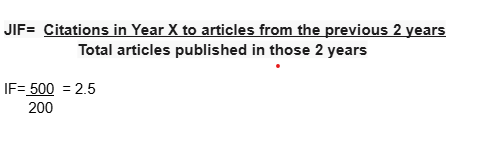
A higher impact factor(JIF) means a more influential journal.
2. CiteScore – Used by Scopus
Similar to JIF, but calculated over four years instead of two.
Formula:

3. SCImago Journal Rank (SJR) – Used by Scopus
A weighted metric that considers citations from prestigious journals more valuable.
Formula:

Where to Check Journal Quartiles?
You can check a journal’s ranking using these platforms:
🔹 Web of Science (JCR) – Best for checking Impact Factor & Quartiles.
🔹 Scopus Journal Rankings – Find CiteScore & quartiles for journals.
🔹 SCImago Journal Rank (SJR) – Provides quartile rankings for thousands of journals.
If you’re unsure where to submit your paper, check these databases first!
Q1 vs. Q2 vs. Q3 vs. Q4 – What’s the Difference?
🔹 Q1 journals are the hardest to get into, but they maximize your research impact.
🔹 Q2 journals are still prestigious and more accessible.
🔹 Q3 & Q4 journals are easier to publish in but have lower visibility.
How to Choose the Right Journal for Your Research?
1️⃣ Identify Your Research Field – Find journals that specialize in your subject area.
2️⃣ Check Quartile Rankings – Use Web of Science, Scopus, or SCImago.
3️⃣ Consider the Impact Factor – Higher JIF means better visibility & credibility.
4️⃣ Follow Author Guidelines – Ensure your paper meets the journal’s submission rules.
5️⃣ Review Submission Time & Fees – Some Q1 journals have long review times.

Should You Target Q1 Journals?
✅ If your research is groundbreaking, aim for Q1.
✅ If you want a faster publication, Q2 or Q3 might be a better choice.
✅ If you’re an early-career researcher, Q3/Q4 journals can be a stepping stone.
Final Tips for Publishing in Q1 Journals
📌 1. Focus on High-Quality Research – Q1 journals demand originality & strong methodology.
📌 2. Write a Clear & Concise Manuscript – Follow the journal’s formatting & structure.
📌 3. Address Peer Review Feedback Well – Revisions matter—be professional & thorough.
📌 4. Collaborate with Experienced Researchers – Co-authoring can increase acceptance chances.
📌 5. Stay Updated with Journal Rankings – Impact factors change yearly!
To conclude
✅ Q1 journals are the best but have tough acceptance rates.
✅ Q2 journals are still highly respected and easier to publish in.
✅ Q3 & Q4 journals are suitable for early-career researchers but offer lower impact.
🔹 Use the Web of Science, Scopus, and SCImago to find the best journal for your research.
Want to maximize your research impact? Target Q1 or Q2 journals whenever possible!