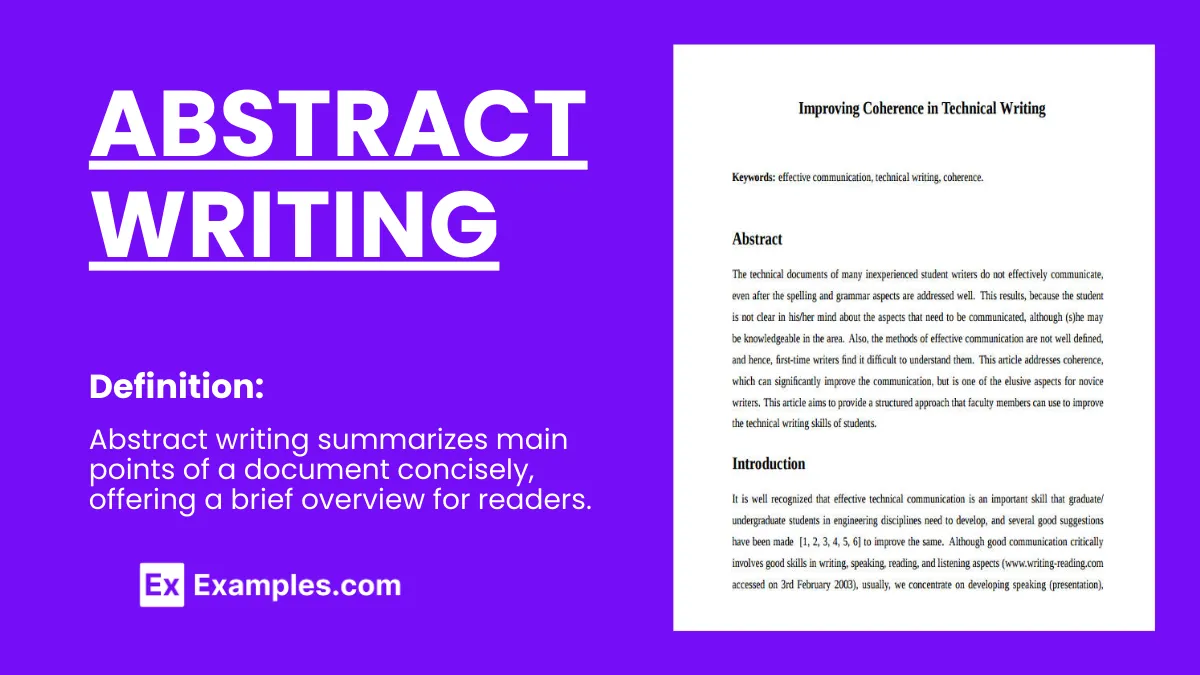
Writing an abstract is the most crucial part of your research paper. Editors and reviewers usually read the abstract prior to deciding if the manuscript is worth further consideration. Indeed, many journal rejections are because the abstract does not convey the significance, and clearness of the study.
At Fast Publications, we walk authors through the basics of writing compelling abstracts that engage journal editors and pass stringent acceptance tests. If you’ve ever been curious about how to write an abstract for journal acceptance, this guide will walk you through in detail.
Why the Abstract Matters in Journal Publishing
The abstract has several functions:
It distills the main contribution of your study.
It enables editors to make instant decisions about whether your paper is suitable for the journal.
It determines if your article appears in search engines and databases.
A good abstract is both a key to acceptance and visibility tool. A poor abstract can be damaging to excellent research.
Key Components of an Effective Abstract
When it comes to learning to write an abstract for journal acceptance, consider it as a formatted sales pitch for your paper. Always include the following elements:
1. Background and Rationale
Briefly state why the research is important. What issue are you trying to solve?
2. Objectives
Clearly define your research aim or hypothesis.
3. Methods
Briefly summarize the methodology, just enough to demonstrate rigor without too much detail.
4. Results
Emphasize the key findings concisely. Numbers, trends, or significant outcomes are necessary.
5. Conclusion and Significance
Conclude with the broader significance of your research. Why should the scholarly community care?
Common Mistakes to Avoid When Writing an Abstract
At Fast Publications, we usually find researchers falling into the same traps:
Too vague: An abstract that does not have any specific data or results indicates poor research.
Word limit exceeding: Journals have strict word limits; excessive abstracts get automatically rejected.
Poor organization: Abstracts written in a random manner confuse the readers.
Use of jargon: Technical jargon is required, but too much jargon gets readers and reviewers upset.
Disregarding journal guidelines: Every journal provides format, word limit, and style requirements. Disregarding these results in automatic rejection.
How to Match Your Abstract with Journal Requirements
You should know the journal submission guidelines. Most journals require:
Word limit (usually 150–300 words).
Structured vs. unstructured abstract formats.
Specific headings such as Background, Methods, Results, and Conclusion.
Always tailor your abstract to the journal’s expectations. Submitting a generic abstract increases rejection risk.
Tips for Writing an Abstract

Here are practical tips to help researchers master how to write an abstract for journal acceptance:
Write the abstract last. Once the paper is complete, you’ll have a clear overview of objectives, methods, and results.
Be clear but brief. Each word must contribute; cut out padding words.
Use keywords wisely. Indexing services and editors depend on keywords for findability.
Avoid references. Abstracts must be independent without citations.
Emphasise novelty. Journals value original contributions. Make your newness apparent.
Examples of Writing an Abstract
Various disciplines and journals use slightly different styles.
Structured Abstract (common in medical and scientific journals):
Background, Methods, Results, Conclusion.
Unstructured Abstract (common in humanities and social sciences):
One smooth paragraph that addresses objectives, argument, and conclusions.
Our services at Fast Publications assist researchers in transforming their abstracts into the targeted journal’s preferred style to ensure compliance and clarity.
How Writing an Abstract Influence Acceptance Rates
A well-written abstract not only promises quality to reviewers, but also forms first impressions. Editors handle hundreds of submissions in a given month. A well-crafted, journal-ready abstract demonstrates professionalism and care, which can tip the decision in your favor. A badly written abstract can lead to:
Desk rejection without review.
Lower visibility on databases such as Scopus or Web of Science.
Lower citation potential upon publication.
Final Checklist Before Submission
Before you submit, check your abstract against this list:
Does it declare the research problem clearly?
Are objectives measurable and specific?
Are methods explained briefly and succinctly?
Are results conveyed with supporting data?
Does the conclusion emphasize importance?
Does it conform to the journal’s word length and presentation rules?
If you can answer yes to everything, your abstract is ready to submit.
How Fast Publications Assists Researchers in Writing Abstracts

Creating a powerful abstract requires ability, accuracy, and experience. At Fast Publications, we provide:
Abstract writing and editing assistance to enhance clarity and compliance.
Journal submission assistance to make your abstract editorial guideline-conform.
Professional peer-review response services for resubmissions.
Our team knows what journal editors want and assists researchers in placing their work for acceptance.
Final Words
Learning to write an abstract for journal acceptance is perhaps the most valuable skill for any researcher. The abstract is more than just a summary; it is your chance to make a strong first impression, convey the validity of your work, and indicate publication readiness.
By steering clear of common pitfalls, making your abstract journal-compliant, and maintaining precision and clarity, you can see a huge improvement in your chances of success. With Fast Publications on your side, you’ll get professional guidance to make every submission valuable.
FAQs
1. How long does an abstract need to be for journal acceptance?
Most journals ask for 150–300 words, though it may differ. Always refer to the particular journal’s guidelines.
2. Do I put results in my abstract?
Yes. Journals anticipate actual findings, not generic promises of results.
3. Will Fast Publications assist me in making my abstract better?
Certainly. Our editors polish language, organisation, and compliance to journal guidelines.
4. What if my abstract fails to comply with journal requirements?
Your manuscript could be desk-rejected before peer review even starts.
5. Do I write the abstract before or after the paper?
It’s best to write the abstract after completing your paper to ensure accuracy and completeness.