Publication in any IEEE journal is a big milestone for any researcher in any discipline of engineering, computer science, or technology. The IEEE is one of the most recognised and regarded publishing companies in the technical field in the whole world and has an unmatched capability of reaching and being credible. This reputation is, however, put together on a base of high standards. An innovative manuscript may still face rejection if the author does not follow the specific formatting and stylistic standards found in IEEE.
This blog will guide you to prepare a technical research paper to submit to an IEEE journal.
About the IEEE journals
The first thing you need to know before you move on to writing. IEEE issues a diverse range of periodicals, and they include:
- Transactions: Transactions are normally high-impact, archival journals specialising in a narrow, well-established engineering subject (e.g., IEEE Transactions on Power Systems).
- Journals: Like the transactions, usually broad or entering the field.
- Letters: These contain terse, brief articles of noteworthy, quick-impact conclusions.
- Magazines: Articles in the magazines are written in a less specialised format with a more generalised approach to a wide professional audience and may include the state-of-the-art and its uses.
Acceptance in any of them marks quality. It indicates that your work has been reviewed by a highly competent peer group and is of value to the entire scientific community of the world.
Selecting the Appropriate IEEE Journal
The first and most critical strategic choice that you have to make is which journal to select.
- Make the scope clear: Take definite time to read the aims and scope of the prospective journals. Your paper should match their prescribed topical areas.
- Assess Metrics: Take into account the impact factor, publication rate and readership of the journal. When an impact factor is high, the level of competition will be high, as well as the visibility.
- Action Use IEEE Xplore(r) Digital Library: That is the best research tool to use. Read new articles in your desired journals. This will provide you with an idea of how well-submitted submissions can and should look.
Organising Your IEEE Technical Paper
The papers that IEEE journals publish are more generally structured around (Introduction, Methods, Results, and Discussion). A standard paper contains the following sections:
- Abstract: It is a paragraph (usually around 200 words) as a summary of the problem, the methodology, the central findings and the conclusion. This is the most read section of your paper.
- Keywords: 4 to 6 phrases which most accurately depict the material to be indexed and can be searched.
- Introduction: Smack down and outline the issue, its importance and what solutions already exist (of course, briefly). Set out clearly how your paper is a contribution and a novel approach.
- Related Work: You can review the past literature to create a context and a need for your work.
- Methodology: A detailed and repeatable description of how and what you do with and how you analyse your data.
- Results and Discussion: Report your findings clearly and concisely using figures and tables. Give explanations on the implications of the results, and how they can justify your claims.
- Conclusion: Be able to summarise the key findings in the research, rephrase the contribution, and possibly provide future working directions.
- References: Write in the IEEE style of references.

Following Formatting Guidelines
This is non-negotiable. IEEE offers official templates in order to be consistent.
- Templates are Compulsory: Usually, it is mandatory to use the latest Microsoft Word or LaTeX template downloaded from the IEEE Author Centre.
- Two-Column: Final papers should be in the regular IEEE format of two columns.
- Figures and Tables: All the figures must be high-resolution and clearly labelled with references made in the text. Put captions of the table above the table and captions of the figures below the figure.
Write using the IEEE style
Most important is the tone and clarity of what you are writing.
- Formal and Concise: Utilise a formal and objective tone. Do not use colloquialisms and irrelevant jargon. Be direct and get to the point.
- Logical Flow of Process: Create a logical flow between various sections. Encourage the reader to read by using signposting language.
- Evidence-Based: Justify all the statements with evidence from your findings or references to existing literature.
- UK English: Just use UK English conventions of spelling.
The Review and Submission Process
Send your manuscript using the IEEE Author Portal. The general process is:
- Editorial Review: The editor scans for extent, style and quality. A good number of the manuscripts face rejection at this phase.
- Peer Review: If it passes the screening, the evaluation will be forwarded to 2-4 expert reviewers, who will review it in a single-blind review. This can take several months.
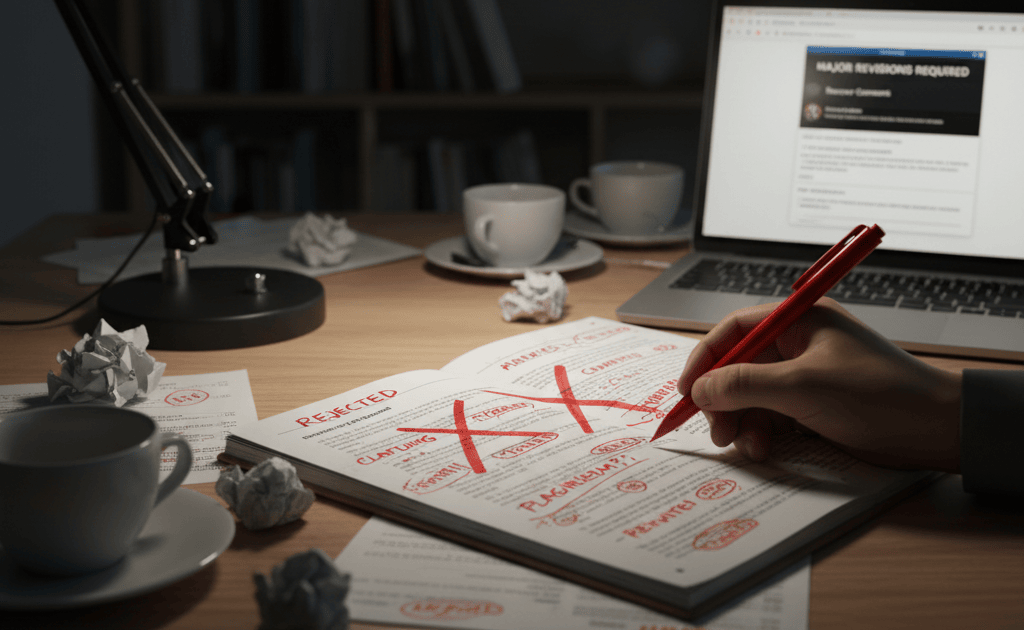
- Decision: The decision can be categorised into accept, minor revision, major revision, or reject.
- Revisions: You will be required to provide a revision of the manuscript. Make a response memo responding point-by-point to all the reviewer comments. Be able to submit the revised manuscript before the deadline.
- Final Acceptance: After all the issues are addressed and all the concerns have been fully resolved, your paper will be accepted by the editor.
Conclusion
Getting IEEE to publish requires more than just good research. It needs close consideration of organisation, format and clarity. With the right journal choice, strict adherence to the official guidelines, and a proper revision of your language, you will turn your precious research into a professional paper.
To researchers who might require further help in the publication journey, services such as Fastpublications are very helpful. We help researchers to prepare, polish and submit technical papers to the IEEE and other well-reputed publishers. We contribute to the compatibility of formatting, language correction, and provide a pleasant publication experience altogether.