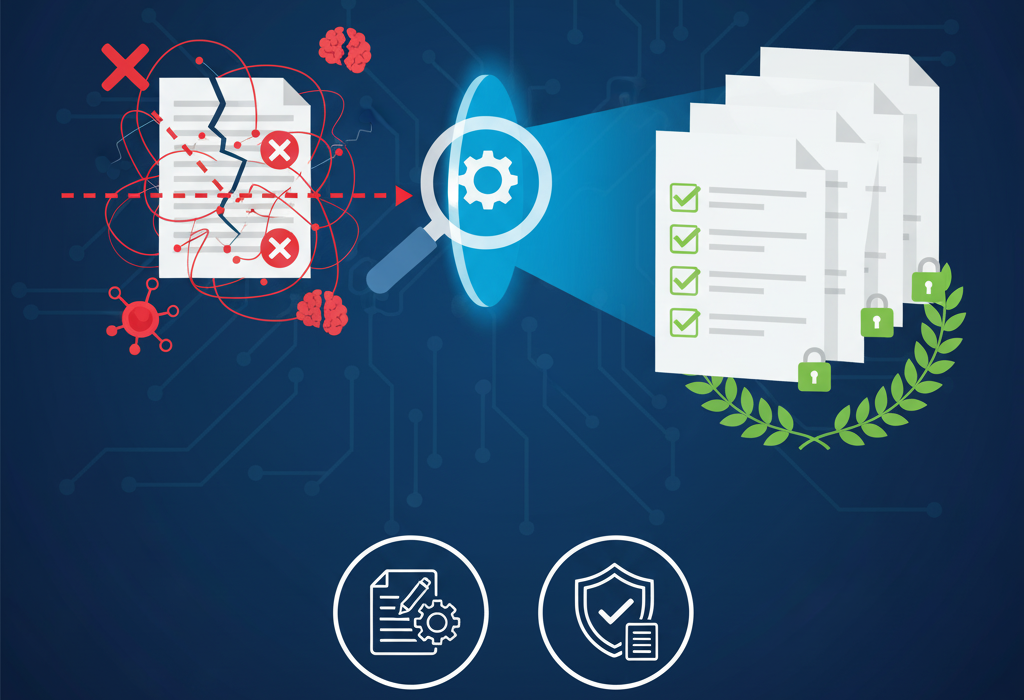
The issue of reference rejection because of high levels of similarity measure is a rather heavy blow to scholars. The journals that are listed in Scopus and Web of Science use advanced detection platforms to detect non-original content. Very often, the cause is non-purpose overlap, or characteristic styles of AI-generated written text, but not intentional plagiarism.
Meeting such struggles requires having not a passive paraphrasing utility but a careful supervision of experts. Fast Publications provides reliable and professional assistance that will eliminate the similarity issues in a wholesome manner. So that the manuscripts fulfil the strictest levels of standards of originality and place the authors in the best perspectives of acceptance.
Understanding Your Similarity Report
The results of a similarity test combined with programs like Turnitin or iThenticate in themselves do not amount to evidence of plagiarism. The report merely highlights textual portions that match entries within its broad database, which could comprise: direct quotes without proper quotation marks; improper paraphrasing of sentences; common academic phrases; and properly quoted, verbatim quotes. These reports are studied with subtlety by editorial staff who realise that aggregate percentage is upsetting, whilst local assessment of the matches in context can indicate permissible repetition.
Why do High Percentages of Similarity arise?
Even strictly ethical researchers reach high scores of similarity. Typical reasons are:
- Recycled methodology, wherein accounts of standard workings or software are described using universal lexemes which arouse matches.
- Self-plagiarism, where the down to pattern is reworded in content generated by artificial intelligence.
- Improper paraphrasing occurs when the content generated by artificial intelligence contains identifiable structures and predictable lexical rather than syntactic patterns, which are increasingly identified through detection algorithms.
- AI content hallmarks, where writing created through artificial intelligence contains recognisable constructs and foreseeable word choices.
How Our Editors Lower Your Score on Similarity
We do not simply take manuscripts and direct the computers to put them through software. We offer a thorough process of editing the manuscripts manually. Furthermore, we design our methodology in a way that reduces similarity score and ensures scientific accuracy and the voice of the writer. The process consists of:
- Comprehensive diagnostic review of the full similarity report to differentiate problematic and benign matches.
- Strategic approach to ethically paraphrase by editing content by subject specialists, making fundamental deviations in sentence construction and vocabulary, without losing technical integrity
- A citation and referencing overhaul, which will make sure that every copied concept is credited properly, properly formatted, and that where appropriate, incorporate quotation marks.
- Humanisation of AI content, where passages identified as containing AI markers are rewritten to reflect natural language. Any work is done under strict confidentiality and signed Non-Disclosure Agreement; manuscripts are never entered in any database.
Plagiarism vs AI Detection: What Do You Know?
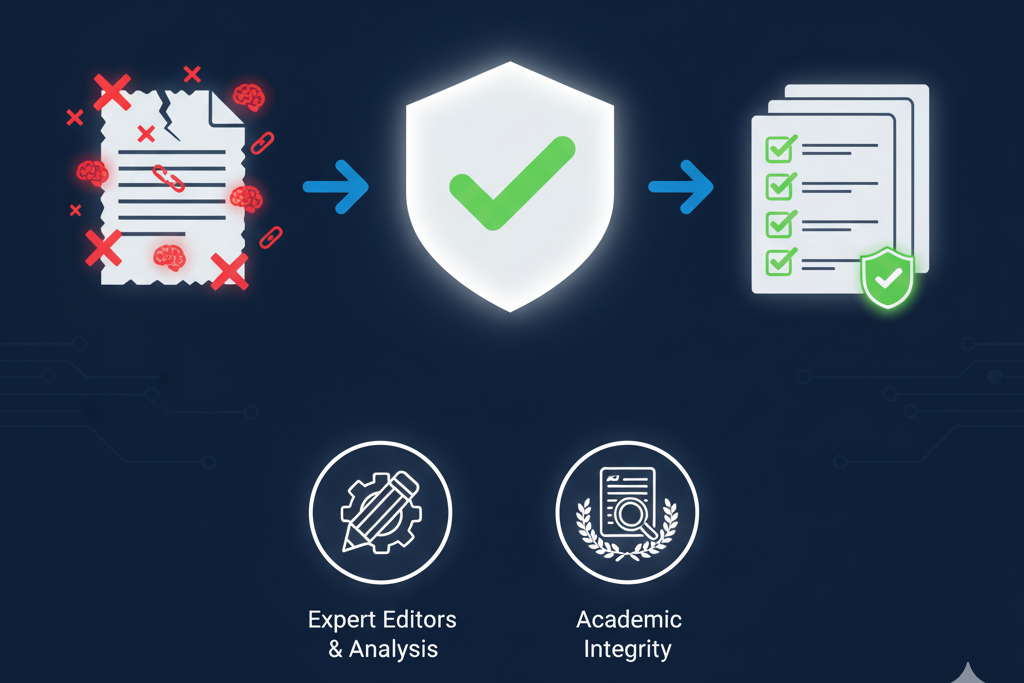
There is a need to distinguish between the two issues. Plagiarism detection aims at content overlap with literature, whereas AI detection measures style and probabilistic characteristics to determine whether the content is from AI. The manuscript can have absolutely original ideas and still have an AI writing issue. It reduces credibility. Our editors have the skill to work on the two issues simultaneously, to make the text original in its substance and authentic in its style.
The Pitfalls when Correcting Similarity Report
Writers tend to make it worse in a hurry. We also help clients avoid fatal mistakes like:
- Using automated paraphrasing tools can result in incoherent and unsound prose.
- Removing important citations in an attempt to get lower marks, sabotaging academic integrity and damaging scholarly legs.
- Engaging in over-editing can destroy the voice of the manuscript and land someone with multiple charges of disguised plagiarism.
Researchers prefer Fast Publications
A trust in results and experience is the basis of our reputation. Reasons why researchers prefer our service include:
- Specific knowledge of journals, as we are set to prepare manuscripts dealing with high-impact ISI, Scopus and Web of Science substratums.
- Subject area editors with advanced degrees who understand the vocabulary of the domain and conventions in their domain.
- Non-repository guarantee, such that we will not upload any of the articles to a database, thus maintaining originality in the future.
- Confidentiality is a priority, such that all their projects will have a signed NDA in place to guarantee intangible property.
Who Can Be a beneficiary of such a service?
We target a wide audience, such as:
- PhD students need to write thesis parts to publish in a journal.
- Established academics who want plagiarism-free manuscripts
- Researchers who want to remove AI style from the content of manuscripts.
- We would also be offering services to universities and colleges seeking a good partner to help them with the heavy editing workload they have to satisfy.
Our Simple Four‑Step Process
The route to a journal-ready paper is simplified:
- Upload: Authorise the submissions of the manuscript together with its similarity report.
- Assess: Get a detailed evaluation and a plan of action.
- Review: Seek the assistance of professional editors to make the document original and accurate.
- Deliver: Have an improved manuscript and work notes of improvements, ready to submit.
Conclusion:
A large score on similarity is a challenge rather than a barrier. Through proper expertise, it can be efficiently and ethically overcome. Fast Publications provides a similarity report and manuscripts editing of the best quality that assures plagiarism-free papers, AI-compliant and made as perfect an academic paper as possible. Eliminate fears of similarity reports and move on to publication with confidence.