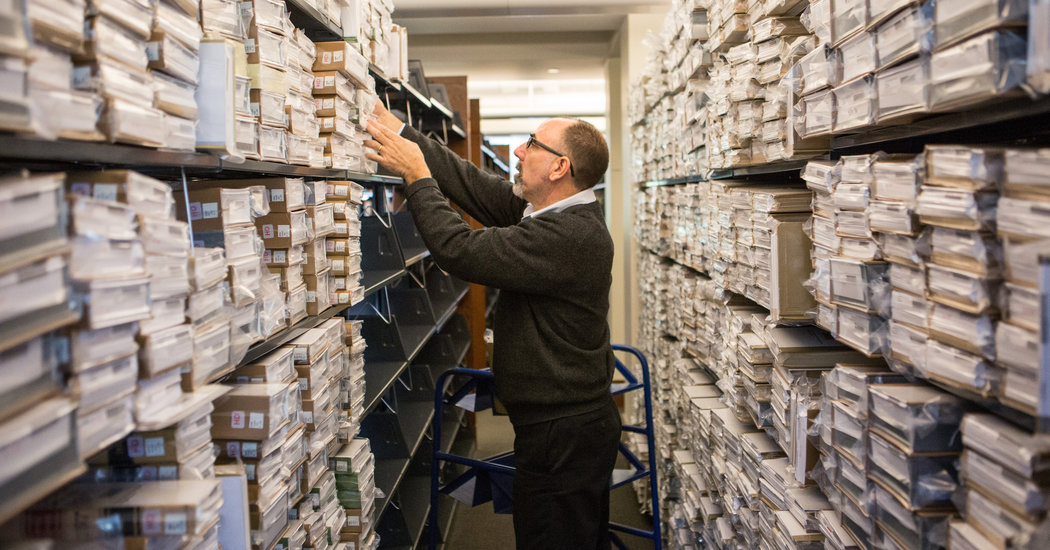
It takes curiosity but no more to unlock the secrets of the past. It requires a map. To the scholars of law, research in archives of non-English speaking areas is a treasure trove of unexploited information. These records show how laws influenced and regulated societies, trade, and other human rights much before the modernist period.
At Fast Publications, we have specialized in transforming these complicated historical discoveries into world publications. We are familiar with the fact that it is challenging to maneuver foreign archives. Even the most effective researchers can get stuck by language barriers and various legal systems. This handbook offers a concrete road map in the search and interpretation of historical legal documents worldwide.
The Benefit of Legal Archives in Non-English Countries
The majority of legal history in the world is outside the English-speaking world. Traditions of civil law in Europe, Latin America and certain parts of Asia have centuries of court cases, land titles and legislative discussions. You are not looking at the whole picture when you look at English sources only.
By studying such archives, you can upset Western-focused accounts. It gives the primary evidence required in breakthrough papers. Nonetheless, documents of law of the past are seldom ever straightforward. They mirror the linguistic and political connotations of their era. To be successful, you have to go about them in a methodical way.
Locating the appropriate Repositories
The first step is identification. Each nation is different in terms of legal history. Begin with your target region National Archives. Most countries maintain centralized databases, albeit that most older records have not been catalogued online.
Look for “Notarial Archives.” In civil law countries, notaries registered all transactions, such as property sales to wills. These documents provide a finer detail of the workings of law in everyday life. Do not disregard local municipal archives and religious institutions. Family law and inheritance were centuries-old in the ecclesiastical courts in many regions.
Relate to local librarians. They have tacit knowledge, which is not available in the digital catalogs. One conversation will save you months of hopeless searching.
Breaking through the Language Barrier
The most evident barrier is language. You are frequently handling old versions of Spanish, French, Portuguese or Mandarin. The translation tools used in the modern world do not frequently translate legal terms used in the 1700s.
In the first place, study about the legal formulae of the epoch. The legal documents in the past are usually very rigidly patterned. After recognizing the general introduction and closing words or phrases, the main material is less difficult to extract. Second, seek the services of a paleography expert in case the handwriting cannot be read. Paleography refers to the study of ancient systems of writing. It is a crucial art in dealing with manuscripts of the pre-19th century.
Lastly, hire professional translation services which have specialized in legal history. Accuracy is non-negotiable. Even a minor misunderstanding of a court ruling can be altered by a minor misunderstanding of one of the legal words.
Contextual interpretation of Documents
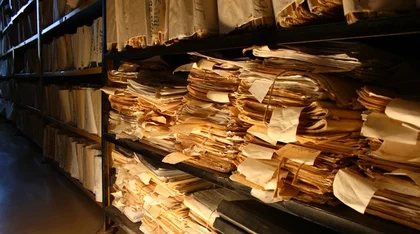
Locating a document is not enough. The real work takes place in interpretation. You need to know the legal culture. What were the social norms? Who held the power?
There is much in legal documents that is concealed as much as it is revealed. The transcript of a court could show the bias of the one that wrote and not the statement of the witness. Triangulate your findings. Compare a court record and personal letters or newspaper stories about the same time. This forms a multi-dimensional perspective of the legal event.
Consider why the document has been prepared. Was it to enforce a law, to put an exception on? Knowledge of the motive of the record does not allow you to read historical text at face value.
The Role of Article Writing of Research
Gathering archival evidence is an ordeal. But the end is to communicate your findings to the rest of the scholarly community of the world. This is where the Research Article Writing Art has to come in.
A Research Article Writing makes the historical material raw and turns it into a coherent story. You would have to tell us why a 300-year-old legal case in a non-English-speaking area has any relevance in the eyes of contemporary scholars. You must extract the individual details of the archives and bring them into general theoretical consequences.
By learning to write a Research Article, you are not only telling the truth. You build an argument. You demonstrate how these historical documents bring transformations in our perception of existing legal systems. This is the level of synthesis which distinguishes the average report and a high impact journal article.
The way Fast Publications Market Your Expertise
We deal with Fast Publications as your intellectual partner. We appreciate the fact that archival research is time consuming. You end up being in stuffy basements and on computer screens. The last few miles of the publication process should not be a hassle to you.
We provide professional services to legal historians. Our team assists with:
- Structural Logic: We assist in systematizing large volumes of the archival data into a logical stream.
- Terminology Accuracy: We guarantee that your translation of legal terminology in the past is accurate to the standards of contemporary academia as well.
- Targeted Placement: We find journals which reward niche, non-English archival research.
- Professional Polish: Our Research Article Writing service makes your prose clear, active, and convincing.
Conclusion
We assist you to sell your work to the appropriate audience. We make sure that your finding of a legal writing of the past is given the readership it warrants in the highest-quality journals.
Once again, I think I have nothing left to say except to conclude by having to bridge the past and the future.
Historical studies concerning non-English speaking are an exploration of the unfamiliar. It takes time, a command of language and a profound appreciation of context. You can also discover centuries-old stories by working in a methodical manner.
Keep in mind, there must be a good presentation in order to have a good discovery. Apply your results to support assumptions and push the limits of legal history. By the proper encouragement your archival effort may be one of the pillars of a contemporary scholarship.
Fast Publications will make sure that your voice is heard. We transform your knowledge of the past into publications that withstand the test of time.
Make the Next Step in Your Research
Do not sit on your archival findings in your notes. We would like to assist you in making your findings known to the world.