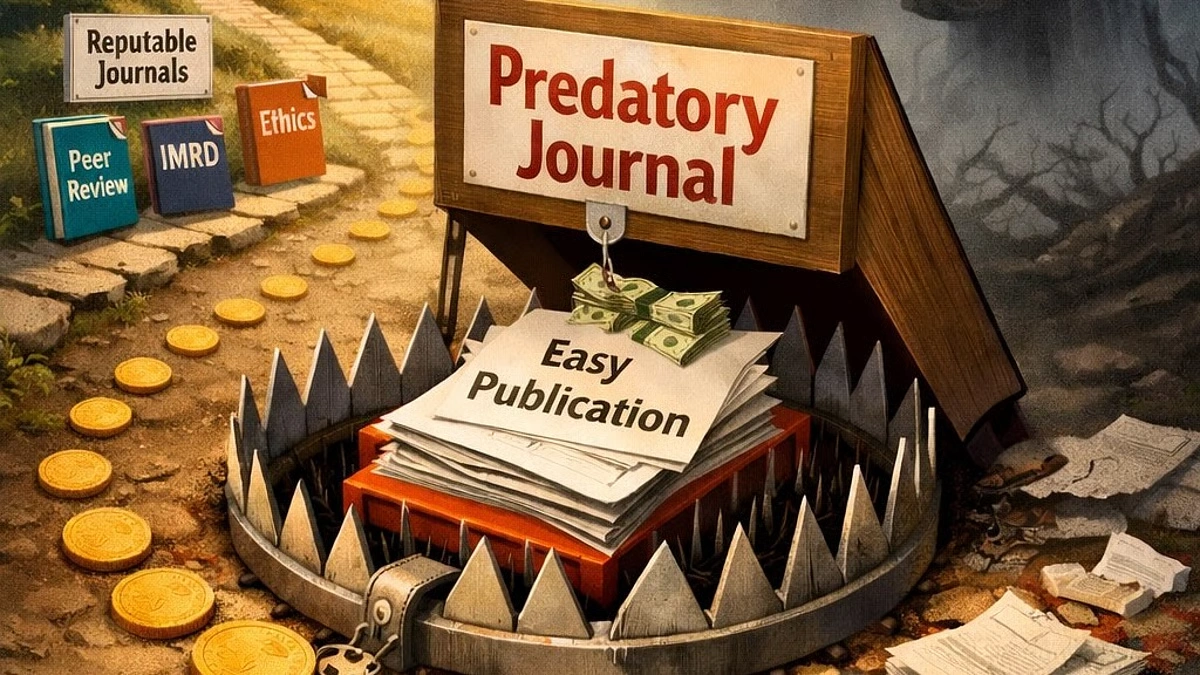
Predatory journals target researchers everywhere, but Saudi academics face extra risk due to tight promotion and grant deadlines. An unsolicited email promising fast publication often arrives right when a researcher is most vulnerable, such as after a rejection or near a deadline.
This guide provides a practical checklist to verify a journal before submitting or paying. It follows the core steps used by leading academic integrity resources.
What is a Predatory Journal?
A predatory journal charges authors fees without providing genuine peer review or editorial oversight. In exchange for payment, it offers no legitimate publishing services. This differs from open access, which is a fully legitimate model. The issue is not the fee itself, but charging a fee while skipping the peer review it is meant to fund.
The Core Verification Checklist
Work through these checks before submitting to any journal you are not already confident about, and treat a pattern of several unticked boxes as a serious warning rather than dismissing any single one on its own.
Check the journal against the official Scopus source list or Clarivate’s Master Journal List. A logo claiming indexing on a journal’s homepage is not proof. Search the exact journal title or ISSN directly in the official database.
Look for a specific, checkable peer review process. Legitimate journals describe their review model in concrete terms, such as double-blind review with a stated typical timeline. Vague language, or an outright promise of guaranteed or extremely fast acceptance, is one of the clearest predatory journal warning signs.
Verify the editorial board. Search for several board members individually and confirm they are genuine researchers at real institutions. Predatory journals have been known to list scholars without their consent or invent names entirely.
Check the fee structure and timing. A legitimate journal publishes its fee schedule openly on its website before you submit. Be especially cautious of any journal that requests payment very quickly after submission, before any meaningful peer review appears to have taken place.
Cross-reference with DOAJ and Think. Check. Submit. The Directory of Open Access Journals and the Think. Check. Submit campaign: both provide free, independent tools built specifically to help researchers verify journal legitimacy before submitting.
Watch for unsolicited invitation emails. A journal you have never heard of, emailing you directly with flattering language and an invitation to submit, especially shortly after you published or presented elsewhere, is a common and well-documented predatory tactic.
Why This Matters More for Researchers Under Promotion Pressure

النشر العلمي في السعودية مرتبط مباشرة بالترقية الأكاديمية، وهذا الضغط الزمني تحديدا هو ما يستهدفه ناشرو المجلات المفترسة، حيث يرسلون عروض نشر سريع فور شعورهم بأن الباحث يحتاج نشرا عاجلا.
Researchers working against a tight promotion or grant reporting deadline are more likely to be tempted by a journal promising fast turnaround, which is exactly the vulnerability predatory publishers are designed to exploit. Slowing down enough to run through the verification checklist above, even under deadline pressure, protects both your research output and your professional reputation, since a paper published in a predatory outlet typically will not count toward a promotion file and can be difficult to withdraw or republish elsewhere afterward.
What to Do If You Suspect a Journal You Already Submitted To
If you have already submitted a paper and start noticing warning signs, such as an unusually fast acceptance with minimal or no reviewer feedback, or a fee request that arrived before any real review took place, it is worth pausing before proceeding to payment. Verify the journal independently using the checklist above, and if it fails multiple checks, withdrawing your submission before payment is generally the safer path, even if it means restarting your journal search.
A Few Real Examples of How Predatory Tactics Show Up
Understanding the abstract checklist is useful, but seeing how these tactics actually appear in practice makes the warning signs easier to recognize in the moment. An email arrives within days of a conference presentation, addressing you by name and referencing your specific research area, inviting you to submit to a journal you have never heard of with a turnaround of two to three weeks and acceptance described as highly likely. A journal’s homepage displays several impact factor-style logos from organizations that are not Clarivate or a recognized metrics provider, using unfamiliar names designed to resemble legitimate indexing services. A fee invoice arrives within 48 hours of submission, before any indication that reviewers have even been assigned, let alone completed a review.
None of these signals alone is automatically proof of a predatory operation, but seeing two or three together on the same journal is a strong reason to verify independently before proceeding.
Building a Habit of Verification Rather Than a One-Time Check
The most reliable protection against predatory journals is not memorizing every warning sign; it is building verification into your normal submission routine every time, regardless of how credible a journal seems at first glance. Hijacked journals often clone legitimate names and websites to trick researchers. Even if a journal name sounds familiar, verify its authenticity before assuming it is safe. Treating the verification checklist as a standard five-minute step before every submission, not just the ones that already feel suspicious, closes this gap.
Getting Support With Journal Verification
Working through a full verification checklist for every candidate journal takes time that researchers under deadline pressure often do not have. Fast Publications offers Scopus publication support Saudi Arabia researchers can rely on to verify journal legitimacy as part of the broader journal selection process, so you are not making this call alone under time pressure.
Our Scopus journal selection services include journal verification against the official Scopus source list before any recommendation is made. For guidance on choosing between Q1 and Q2 journals more broadly, see our Scopus Indexed Journals guide, and if you have already experienced a rejection and are worried about resubmission pressure, our rejection and resubmission guide.
Frequently Asked Questions
Does charging a publication fee automatically mean a journal is predatory?
No. Legitimate open access journals commonly charge an article processing charge. The concern is the pattern around the fee, such as payment requested before genuine review, not the existence of a fee itself.
كيف أتحقق من أن المجلة ليست مجلة مفترسة قبل التقديم؟
تحقق من إدراج المجلة في قائمة سكوبس الرسمية أو قائمة Clarivate، راجع أعضاء هيئة التحرير للتأكد من أنهم باحثون حقيقيون، وتحقق من أن سياسة التحكيم العلمي موضحة بشكل دقيق وليس بصياغة غامضة أو وعود بنشر سريع مضمون.
Is it safe to trust a journal that appears in Google search results with a professional-looking website?
Not on its own. Predatory journals frequently invest in professional-looking websites and fake indexing logos. Independent verification through the official Scopus source list, DOAJ, or Think.Check.Submit is always necessary regardless of how polished a website appears.
ما هي أكثر علامات المجلات المفترسة شيوعاً التي يجب الانتباه لها؟
من أبرز العلامات رسائل الدعوة غير المرغوبة للنشر، والوعد بقبول سريع ومضمون، وطلب الدفع قبل إجراء أي تحكيم علمي حقيقي، وغموض في وصف عملية المراجعة أو هيئة التحرير.
What should I do if I already paid a predatory journal?
Contact the journal to request a refund, though success varies. Document the interaction and consult your university’s research office. Many institutions track predatory publishing incidents and can advise on funding or promotion implications.