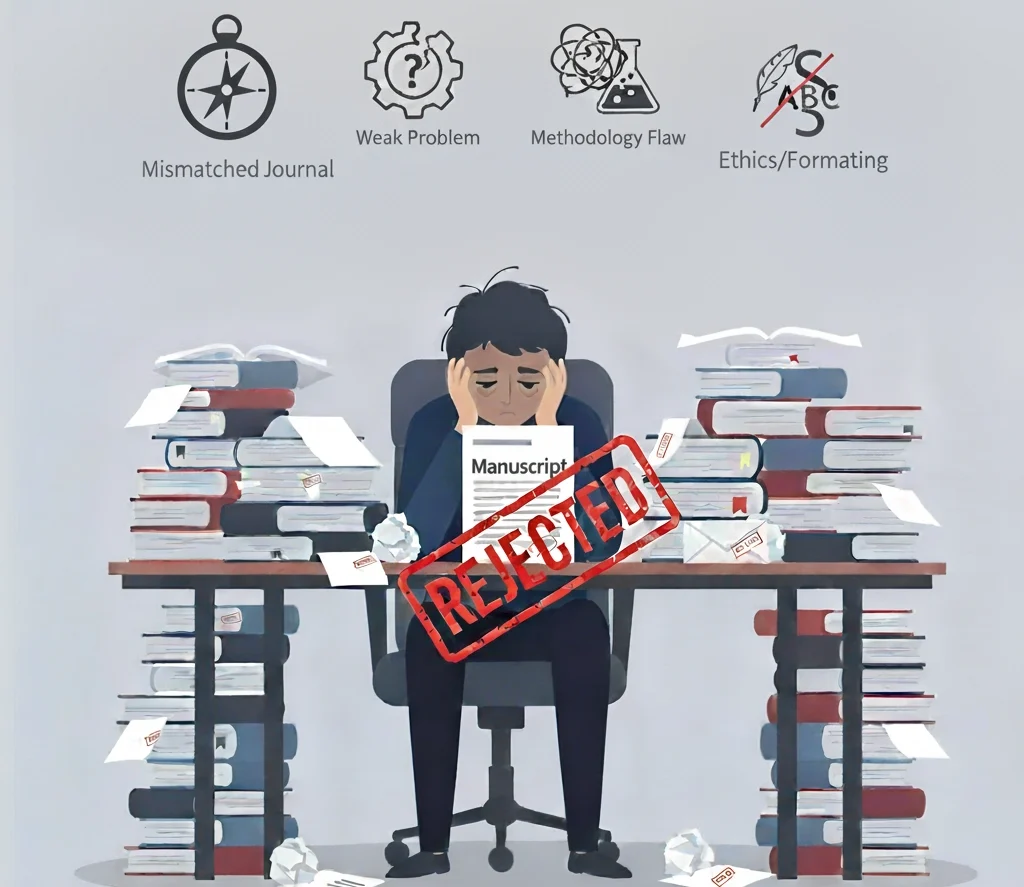
Few things are more depressing for academics than witnessing months or even years of arduous study rejected with the word “Rejected.” Academic publishing is a very competitive process, and the rejection letters are more frequent than acceptances, particularly in the beginning of the career of the researcher. Although it is all too easy for people to point the finger at the system or reviewers, most researchers cause the rejections through preventable errors as opposed to the quality of the research.
We assist authors of manuscripts in avoiding these pitfalls and polishing the manuscripts for submission to succeed at Fast Publication. Here are the 5 best reasons why publishers reject manuscripts and how to prevent them.
Lack of Fit to the Scope of Journal
A reason that desk rejection occurs most frequently is because the submission was to the wrong journal. A journal has a specific scope, which is an expression of the topics, the methods and the audiences to which it serves. Filing a paper that is not within that periphery is an indication to editors that the author has not worked sufficiently on it.
As an illustration, a journal that mainly publishes quantitative neuroscience work will most likely reject any qualitative educational psychology study early on.
The editors desire content that fits the expectations of their readers.
How to avoid this:
- Examine the goals and objectives of the journal.
- Read the latest issues to know the types of articles and concentration.
- Via such tools as Journal Finder or Journal Suggester of Elsevier.
- Take into account Fast Publication as an aid in the selection of professional journals.
Weak or Indistinct Research Problem
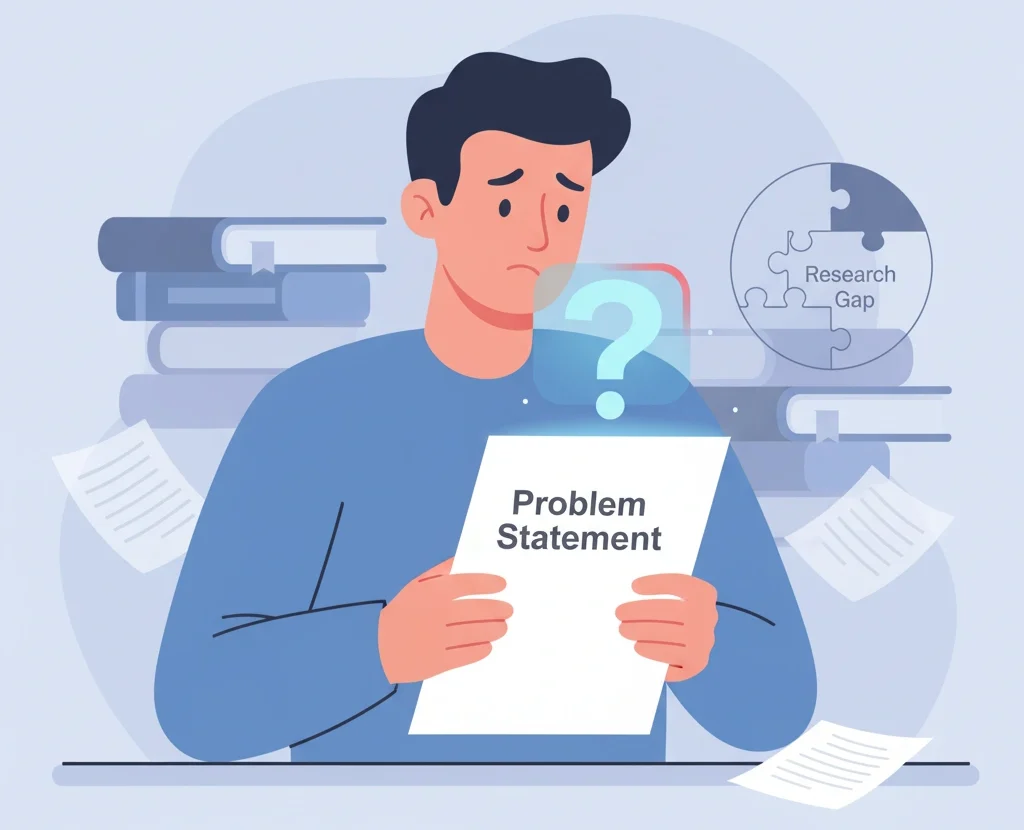
Manuscripts submitted to editors and reviewers are seeking material that is clear on why the study is important. It is a common practice that a paper that does not present a clear research question or problem statement seems to be out of focus or redundant. Even perfectly carried out studies may appear insignificant without a proper foundation.
A powerful research problem identifies the literature gap and indicates how your work will fill the gap. The editors can view the study as insignificant or redundant in the absence of this clarity.
Suggestions to refine your research problem
- Begin with a brief and issue-based introduction.
- Indicate how your study is related and how you conduct your research based on the previous research.
- Formulate goals and hypotheses that are clear and connected to the gap in the research.
- Represent greater scholarly or real world meaning.
At Fast Publication, we assist authors in polishing problem statements in order to make their papers explain the relevance of the research.
Methodological Weaknesses or Ineffective Data Reporting
Even the topical subject has to be based on a solid methodological base. Rejection of manuscripts is usually due to:
- Lack of sufficient sample size or control groups.
- Lack of enough methodological information.
- Unreasonable choices of analysis or inadequate replicability.
- Beyond control messy tables or ambiguous figures.
Poor presentation of research results can obscure the significance of even innovative research.
How to avoid this:
- Present all methodological information.
- Apply suitable statistical tests and support them.
- Introduce information in a structured manner in tables and graphics.
- Professionals check methodology – Fast Publication services provide this.
Language and Structural Problems

Reviewers can reject even groundbreaking research if it is written in an untidy manner. Manuscripts are hard to follow because of language barriers or grammatical errors or incomplete arguments. Editors do not have much tolerance to the lack of clarity in writing and can discard the papers that need extensive editing.
Language and structuring techniques:
- Write succinctly, logically and avoid the use of jargon.
- Get professional academic editors.
- Make sense logically: introduction, methods, results, discussion.
- Read published articles to know how the journal is written.
Fast Publication’s Academic Editing Service matches manuscripts with international standards to enhance clarity and easy readability.
Ethical and Formatting Non-Compliance
Manuscripts that have been well researched may also be rejected due to ethical or formatting reasons. Common problems include:
- Plagiarism/ self-plagiarism.
- Lacks of ethical consent in the research involving human or animal participants.
- The manipulation of data or incorrect referencing.
- Failing to follow submission instructions or guidelines.
Avoid this by:
- By the means of plagiarism detection and referencing the sources in an appropriate way.
- Making sure that the ethical approvals are mentioned.
- Working in accordance with the directions of the journal.
- Ordering a Pre-Submission Compliance Check of Fast Publication.
Final Thoughts
Rejection is not the final goal – it is a lesson. The majority of authors that become successful have gone through numerous rejections. It is the trick of knowing why a paper was turned down and tackling those problems appropriately.
The Fast Publication helps the researchers go through it all, whether it is the selection of journals and editing of their papers or the plagiarism scan and submission advice, to help the papers achieve their potential. These five pitfalls can be overcome by steering clear of them to become a successful publication.