When preparing a research article for journal submission, every scholar aims for one goal: perfection. Yet even the most brilliant research can be rejected if the writing lacks clarity, consistency, or professional polish. That’s where editing and proofreading come into play. However, many researchers use these terms interchangeably, and that’s a mistake that can cost them publication success. So, what’s the real difference between manuscript editing and proofreading? And which one does your research paper truly need before submission? Let’s break it down step by step so you can make informed decisions and increase your chances of journal acceptance with the expert guidance of Fast Publications.
Understanding the Core Difference
At first glance, editing and proofreading may sound similar; both deal with improving your writing. But in academic publishing, they serve distinct purposes.
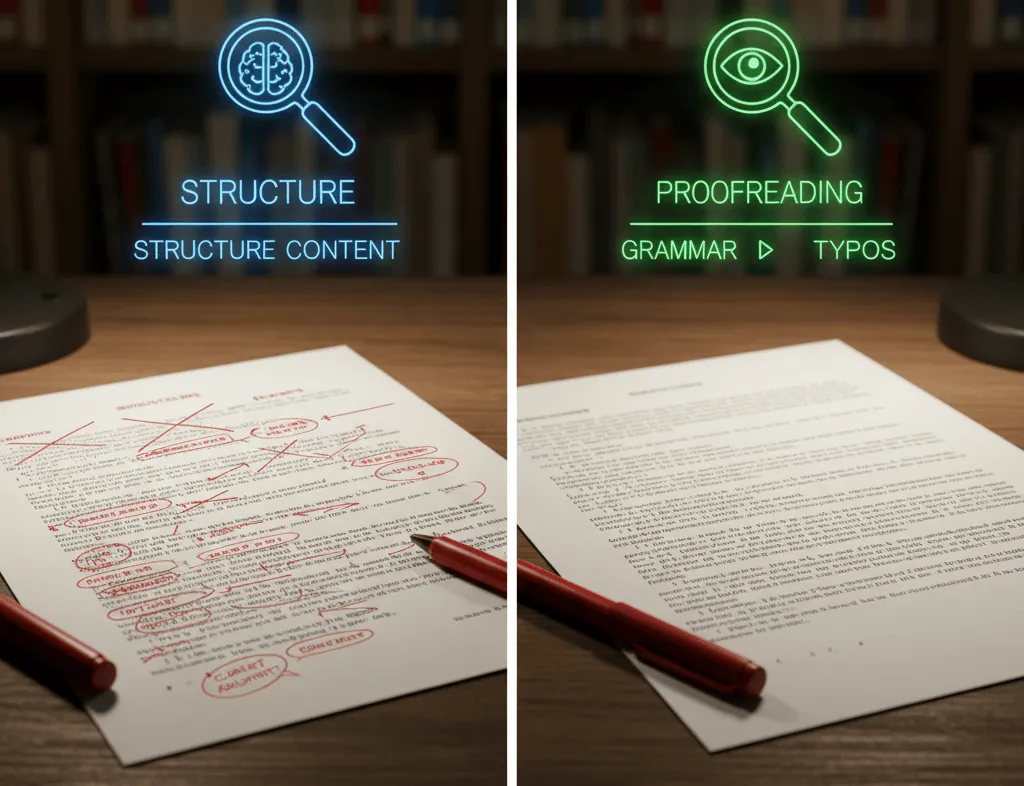
Manuscript Editing focuses on improving the quality of the writing itself. It involves refining sentence structure, improving flow, enhancing logical coherence, correcting language tone, and ensuring academic consistency.
Proofreading, on the other hand, is the final polish. It targets surface-level issues, spelling, punctuation, grammar, and formatting, once the content is finalized.
Think of editing as reconstructing your paper for clarity and impact, while proofreading is your last check before hitting “Submit.”
Manuscript Editing: The Deep Transformation
Manuscript editing is an intensive process that looks beyond typos and grammar mistakes. It examines how well your research communicates its message. A skilled editor ensures your manuscript is precise, logical, and engaging, without changing your intended meaning.
Key Aspects of Manuscript Editing
Clarity and Flow: Editors revise awkward phrasing, redundancies, and long-winded sentences. The goal is to make your arguments crisp and easy to follow.
Structure and Coherence: Editors ensure your paper has a logical structure, a strong introduction, smooth transitions, and a compelling conclusion.
Tone and Style: Your language must match academic expectations. Editors refine tone, ensuring it’s formal, objective, and suitable for your target journal.
Terminology Consistency: Technical words, abbreviations, and symbols must be consistent throughout the paper.
Journal Alignment: Editors align your manuscript with the target journal’s scope, formatting guidelines, and preferred referencing style.
A thorough manuscript editing session can make the difference between a reviewer seeing your work as “unclear” versus “well-articulated and publication-ready.”
Proofreading: The Essential Final Step
Once editing is complete and your content is locked, proofreading takes over. This is your last defense against minor but fatal errors that can hurt credibility. Even a small typo or misplaced comma can make reviewers question your attention to detail.
Key Aspects of Proofreading
- Grammar, punctuation, and spelling checks.
- Formatting consistency (fonts, margins, headings).
- Correct citation and reference style.
- Verification of figure and table labels.
- Checking for typographical errors or broken cross-references.
Proofreading ensures that your paper looks professional and polished, reflecting the quality of the research it represents.
Why Researchers Often Mix the Two?
Many first-time authors assume proofreading alone is enough before submission. Unfortunately, that’s a common reason for rejections. Journals often flag manuscripts for “language issues” or “lack of clarity,” even if no grammar errors exist. That’s because proofreading doesn’t fix weak structure, vague explanations, or inconsistent argumentation; editing does. Relying only on editing without a final proofread can leave overlooked punctuation or citation errors that annoy reviewers. In short, editing refines the content, while proofreading perfects the presentation.
Which One Do You Need for Journal Submission?
If you’re submitting to a peer-reviewed journal, the answer depends on your paper’s current stage:
Draft stage: Choose Manuscript Editing. This service will help you refine your argument, improve clarity, and strengthen overall quality.
Final stage: Opt for Proofreading just before submission to ensure technical perfection.
Resubmission stage: Combine both. If you’ve received reviewer feedback, editing can help you rewrite and clarify your revisions, while proofreading ensures no new errors were introduced.
Fast Publications offers both services, individually or combined, to match your submission phase and journal requirements.
Professional Manuscript Editing
Professional editing can do more than just polish language; it can transform how reviewers perceive your research. Studies show that well-edited manuscripts are 40% more likely to receive favorable reviewer comments compared to unedited ones.
Here’s what expert manuscript editing can do:
Higher acceptance potential: Reviewers focus on research quality, not writing flaws.
Improved readability: Clear writing communicates complex ideas effectively.
Credibility boost: Well-edited papers reflect academic rigor and professionalism.
Time savings: Editors handle formatting and style so you can focus on content.
At Fast Publications, our editors are field specialists who understand both the science and the standards of publication. Whether your paper targets Elsevier, Springer, or Wiley, we tailor our editing style to match each publisher’s expectations.
Combining Editing and Proofreading
While manuscript editing and proofreading can be performed separately, the best results often come when both are used together. Editing ensures strong content structure and clarity, while proofreading guarantees surface-level perfection.
A typical workflow at Fast Publications looks like this:
- Initial Manuscript Editing: Deep content and structure refinement.
- Technical Review: Consistency checks for data, citations, and references.
- Final Proofreading: Error-free finishing and format optimization.
This 3-stage process ensures that your manuscript not only reads perfectly but also looks ready for high-impact publication.
The Fast Publications Advantage
At Fast Publications, we go beyond basic editing. Our Manuscript Editing service includes:
- Detailed line-by-line language refinement.
- Journal-specific formatting adjustments.
- Logical flow restructuring.
- Reviewer-friendly clarity improvements.
- Optional pre-submission evaluation reports.
Meanwhile, our Proofreading team performs multiple checks using both human expertise and AI-powered tools to ensure zero technical errors. Together, these services create a publication-ready manuscript that impresses editors and reviewers alike.
Avoiding Common Mistakes Authors Make
Many authors make these avoidable errors when preparing their papers:
- Submitting without professional editing.
- Editing after formatting causes layout inconsistencies.
- Ignoring journal-specific language preferences.
- Relying solely on grammar checkers like Grammarly or Word.
Automated tools may correct spelling but fail to understand academic nuance, tone, or structural logic, all essential aspects of manuscript editing.
Conclusion
Editing and proofreading are not competing tasks; they’re complementary steps in your journey to publication success. Editing strengthens your paper’s academic voice and structure, while proofreading guarantees that it’s flawless and professional. Before you submit to any high-impact journal, invest time in both processes. The difference between rejection and acceptance often lies in those final details.
At Fast Publications, we combine linguistic excellence with academic professionalism to help you achieve recognition. Our Manuscript Editing service ensures your research is clear, consistent, and journal-ready, while our proofreaders deliver the final polish that turns good writing into outstanding publication material.