
Publication of research is instrumental, particularly in academia, in deciding on career growth, collaboration, or simply the advancement of a concept. Among several modes of publication, Scopus-indexed journals are considered by scientists to be the ultimate thing in publishing. Scopus is one of the largest databases and provides abstracts of almost all peer-reviewed publications produced by the most prestigious global scientific and technical publishers while, at the same time being subject-specific, multidiscipline-specific, or multidisciplinary.
The publications in Scopus journals have a lot of advantages, from gaining better credibility to gaining more visibility. It discusses ten key benefits of publishing in a Scopus-indexed journal and why it is considered a milestone for researchers all over the world.
1. Visibility and Global Impact
Accordingly, this implies a Scopus journal is esteemed to be one of world-renowned quality, while the paper within Scopus is read through varied spectra by an audience. Publishing in such a prominent database as Scopus signifies availability for the academic public globally, both institutional and professional. This ensures your article will be more highly cited and its impact used and built upon by people researching in your field of studies in a Scopus-indexed journal also means that your work is part of a platform accessed on numerous occasions by libraries, research institutions, and funding bodies. Global exposure will give your research a visibility that research published in less-recognized journals may not achieve.
2. High Academic Credibility
The Scopus-indexed journals maintain stringent peer review standards and thus publish only quality research contributions. When you finally publish your paper in such journals, that is a pretty strong signal to the research community that your work underwent rigorous scrutiny and met the highest scientific and ethical benchmarks.
That does not stop at your level. Similarly, institutions and organizations place so much regard on Scopus-indexed publications as indications of academic excellence. With that in mind, you automatically boost the credibility of your institution by ensuring the publication standards for your research.

3. Better Citation Potential
Each researcher wants to be cited and contribute to active discussions in his or her field. Well, Scopus is among those elite citation databases that have a great platform to increase your citation count. Publishing in a Scopus journal means your research becomes part of a network frequently accessed and cited by other researchers.
Higher citations improve your h-index, a metric currently used by most to measure a researcher’s impact and productivity. A strong citation record will increase your potential for collaboration, funding, and recognition.
4. Interdisciplinary Collaboration Opportunities
The subject disciplines covered by Scopus are broad, from engineering to medicine, and from the arts to humanities. Having your work published in a Scopus-indexed journal will most likely have experts in a related field spot your work. Such exposure by a multidisciplinary entity assembles a collaboration of diverse domains of researchers looking into your findings for new methods and applications.
Interdisciplinary collaborations have increasingly gained value across the board in academia and industry because they are usually accompanied by phenomenal discoveries or solutions to very complex problems.
5. Improved Funding Prospects
Generally, obtaining research funding is an arduous process. More often than not, grant committees and agencies also tend to consider your public records application cases. The credibility that comes with Scopus publications gives confidence to funding bodies that their investments are towards impactful, high-quality research.
Moreover, the credibility that comes with Scopus publications gives confidence to funding bodies that their investments are being channeled toward impactful and high-quality research; this could open doors for grants, fellowships, and sponsorships that otherwise may not be accessible.
6. Career Growth and Professional Development
Publish the factor in Scopus-indexed journals, which is indeed crucial for career advancement along both academic and research value chains. Most academic institutions have requirements for promotions, tenure, and faculty appointments based on whether the publications are Scopus-indexed.
Also, a strong publication record in Scopus journals is the development of a good professional profile whereby one will stand a chance of winning good opportunities, collaboration, and leadership within their area of expertise. In cases of beginning researchers, these publications are a runway toward building an academic reputation.
7. Benefits and Recognition to Institutions
Publishing in Scopus journals boosts not only the individual researcher but also the institution he or she is affiliated with. This is why most universities and research organizations have adopted these metrics, such as citations on Scopus and publications indexed, to increase their standing in the global league tables.
By contributing to Scopus-indexed literature, you are raising the academic standing of your institution. This leads to increased funding, better facilities, and enhanced opportunities for your department and colleagues.

8. Integration into Academic Metrics
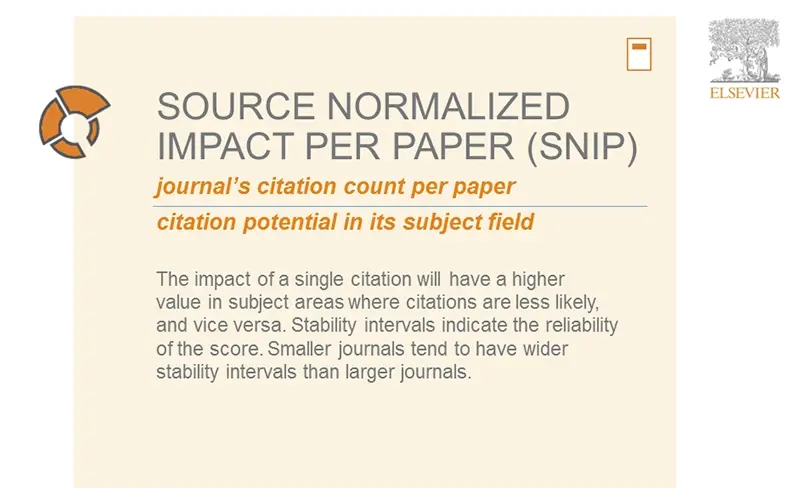
Scopus is a cornerstone for generating academic metrics, including the h-index, impact factor, and SNIP (Source Normalized Impact per Paper), among others. These metrics nowadays are in wide usage for evaluating quality and the influence of research.
Publishing in a Scopus journal ensures that your work feeds into these metrics and, therefore, provides measurable proof of the impact of your research. Many such statistics are used in performance evaluations, applications for funding, and institutional assessments and are, therefore, very important to your academic journey.
9. Creating Real-World Impact
Scopus journals are renowned for publishing research that shows both practical and social relevance. Publishing your research in a Scopus-indexed journal increases its impact beyond academia, reaching policymakers, industrial professionals, and practitioners.
For instance, research published in Scopus journals very often influences the development of new policies, technological innovation, and the solving of critical challenges in health, environment, and social sciences. This real-world impact can raise the value of your work and open doors for collaborations beyond academia.
10. Personal and Intellectual Satisfaction
Last but not least, publishing in a Scopus-indexed journal gives great personal satisfaction and fulfillment. It may be tiring to go through the preparation, submission, and revision of your research for such a prestigious platform, but it is well worth the effort.
Having your work published alongside leading researchers validates your hard work and intellectual contribution. Such could be the encouragement that spurs one toward further research, thereby striving more in the academic journey.
How to Get the Most from Scopus Journals?
To achieve most of the benefits that come from publishing in a Scopus journal, approach the system strategically:
- Choose the Correct Journal: The journal should fall within your scope and objective of research.
- Focus on Quality: Spend time designing robust methodologies, thorough literature reviews, and clear, concise writing.
- Seek Peer Feedback: Work with your peers or mentors on giving useful critiques before submission.
- Persist: The peer-review process is grueling, and rejections are not uncommon. Take feedback on board and resubmit.
Publish with Confidence!
Publishing your research in a Scopus journal is a great asset that includes not only academic advantages but also international recognition and increases one’s credibility, career development, and real-life impact. Though the procedure requires commitment, persistence, and detailed preparation, its rewards are transformational not only in one’s career but also in the development of knowledge in one’s field. BPublicationin a Scopus-indexed journal is just about an essential step in a meaningful contribution to one’s discipline and also in establishing one’s credibility as a researcher.