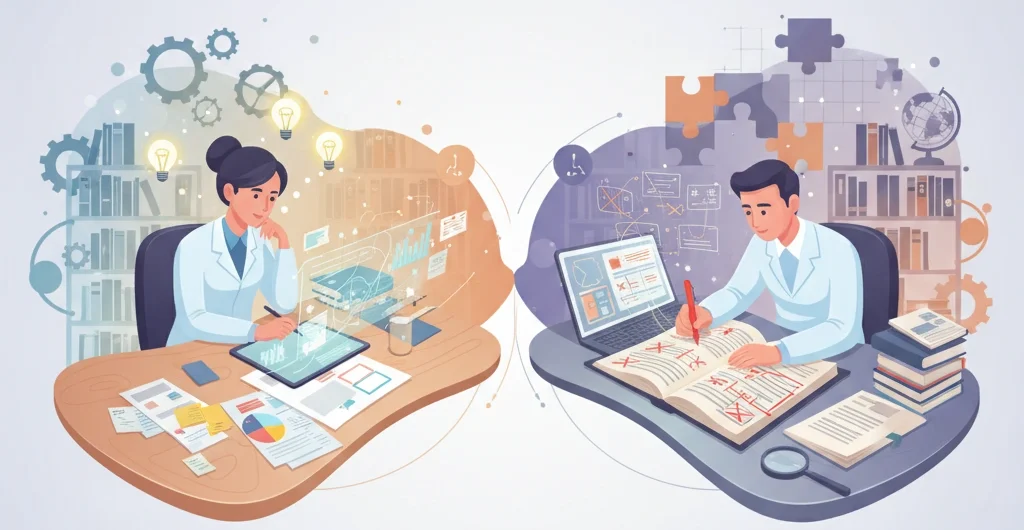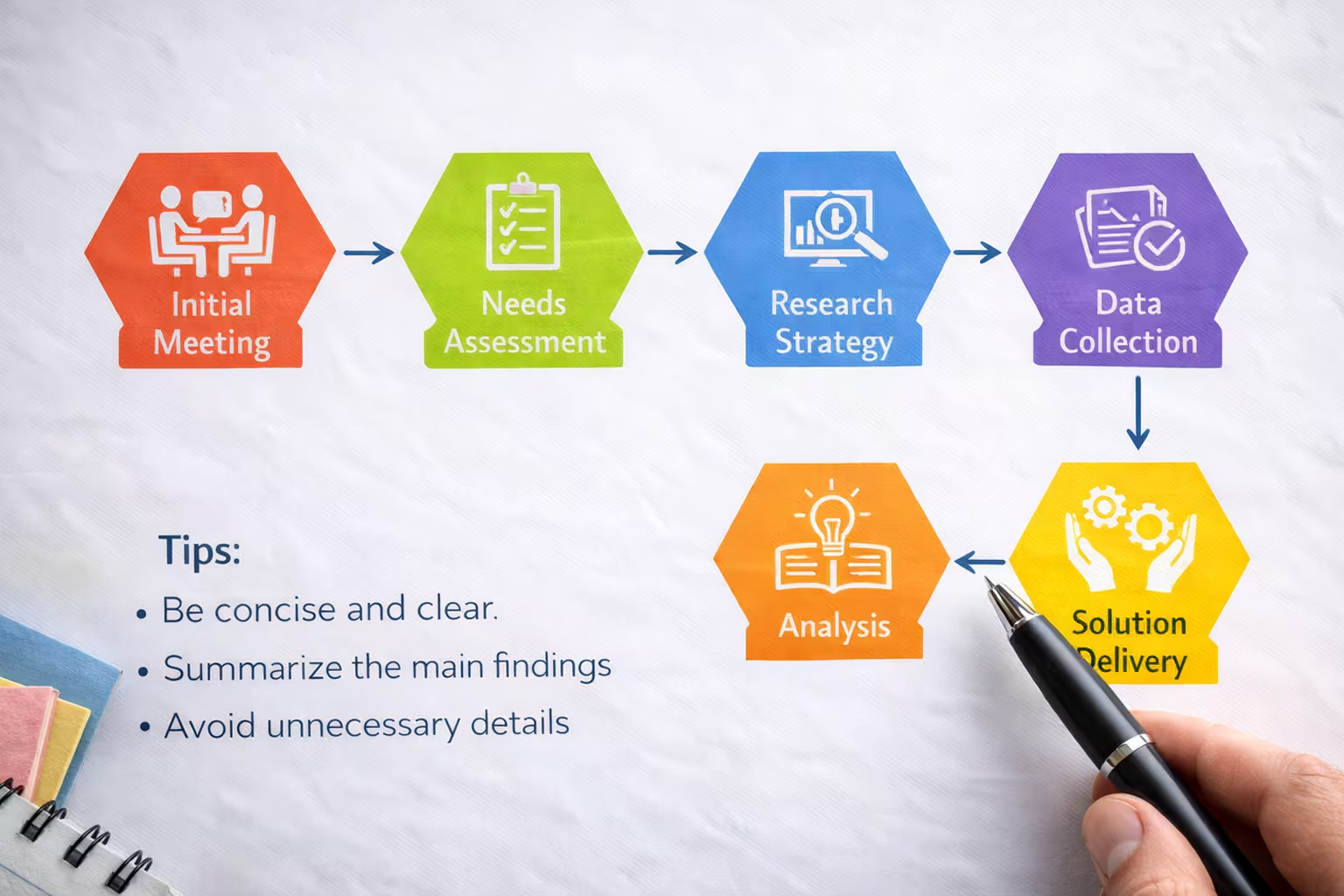
A focus group guide is not merely a questionnaire. It makes sessions regular but allows natural conversation. When it is designed properly, it provides similar information on all the sessions and also answers your research questions.
This is a copy-ready guide that you can customise. It contains opening scripts, core questions with probes and closing procedures. It also contains community perceptions, service access, and health behaviour variations of a community through Public Health variations. A publication-ready lens, such as that of Fast Publications, will assist others in being able to judge and copy your work.
When Focus Groups Work Best?
Best Use‑Cases
Focus groups are best for discovering perceptions, language, social norms, barriers, facilitators, and experiences of services. They demonstrate ways in which people talk to each other and areas of agreement or disagreement. Researchers apply them in the field of public health in order to understand attitudes to services, trust in information sources, and response to health messages.
Limitations to Plan Around
What the participants share can be biased by social desirability. The powerful voices can overpower the less powerful voices. Confidentiality restrictions imply that you should not have full privacy of sensitive disclosures. Topics that can be discussed openly are best researched using focus groups and not highly personal situations that require interviews.
Prerequisite Before You Write Questions: Prepare the Design?
Establish the Purpose and the Unit of Understanding
Distil your general purpose into two or three research questions. All the questions in your guide are to be mapped back to these. Conversation is prevented by knowing what you want to learn.
Recruitment and Composition
Strive to have five to eight participants in each group. Divide into subgroups based on such attributes as age, position, and experience so that everyone can speak out. Write down your inclusion and exclusion criteria.
Logistics and Ethics
Make consent forms, recording equipment and a note-taking plan. Write your confidentiality statement and information on how to use the data. Make decisions about rewards and be effective communicators. Record such decisions in your methods section, as per the standards of transparency at Fast Publications.
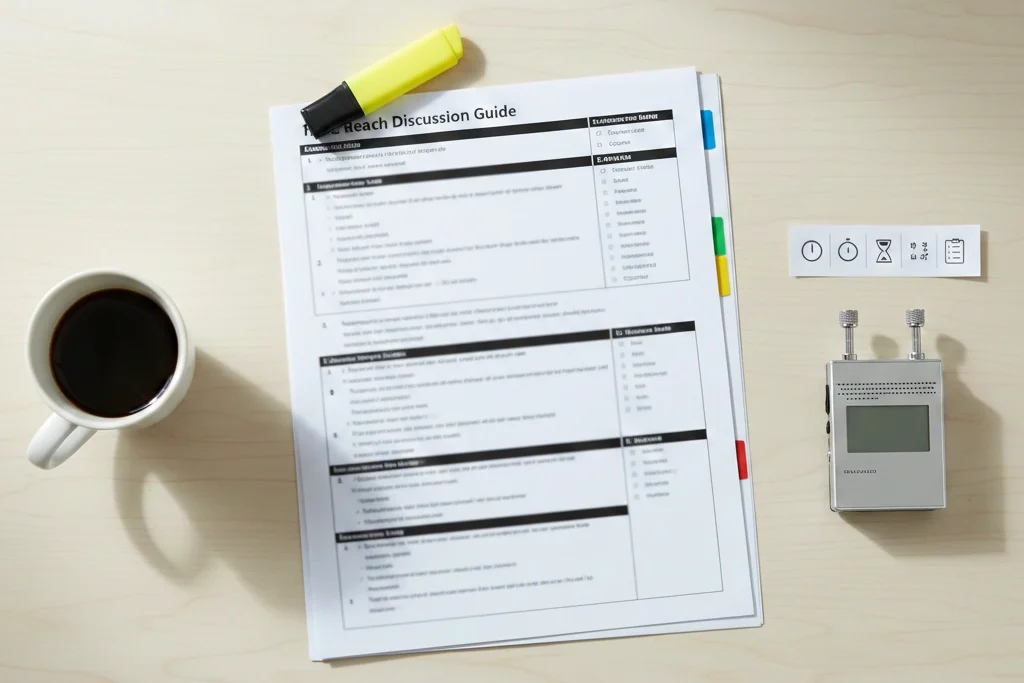
Copy-Ready Focus Group Discussion Guide Template
Section A: Moderator Intro Script
Welcome all, and introduce yourself and note-taker, state the purpose and length of the discussion. Accentuate it by saying that you are recording and asking for verbal consent. Test ground rules: one person at a time, no right or wrong, respect every opinion and maintain group confidentiality. Provide a short ice-breaker- each one should talk about their first name and a single word concerning their encounter with the topic.
Section B: Warm‑Up Questions
Start with easy questions to make everyone talk. They must be simple to respond to and not intensive to think about. Such as: When you consider [topic], what crosses your mind first? Or describe your usual experience with [service or situation].
Section C: The Core Questions with Probes
Prepare the main part of the discussion, basing it on five types of questions, each having probes that elaborate on answers.
- Experience: Walk us through a classic time when you [built upon the subject]. Probes: What happened first? How did you feel? What did you do next?
- Barriers: What makes it hard to [action you want to do or experience]? Probes: Give an example. How common is it? What makes it worse?
- Facilitators: Which makes you accomplish the desirable? Questions: Who or what is in your favour? Which of them would have to change?
- Perceptions: ‘What do others around you think of [topic]? Probes: What do others say? Are various groups different about it? What could be the origin of those opinions?
- Suggestions: If it were possible to revise one aspect of [topic], what would it? Probes: Why? What needs to happen? What would success look like?
In the case of population-health research, these questions can take the form of vaccine coverage and clinic access or the effectiveness of health messages.
Section D: Prioritisation Activity
In case being able to define priorities is among the goals of your study, add a ranking or dot-voting activity. Provide the participants with stickers or markers and request them to rate the most critical ideas. This will supply quantitative information to your qualitative knowledge.
Section E: Closing Script
Recap what you heard and verify accuracy. Ask participants to make any additions. Provide directions on what should then come next, acknowledge them, and present rewards. Definite section headings facilitate subsequent write-up, which is a transparency requirement of Fast Publications style.
Public Health Variations That You Can Plug into the Same Template
Variation 1: Community perceptions and Trust
Insert questions concerning trust in health authorities, exposure to misinformation, favoured sources of information and cultural framing of health problems. These can be used in vaccine hesitancy or health communication research.
Variations 2: Service Access and Experience
Add cost, distance, clinic hours, appointment flow, staff interactions and privacy issues probes. These studies on healthcare usage or patient experience.
Variation 3: Messaging and Change in Behaviour
Explore causes of behaviour change, barriers, which message tone is most effective and what channels of delivery can reach which groups. These are suitable for the area of intervention development and health promotion studies.
Keep your Data Usable: How to Run the Session?
Be objective, without expressing concern. Do not use leading questions or an indication of approval and disapproval. Promote equal participation by calling on the weaker voices. When one talks a lot, compliment them and encourage others to talk. Use time efficiently so that you do not rush on every part.
Conclusion
Clarify your mission and theory of recruitment. Write the introduction, main questions, including questions and probes, and the closing script. Incorporate any activities or changes that apply to your topic. Record all that to be transparent.
A guide that is ready to go provides superior data and simplifies analysis. Beginning with structure guarantees that your end is credible knowledge.