In order to avoid rejection in any high-impact journal it is important for researchers to first understand why a highly credible journal rejects a manuscript so that they can avoid doing the same mistakes that were done by those researchers whose work never got to be known and published. We will be discussing those hidden reasons that are not widely spoken about and thought to be as they aren’t even a big deal to begin with, but bear in mind becoming aware of them and avoiding these mistakes can result in avoidance of rejection as well.
Strategies To Avoid Rejection
Following are some of the ways in which you can avoid rejection from any prestigious and credible journal. Go through each one of them to get a better understanding and avoid the distress of rejection.
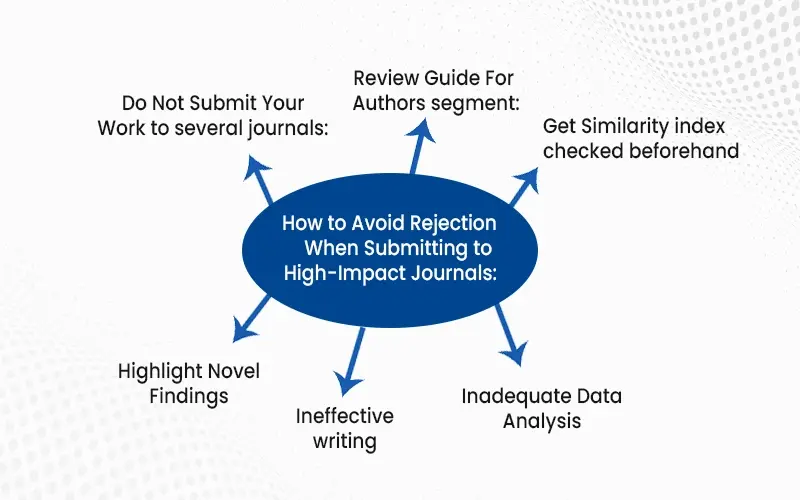
1. Do Not Submit Your Work to several journals
Majority of the new researchers make the mistake of assuming that it is okay for them to simultaneously submit their manuscript into all the journals. In order to save time or trying to make sure at least one journal get to see their work and get them published. Sending your work to multiple journals and checking them by trial and error is considered Spamming. Your work can get rejected by every published for the same reason. Remember in peer review and publication process your work is assessed by experts from different backgrounds. It’s impossible that they won’t be able to detect spamming and your desperation to publish your work. Remember remaining confident related to the work you have done and being hopeful is extremely effective in your journey. It can provide clarity in which journal to select and work with. So just do the change required and apply only in one journal that matches with your field of study.
2. Review Guide For Authors segment
In every high impact journal there is a segment called “Guide To Authors”. It is present in order to help you have basic understanding related to all of journal requirements. Additionally the kind of work they publish, it includes manuscript formatting requirements. In which they describe what font size, spacing and structure they accept. In addition to this referencing style whether its APA, Vancouver, MLA etc. word limit for overall research paper and also for specific headers like abstract, methodology and most importantly discussion and findings is necessary to go through. Lastly They mention ethical guidelines including plagiarism and other appendices. The complete process about open access, publication fees would be discussed as well. It’s necessary to submit manuscripts according to guidelines in order to avoid getting into the cycle of rejection and resubmission.
3. Get Similarity index checked beforehand
High impact journals have strict guidelines related to similarity index and SR can result in rejection of a manuscript. Many new researchers have misconceptions related to getting their plagiarism checked before journal submission. They fear their work getting stolen in the process. They face difficulty trusting any source who claims to get their similarity index checked. It is necessary to realize that getting similarity index and duplication similarity rate (DSR) is extremely important. In order to avoid disappointment or rejection from high impact journals. Most authors have a fair idea regarding similarity rate but duplication similarity rate is equally relevant. It refers to the content that the author has copied from existing studies. Also from previous authors in the field even the ideas that were copied appear on DSR. It can prove to be dangerous for research publication as high impact journals have systems to detect SR and DSR. So it is advised for the authors to get plagiarism checked.
4. Highlight Novel Findings
High impact journals are always looking for the novel and meaningfully different findings they are not interested in the repeated and the usual so adapting the writing style of majority of researchers won’t help you get published, you have to highlight not the usual but the novel in your abstract, discussion and findings also theoretical framework is equally important. Keep in mind that using statements like “unlike past researches our findings reveal” or “its the first study to find out” without proper justification can get you in more trouble make sure to mention things that are valid and not just to appear as worthy of publication as more claims you make more likely they are able to pinpoint where you are lacking in your big claims, remember experts in high impact journals are highly trained to detect pseudo-scientific arguments and exaggerated claims so be grounded in your research findings and provide practical implications and impact of your research study to get noticed among the crowd.
5. Ineffective writing
It pretty much gets mentioned a lot but still researchers got no complete clarity regarding what it actually consists of so let’s discuss each of the elements that an ineffective research writing consists of. First of all the overuse of technical terms without explanation and letting the readers guess its implications, using ambiguous statements or filler sentences in order to complete the word count can you in trouble make sure to have a logical flow let me provide an example “Following study highlights X which means Y and it can be applied to Z context” rather than “this study highlights important findings that have implication in understanding of theoretical framework” Can you see the difference between both ways of presenting idea?. In addition to this overexplaining basic concepts can come off condescending and not novel enough, repeating same ideas in different words, inconsistent formatting and no logical flow from one section to another is yet another element of ineffective communication which can increase your chances of getting your research rejected by high impact journals.
6. Inadequate Data analysis
In high impact journals the focus of experts is not only on the theory side of the research paper but the data analysis holds significance to a greater extent. The majority of new researchers spend all their energy and time completing the word count and they forget that choosing the right test to test their hypothesis can make or break the credibility of their findings. We have already discussed for high impact journals novelty and new meaningful insights are more important and as repetitive and usual the journal findings will be it will only increase the risk of rejection. Only mentioning p value and not the values that show strength and correlation of variables or not having enough data to back your claims and hypothesis is lethal for research publication. Lastly it is extremely important to understand that getting your null hypothesis rejected is not an achievement or accepting the null hypothesis is not a failure. Either avoid manipulating data just to get specific results or it may back fire. It’s necessary to have the conclusion that matches with your data analysis and interpretation.
Conclusion
In this article i discussed some of the strategies that can help you avoid getting rejected by high impact journal including working on your data analysis, highlighting novel findings and restraining yourself from publishing in multiple journals simultaneously as it can be considered spamming and your manuscript can get outright rejected. Consider going through each strategy and learn as much as you can in order to avoid future disstress.