Do you want to see your research published in a good Scopus-indexed journal? This milestone boosts your academic profile, increases your international presence and helps establish the worth of your scholarly work. However, the path on the way to Scopus publication may be hectic, hard, and exhausting. What you require is a well-illuminated roadmap backed up by expert advice that will help you steer through the demanding landscape of global academic publishing with confidence.
At Fast Publications, we make this journey easier for you. We divide the whole process of publication into easy-to-understand, strategic, and manageable sections. We have a simple mission, which is to ensure that your publishing experience is efficient, ethical, and very successful. This guide includes the key milestones and demonstrates how our professional consultancy can help you speed up your development.
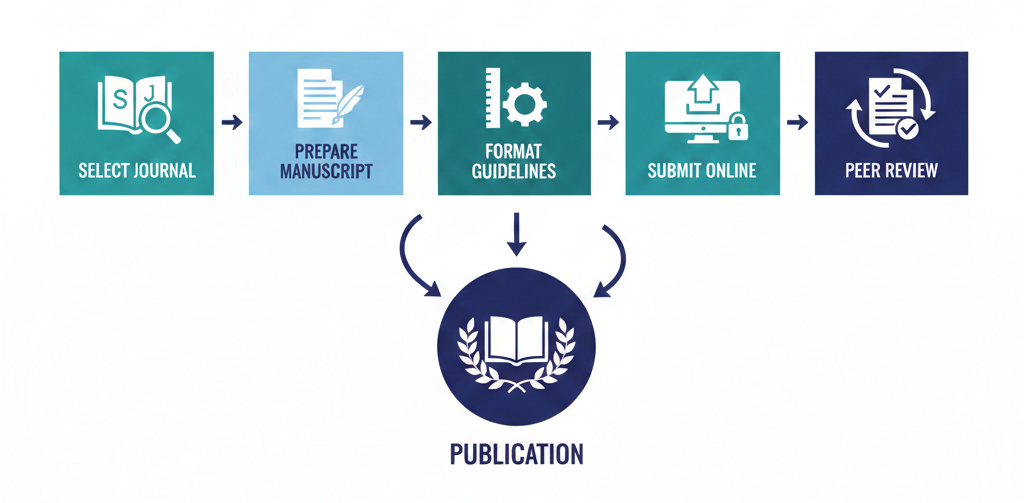
Phase 1: Readiness to High-Impact Submission
The team achieves success far before they submit it. Good preparation will greatly increase the chances of passing the initial editorial vetting test.
Innovate New and Important Research
Any successful manuscript is based on strong research. Your work has to focus on a significant gap in literature, or provide a new insight into a familiar issue. Journals indexed into Scopus give preference to those works that show originality, scientific quality, and have clear value to the discipline. State your research question, describe relevant hypotheses, and have a solid and justifiable methodology. Your study needs to have a contribution that is both clear and effective.
Arrange Your Paper With the IMRaD Standard
The vast majority of trustworthy journals take the international IMRaD format, i.e., Introduction, Methods, Results, and Discussion. This logical presentation in order of your work will enable the reviewers and readers to have a clear picture of your aims, methods, results, and conclusions.
- Introduction: State the issue, define the gap in the research, include your purpose, and provide the context based on the recent high-quality literature.
- Methods: Explain the design of your study, describe the materials you used, and detail the data collection and analysis methods so that others can reproduce your study.
- Results: Provide your results in a clear manner through well-designed tables, figures and charts. Emphasis on quality and openness.
- Discussion: Interpretation of your findings, comparison with the literature, contributions to the literature, and limitations.
- Conclusion: Discuss briefly, in a clear and powerful way, your main findings, and their implications.
Academic English Mastery and Journal Formatting
It must be clear, concise and formal academic writing. Avoid using machine translations and use subject-specific terminologies properly. Follow the international publishing ethics rigorously, such as preventing plagiarism and proper citation.
Formatting is also very important. Journals reject submissions simply because they did not comply. Adhere to the “Guide to Authors to the letter, font, spacing, headings, reference format (APA, Vancouver, IEEE, etc.), word size, and figure specifications. Check your citations twice and have a full and properly formatted reference list.
Phase 2: Selecting and Submitting Strategic Journals
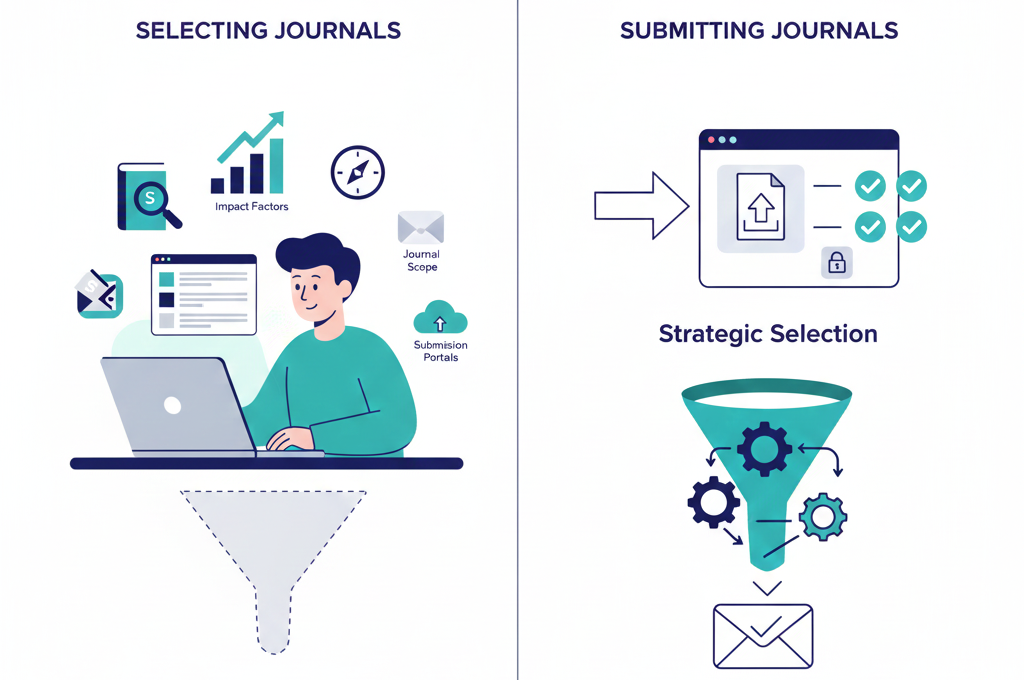
One of the least well-known, not to mention the most important steps in the process of publication is choosing the right journal.
Choose the Most Appropriate journal in Scopus
The journal you are using should suit your topic of research, methodology and contribution perfectly. Use databases like the Scopus JournalFinder to come up with possible matches.
Pay close attention to:
- CiteScore, SNIP, and SJR: The indicators are used to demonstrate the quality and impact of the journal. Q1 or Q2 journals with the most academic effect.
- Purpose and Scope: Check the objective of the journal and ensure that your subject is consistent with the articles published recently.
- Open Access vs. Subscription Model: Many Open Access journals require an Article Processing Charge (APC): Make sure you know how much it costs and what the funding needs are.
- Cover Letter: Prepare a well written and brief cover letter stating the novelty, relevance, and appropriateness of your study to the journal.
- Documents: Manuscript, figures, supplementary files, ethical approvals, and other forms required must be uploaded.
- Check compliance: Check the technical requirements of each file in accordance with the journal.
This is the point where attention to detail will not cause a rejection at the desk immediately.
Phase 3: The Finalization and Review by the peers
Peer review procedure makes sure that your work corresponds to the international scientific standards. Be patient and professional at this stage. Act Acceptably in Regard to Peer Review
Field experts forward your manuscript to critically review the content after a technical evaluation. This process can last a number of weeks or months.
If revisions are required:
- Respond to all the comments of the reviewers in a dignified manner.
- Give a point by point answer explaining every change.
- Keep language off-hand. Be professional.
- Reviewers anticipate reasoned and evidence-based reviews. Powerful replies will go a long way in making you get accepted.
- Final Acceptance, Production and Indexing.
- After making your changes that please the reviewers and the editor, you get the much-awaited Acceptance Letter. The publisher can ask you to sign a copyright agreement and pay any relevant APCs.
Next steps include:
- Proving page proofs against minor mistakes.
- Accepting the final one to be published.
- Receiving your DOI.
- Indexing Scopus, where you want to end.
The world scientific community has announced your study as an official part.
Publications in Scopus: Achieve Success Fast
The process of publication organisation is usually lengthy and technically complex. This is the place where Fast Publications changes your experience.
We provide full, end-to-end support of Scopus publication including:
- Editing and Formatting of Expert Manuscripts.
- We ensure that all journal requirements are met and strengthen the academic clarity, flow, and impact.
- Targeting of Strategic Journals.
We review your paper and find the highest impact journals that can best fit the acceptance possibility.
Ethical Compliance/Plagiarism
- We do it with complex tools to ensure originality and secure your academic reputation.
- Full Submission and Communication Management.
- We are in charge of cover letters, submission ports, reviewer responses and communication with editors.