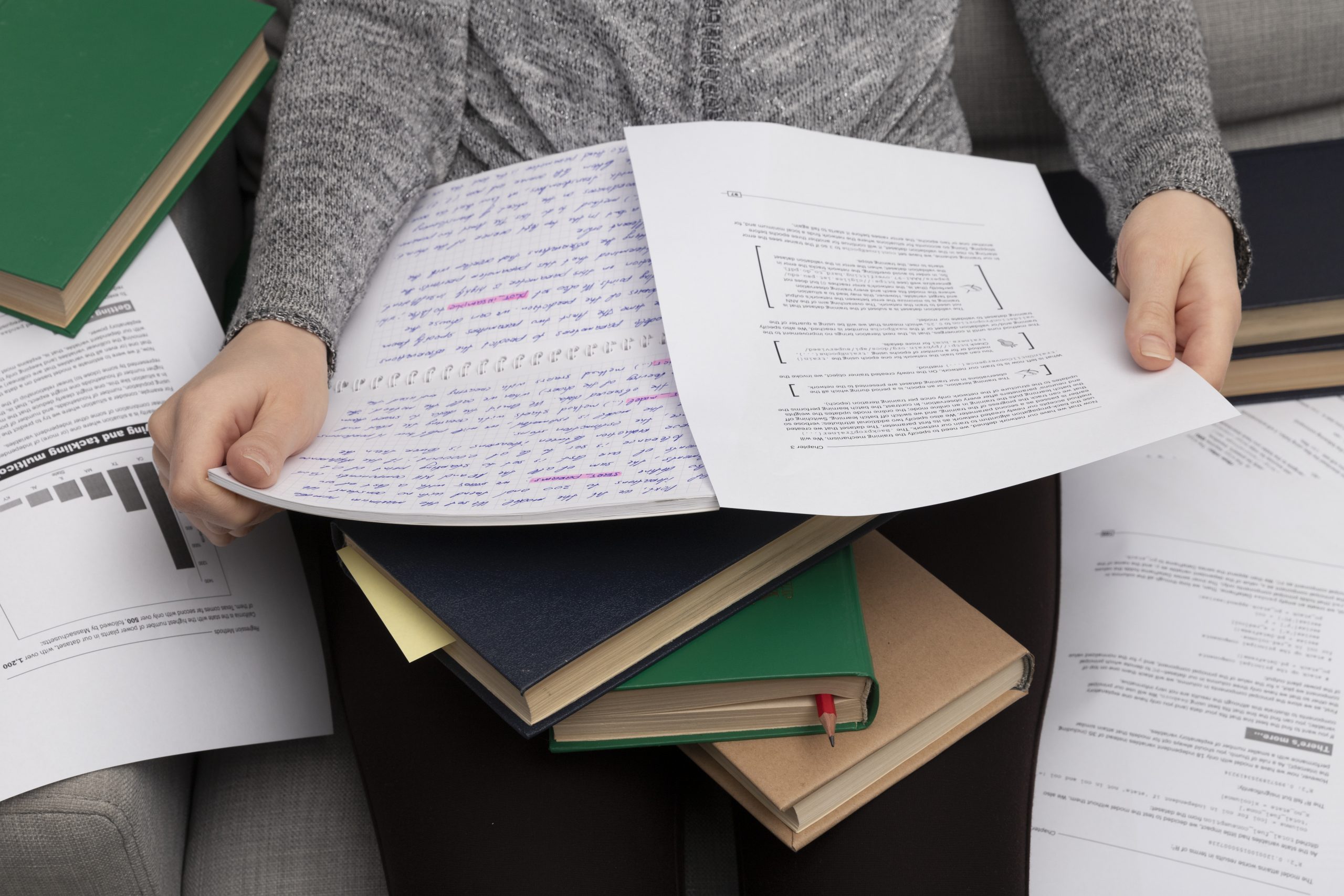
The time comes: you are done with your research manuscript. It is the result of months or even years of hard work, experiments, and careful research of the data, which led to this final paper. You press the button to send the journal with a feeling of relief. However, consider the expression of the editor and your consequent heartbreak when they notice an obvious typing error in the abstract, or an incomprehensible run-on sentence in the results section. Here is the bare, hurting fact it is these typos can cost you publication.
Proofreading is not an option; it is the last step that cannot be compromised in the final process of writing research. It is the final barrier between your innovative work and a rejection letter from your desk.
The Big Price of the Tiniest Misjudgments
Academic journals have high requirements when it comes to submission. Reviewers and editors are given hundreds of submissions. They are seeking any excuse to cut back on their workload, and a manuscript full of mistakes is an easy way out. When your paper has bad grammar or you use a mixed set of terms, then a reviewer will have to use a lot of time trying to figure out what you are talking about. Their impression is negative within a very short time. They conclude that the author was not keen enough about the submission. This lack of confidence, which carries an immediate effect, is a direct result of an increased possibility of rejection, no matter how good the underlying research is.
Consider the amount of time spent. You had spent years on a PhD, or months to win a competitive grant. You spent weeks writing and organizing your arguments. Is it reasonable to risk that whole investment because of a forgotten comma or a word switch? Even such negligible errors have significant consequences. Even a negative that is put in the wrong place, like did not significantly decrease, rather than did significantly decrease, will turn the entire findings upside down. Such a mistake hurt your reputation and could be a source of misinformation to the scientific community.
In a different way, Beyond the Typo: Clarity and Credibility
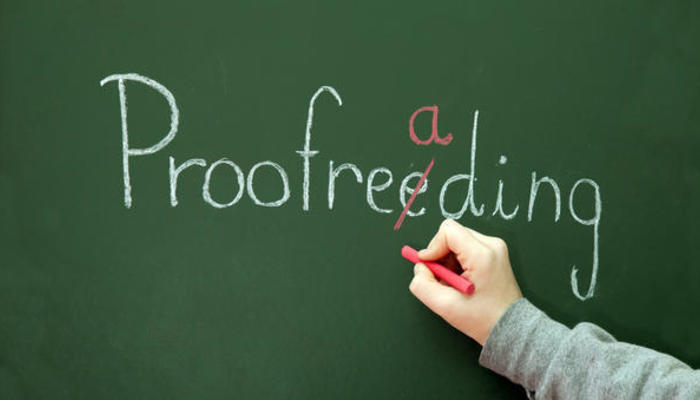
Proofreading goes well beyond the detection of basic spelling mistakes. It is a very important consistency and coherence test.
- Consistency: Have you properly identified your figure and table labels? Were you always consistent with the spelling of a word as American or British? Are your acronyms used throughout the text as they are defined? Lack of uniformity in formatting is an indicator of laxity and is distracting to the reader.
- Coherence: Proofreading enables you to evaluate how your arguments can flow the last time. You should make sure that the transitions between paragraphs are even. You need to be able to assure that your conclusion is a logical extension of your discussion. At other times the same sentence that seemed so clear at one time of night, appears bewildered and uncertain in the glaring morning day.
This last review is crucial particularly among authors who do not write in English but in other languages. Although the research itself can be on a world level, language nuances, idiomatic phrases or complicated constructions of grammar can easily pass unnoticed. There has to be a professional eye to apply so that the language is on par with the sophistication of the science. Language is so poor that it seems that a study is not so rigorous even when the data is good.
The Professionality in Professional English Language Editing
The self-proofreading is necessary, but restricted. The human brain is likely to read what it believes to be what it has written rather than what is in the page. You are too near your own work yourself to see all the mistakes in it. This is where such a professional research consultancy as Fast Publications will play a vital role.
We have our loyal team who offer finer English Language Editing services. We use professional proofreaders in your field of specialisation. Experts train to notice what you do not notice: the misplaced modifier, the subject-verb incongruity, the omitted citation. They ensure that your manuscript follows the proper style required by the targeted journal, including the referencing style, which typically leads to pre-review.
When you use expert proofreading, it does not indicate weakness, but rather signifies professionalism and quality assurance. You are giving out specialized work to experts. You are preoccupied with your study and we do the perfect presentation. This association will ensure that your message is concise, accurate, and effective. You can even be assured that your work would be evaluated solely on its scientific merit.
Make the Non-Negotiable Choice
Do not put a slipshod mistake in the way of your success. The last and most significant part of the research lifecycle is research publication. It makes your work a source of information to others. Please be sure to guard this change ruthlessly.
Fast Publications does the final check of your paper. We overlook those typos which might cost you publication. We provide smooth sailing, high-impact manuscripts to help you reach the next breakthrough faster, allowing you to focus on your next breakthrough. Choose excellence. Choose Fast Publications.