The pressure of research and publication in the fast-paced world of both is enormous, and in the case of research consultancy such as Fast Publication, integrity and academic rigor in their work is their most vital asset.
However, even with the good intentions, the problem of plagiarism is still being experienced, mostly, it appears unexpectedly on Similarity Reports. This intellectual theft is not always an inadvertent action; in fact, it is more of a slip, misperception, or an oversight of operations.
The main problem with this is that access to information in large amounts can cause a fog of information where the original thinking and the information that is borrowed can become mixed up; the researchers may not remember that they were critically evaluating the information they read and passing interesting passages when they are in the process of reading a large amount of information that they have reviewed; later when the researchers write down the information they read they fail to realize that the information they have read is contained in their own writing as they think that they are critically evaluating the information they have read when they are really thinking of some particular passage they read and like.
The other most common trap is the ignorance about effective paraphrasing and summarizing; most writers get confused that all they need is a few word changes in a sentence to be considered good paraphrasing, a plagiarizing habit called patchwriting, which leaves the original structure of the sentence and main phrases intact, thus resulting in an unacceptable textual overlap.
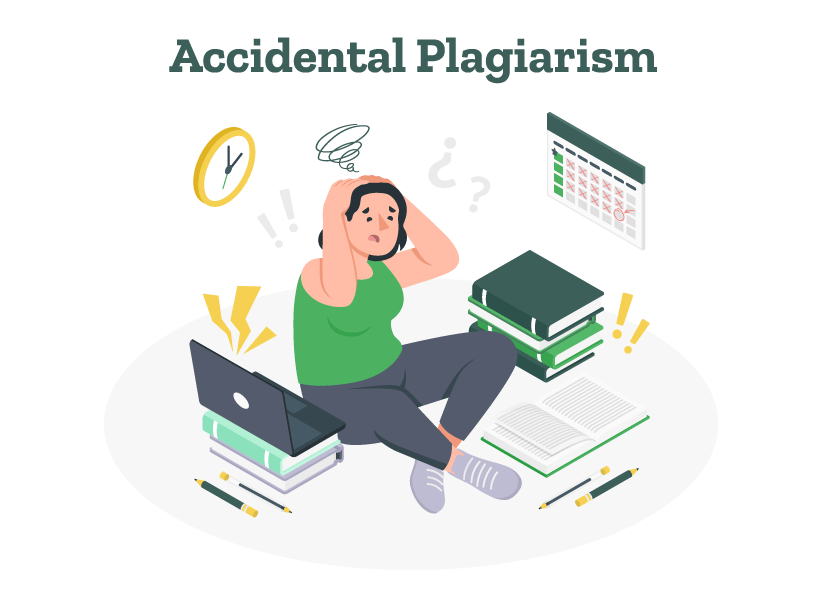
Moreover, the natural stresses of deadline and fast publishing environment may result in the hastiness, as the writers will simply copy and paste some text in order to rephrase and reference it later, which is an essential step that is accidentally overlooked in the hurry of writing the paper.
Mistakes in the highly dynamic and intricate world of academic reference styles (such as APA or Vancouver) also play a role as even the desire to credit can be ruined by improper formatting, lack of page numbers used to directly quote something, or even just by not making any mention of the author who created the original source.
Self plagiarism where authors use their already published works without proper citation or permission without notifying the reader and publishers, thus deceiving both the reader and the publishers, is completely overlooked by some.
Last but not least, even the mere omission of the procedure of enclosing a copied phrase in quotation marks, although the intent was to employ a direct quote with a citation, is an easy (and inexpensive) mistake and yet is detected and considered plagiarism.

The first step to eliminating the accidental cases of plagiarism is identifying the subtleties of it, and in this case, the importance of the Similarity Reports cannot be overestimated.
In the case of a research consultancy, these reports are not a mere detection mechanism, but a mandatory educational and quality assurance mechanism, which offer a roadmap of how to refine content, in terms of comparing a document against extensive databases as well as to indicate potential textual overlaps.
It is crucial to educate researchers that high similarity percentage is a warning signal that should prompt them to investigate and not automatically accuse a researcher of misconduct since instances of acceptable similarities include correctly cited and quoted text, general techno-speak, and reference list itself; the real value is to identify poor paraphrasing, lack of quotation marks, or unwanted re-copying of his or her work and learn and fix it before it gets published.

To resolve this institutional problem, one needs a multi-faceted solution, which starts with thorough, mandatory training on academic integrity, with special emphasis on practice-based training that will lead to the recognition of the difference between summarization and effective paraphrasing, with the ability to follow the rule of reading, putting away and then writing to make the voice original. This should be accompanied by the implementation of effective note-taking methods, including the use of reference management software (like Zotero or Mendeley) throughout the entire process to systematize the sources and by placing strong visual cues in the notes to distinguish between original and source information to avoid the original information mud.
In addition, the citation standards are to be strictly followed, and there should be a peer-review phase, the purpose of which is exclusively to verify the quality of attributions and their accuracy in accordance with the required style guide, and a zero-tolerance attitude towards the failure to review the required Similarity Report of all the documents.
Finally, the most positive step that Fast Publication can take to ensure that every research published is informative, effective, and definitively ethical in its nature and execution, and to establish the organization as a dependable and expert provider of research services, is to promote the culture of valuing and investing in original thinking, thorough assessment, and original research in general and approaching the deadlines with realistic expectations, without forcing to hurry and neglect any proofreading and referencing of the work, in particular.