
Most people widely consider the abstract as a cursory overview of work done. In today’s competitive academic publishing, the abstract is the most important strategic document. Publications use this powerful lever to bypass editorial gatekeeping, engage specialized reviewers, and speed up the publication route. This report details the architectural and rhetoric techniques authors should use to make the abstract a decisive publication resource.
Part I: The Editorial Imperative: The Twofold Function of the Abstract
Reality of Desk Rejection
Desk rejection is a hurdle to publication. Desk rejection often takes as little as three days, which confirms editors usually decide based on the title and abstract only.
The most common filters used in desk rejection are lack of novelty, scope, and poor presentation. The top causes for instant termination are absence of novelty (34.6%), manuscript presentation (32.6%), and scope mismatch (13.4%). If the abstract fails to identify the core contribution immediately, the editor will reject the manuscript, deeming it irrelevant.
Dual Role and Compliance of the Abstract
Authors must prepare the abstract as both a scientifically precise statement (100-300 words) and an elaborate sales pitch. This promotional genre convinces editors and reviewers to read the full article by using logos (logical reasoning through clear methodology) and ethos (credibility through rigorous clarity).
One of the deadliest mistakes is a discrepancy with journal standards. The writers have to carefully tailor the language and orientation of the target journal audience. The writer has to be strict to the requirements provided by a structure, be it an unstructured single paragraph or a structured abstract (with distinct headings such as Background, Methods, Results, Conclusions). The organisation is a good indication of the methodological rigour, which increases the ethos of the manuscript.
Part II: Designing Persuasion: A Methodological Strategy
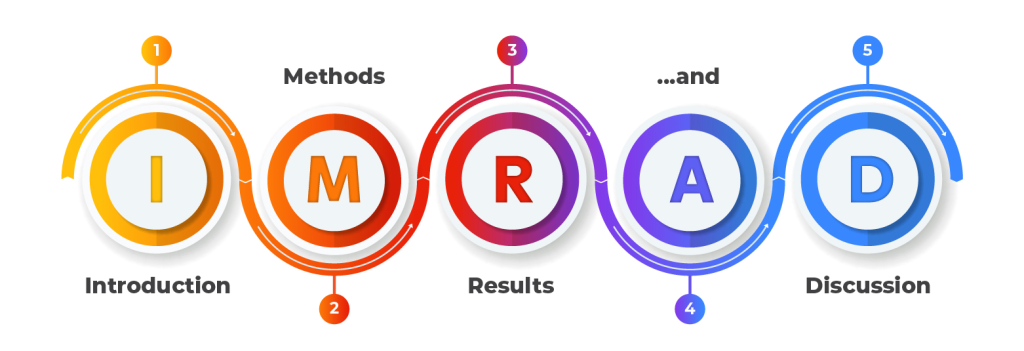
The IMRaD+ Funnel: The Concise Blueprint
The integrity of the structure of the abstract is provided through the traditional IMRaD framework (Introduction, Methods, Results, and Discussion/Conclusion) of the abstract. This framework demands a brief story that fully conveys a mental image under the word constraint. A very useful functional model works as a very short pipeline: Motivation/Context – Purpose/Problem – Methods – Key Results – Conclusion/Implication. Authors should write the abstract only after writing the manuscript (the Write-Last Mandate) in order to guarantee total conformity with the final scope and conclusions.
The Hook and Problem Statement: Defining Exigency
The introductory 1-2 sentences set the overall picture and state precisely the research problem or knowledge gap, which anchors the novelty. Such a position is the most important in discoverability; search engines tend to show only the first two sentences. Preloading the central conflict will generate the most efficient digital indexation and instant interaction.
Methods, Design and Conclusion
The summary of the methodology should give the reviewers the confidence that the study is scientifically rigorous. This section involves close description of the most pertinent design aspects such as population and analysis. Such frameworks as SPICED (Setting, Population, Intervention, Condition, End-point, Design) can ensure the highest level of population of critical methodological data. Reviewers or editors typically reject manuscripts because of methodological weakness or poor descriptions.
The last 1-2 sentences should give a summative answer to the initial problem and give the wider meaning or value of the study. They should also focus on how the study would contribute to knowledge or the way it would enhance current practices. The abstract should be self-sufficient, that is, it should not include figures, tables, and references.
Part III: The Main Idea: Optimizing Results and Rigor

Focus on Findings and Linguistic Precision
The results section should take the greater part of the real estate of the abstract, it should be the longest one. The most important, surprising, or significant findings, which are the findings that can have the most dramatic contribution in the field, are the points that the authors should take into consideration.
Choosing the voice is a wise decision; we recommend the active voice because its straightness and effectiveness frequently reduce sentence length, which is paramount for strict word counts. The active voice also promotes the researcher’s agency (We collected samples). The use of avoidance of passive voice and removing redundant jargon and filler words preserve precious words and are an indicator of professionalism.
Effect Size: How to communicate Practical Significance
Abstract reporting should be based on the contemporary norms of statistical transparency. It is not enough to use P-values, which only prove the statistical significance (not by chance). P-values are not informative about the size and practical significance (into the real world).
Authors have to include Effect Size (e.g., Cohen’s d, odds ratios) because it measures the magnitude of the impact. Telling a strong effect size makes it immediately clear that the effect size is very practical and statistically strong. Accurate estimates of effect sizes are inalienable elements of a high-impact abstract in empirical papers.
Part IV: Discovery and Compliance Optimization

SEO of Science: Keyword Strategy
Keywords play a central role in proper indexing and search engine and scientific databases. The placement policy is strictly stipulated.
- Title Placement: The keywords which are of utmost importance must be included in the first 65 characters of the title.
- Abstract Placement: The keywords required will also have to be presented in the first two sentences of the abstract as this is the text that usually appears in search results.
- Density Control: The keywords must also be naturally repeated 3-6 times in the abstract so as to maintain the indexing density, without any compromise to the so-called key-word stuffing.
The title must be very highly valued; it must be of limited length (preferably less than 20 words), describing, devoid of abbreviations.
The Submission Checklist

The last steps are rigorous verification to make sure that the abstract is of integrity and compliance. Thorough compliance audit should express a strong adherence to a particular set of guidelines of the journal:
- Word Count and Formatting (structured or unstructured)
- Exclusions: Table, figure, reference and footnote absolute exclusion.
- Ethical Reporting: Assurance that required ethical statements approval or registration of clinical trials are provided.
The quality of writing is specifically mentioned as one of the reasons that allow rejection; perfect grammar and high-quality professional formatting are the key quality assurance indicators.
Conclusion and Recommendations
The final mitigating tool and convincing resource to the publication strategy is the abstract. In order to be speedy in publication, the authors should have a strategic thinking attitude that combines the use of rhetoric, digital optimization, and structural compliance.
It includes three recommendations on a high level:
- Put More Emphasis on the Pitch, than the Context: It is important that the first two sentences of the message state the gap in knowledge that is critical and the new addition that the research is making so that the search engine indexes the message as much as possible and the editor is immediately convinced that the message is relevant.
- Measure Effect, Not Only Confidence: In quantitative research, the results part should be oriented on conveying practical meaning. The use of measures of effect size (e.g., d) together with statistical significance (P-values) is required to show methodological rigor and high real-world impact.
- Signal Professionalism With Precision: Active voice To get the optimum conciseness and clarity to save words. Exhibit perfect grammar and excellent compliance rules of journals. The given linguistic polish is a signal of quality assurance and it anticipates aspects of desk rejection associated with bad writing and presentation.