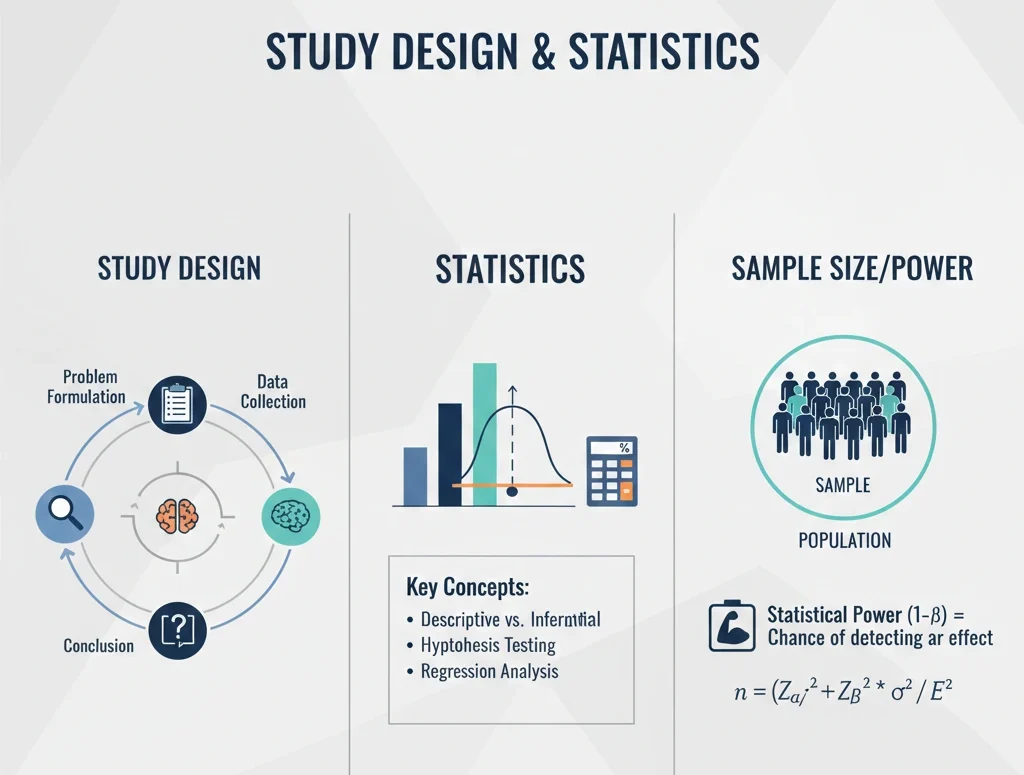
Great ideas in the psychology world prove to be lost in a sea of similar studies. The magnitude of research has gone off scale in subfields of cognitive neuroscience, getting to behavioural analysis, a publishing environment that is highly competitive. The result of this saturation is a case of overworked reviewers, redundant subjects, and continuously increasing journal demands. The result? The unprecedented work may be underestimated. This is a step-by-step guideline that you can use to take your Psychology Research to the next level, eliminate the clutter, and ensure the publication of your work will be warranted.
The Saturation Problem: Why It Is Harder to Stand Out than Ever
Psychology is crowded to an extent than ever before. The best journals get thousands of submissions yearly. Competition is not merely a question of quantity; competition is several factors that render originality difficult to demonstrate. The main reasons for saturation are:
- Redundant subject areas: Numerous studies venture out onto well-worn paths with insignificant added value.
- Absence of innovative methodology: Use of traditional designs and measures may cause familiarity with findings.
- Low theoretical foundation: Work not well grounded in or cannot confront existing theory is uninfluential.
Step 1: Determine the Lack in the Current Literature
Mostly, the failure of Psychology Research to impress is due to the repetition of information. To prevent this, then be a detective in your field. The initial strategic advantage provides you with a first step in finding real gaps in a systematic way.
- Examine inconsistencies: search areas where published literature gives conflicting results. Your study would be useful in solving these inconsistencies.
- Underrepresented contexts: A lot of the research published in psychology is WEIRD (Western, Educated, Industrialised, Rich, Democratic). Research based on diverse cultural, socioeconomic, or demographic factors is becoming very necessary and sought after.
- Bridge new areas: Seek new areas of psychology-artificial intelligence, climate change, or digital wellbeing. Such crossroads are rich in new inquiries.
Step 2: Enhance Methodological Prescription and Openness
During the replication crisis, methodological rigour and transparency are valuable qualities to reviewers and editors. An accurate, ethical and repeatable design is a prerequisite for standing out.
Small and unreasonable sample volumes, undefined operationalisation, and insufficient transparency of data are common traps that result in desk rejection. To increase the credibility of your manuscript:
- Pre-register your hypotheses: Show scientific integrity by publicly stating your research plan and strategy of analysis in advance of the study.
- Disclose open-data repositories: Publish your data, code, and materials on such a platform as the Open Science Framework (OSF) to foster replication and indicate credibility in your contributions.
Step 3: Compose with Psychological Specificity, But Not Academic Density
Most writers commit the fallacy of employing excessively elaborate language as a belief that it is an expression of intelligence. As a matter of fact, it usually becomes confusing, and it can be very annoying to impatient critics. The objective is effective and specific communication.
Making your writing more effective:
- Use the active voice: Do not say It was hypothesised by the authors, but We hypothesised. Incidentally, to describe human behaviour, thought, or emotion, what the p-values and effect sizes imply.
- Format diagrams and graphics: A well-constructed figure or model can be used to better communicate relationships than multiple paragraphs of writing.

Step 4: Select Journals Strategically
Handing in good research to a bad journal wastes months and is prone to avoidable desk rejection. Choosing a smart journal is a smart technique.
Target effectively:
- Fit scope: An article about a clinical intervention probably does not fit in a journal that centres on fundamental mental operations. Go through the journal’s aims and scope.
- Scan the issues of the past year: Analyse the recent publications. Is your paper smooth in terms of topic, methodology, and impact?
- Weigh prestige vs. practicality: Weigh impact factor versus acceptance rate of the journal. A poorly fitted Q2 journal is a wiser option than an ill-fitted one.
Step 5: Capitulate Ethical Visibility
Exposure begins way before actual publication. Promoting your work ethically instils credibility, which can positively impact the editors and reviewers.
- Share preprints: Submit a preprint to sites such as PsyArXiv to elicit prior reviews and presuppositions.
- Attend conferences: Interact with the community, collect folk reviews, and develop your professional network.
- Updating professional profiles: Update ORCID, Google Scholar and ResearchGate accounts. A high online presence is an indicator of an engaged learner.
Psychology Research at Fast Publications is unique
Getting through the process of writing and publishing may be overwhelming. The difference can be made by a committed partner. Fast Publications will assist researchers in simplifying this major step. We realise that presentation and impeccable submission will make us stand out.
The major benefits of engaging Fast Publications are:
- Advanced editing: Our editors are also familiar with the kind of tone and terminology that are required in psychology research writing, so your paper is refined and convincing.
- Strategic journal targeting: Receive data-driven advice to find the best journals to submit to and save on time, and increase your acceptance rate.
- Compliance checks: We provide rigorous plagiarism checks and make sure your manuscript is printed as per the formatting requirements, or you will be delayed in the administration.
- Resubmission service: We help you to write convincing response letters to reviewer comments to transform the revised Open Access into a revised and resubmitted manuscript.
Conclusion
To be able to publish critical psychology research in the modern, saturated area, strategic planning is needed. It requires sharp writing, evident novelty of questions, strictness in the approach, and accuracy in the choice of the journal. You can make sure that your work has the attention that it deserves by going beyond the incremental studies and concentrating on creative, well-done, and well-articulated science.