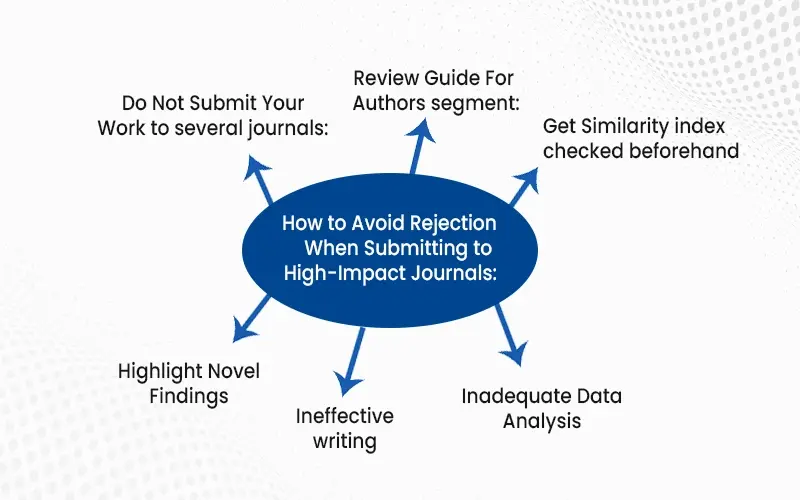
This is an error that is easily made and expensive to overcome when picking the wrong journal. Any one mistake will cost you 6–12 months, possibly countless, of your publication schedule in 2026, whether it be desk rejections, delays in transfers, extensive rewrites, or a complete overhaul. Publishers like Elsevier, Springer Nature, Wiley, Taylor and Francis, Sage, Frontiers, IEEE, ACS, and MDPI get thousands of submissions each year, and editors will reject up to 70% at the initial screening due to poor fit.
This guide outlines the reasons why errors in Journal Selections lead to delays, the reasons behind their occurrence, and provides evidence-based guidance to prevent potential pitfalls. Fast Publications is an expert in selecting the right journal the first time and publishing fast.
How Choosing the Wrong Journal Wastes 6–12 Months?
An inappropriate submission creates a sequence of delays.
Typical timeline impact:
- Desk Rejection (14 weeks lost) Editor rejects the paper without opening because it does not fit the scope.
- Transfer Delay (2–8 weeks). The clock restarts on a new editor and reviewers, despite the publisher having a transfer option.
- Major Revision or Reject and Resubmit (36 months) Poor fit results in brutal feedback and protracted revision processes.
- New submission to an alternate journal (3 to 12 months). You will need to reformat, rewrite the cover letter, and find new reviewers.
All in all, a single incorrect decision can put 6-12 months/periods on the project, which could have instead been spent on the next paper, a grant proposal or a career advancement.
Topical Journal Selection Fallacies Which Lead to Delays
Estimates show that most of the mistakes are caused by inquiring or hurried decisions.
Top mistakes:
1. Neglect of Scope: Reporting to a non-clinical journal (e.g., a theory-oriented journal)
2. Discovery of Prestige without Verifying Fitness or Preparedness
3. Errors in assessing Review Speed: Selecting slow but high-impact journals (average 12+ months)
4. Ignoring Open Access Requirements: Submission to subscription only when OA is a requirement
5. Wrong Article Type: A full research article submitted has a short communication
6. Failure to check recent articles: Absence of conformity to up-to-date publications
Such errors nearly ensure delays, which can result in many rejections

The Cost of Delays in 2026
There are consequences of delayed publication.
Impact on researchers:
- Lost references: originality dies, and other people can get it first
- Stagnation in career: grants, tenure and promotions are impacted by the slowed growth of the h-index
- Loss of funding, most grants have to be published on time
- Emotional burnout: chronic rejections hurt motivation
- Opportunity cost: time devoted to revising might be utilised in new research
In a rapidly developing area (AI, biotechnology, public health), 6–12 months of delay can imply gaining no window of opportunity at all.
Answering Proven Journal Selection Advice to Prevent Delays
Follow this checklist to select the appropriate journal the very first time.
- Read Aims & Scope Carefully: Go to the journal home page and read Aims and Scope by word. Ask: Does my paper fit 100%? Was it my subject that was explicitly stated?
- Review Recent Articles: Read 5–10 recent papers. Make sure that your methodology, theory, and implications are congruent. Note form, length and format.
- Use Journal Finder Tools: Finder tools are provided by Elsevier, Springer, Wiley and Taylor & Frances. Enter your title/abstract and get ranked matches in terms of acceptance rate and time of review.
- Check Metrics & Speed: Cite Score, SJR and quartile are viewed with ScimagoJR or Scopus. Much to look at the journal site under average time to first decision (target <3 months). Give preference to fast publishers such as MDPI (30-60 days) and Frontiers (60-90 days).
- Verify Indexing & OA Options: Web of Science, PubMed and Scopus confirmation. Check Waivers, institutional waivers, or check APCs.
- Prepare for Transfer: Select publishers that have strong transfer networks (e.g., Wiley, Springer Nature).
Fast Publications, in its turn, provides individual journal selection assistance to adopt this checklist to perfection.
The way Fast Publications helps you escape delay
Avoid the improper choice of the journal can be through professional advice. Fast Publications provides specialised services:
- Faster recognition of completely matched journals with fast-tracks journals
- Scope and fit analysis using your manuscript
- Review time, acceptance rate and comparison of APCs
- Preparation of a draft of a cover letter and a submission file
- Handling revision and transferring supports where necessary
Fast Publications guarantees that you do not submit to an incorrect journal. Today, contact us for special journal selection advice.
Conclusion
The misuse of journals can result in delays of 6–12 months to the publication schedules with desk rejections, transfers, and unnecessary revisions. However, through scope reading, perusing recent articles, finder tools, metrics checking, and index checking, researchers can avoid such expensive errors. Also, make professional journal selection recommendations to publish more quickly and intelligently. Lastly, Fast Publications offers the assistance necessary to select the appropriate journal and be published promptly in competitive sources.