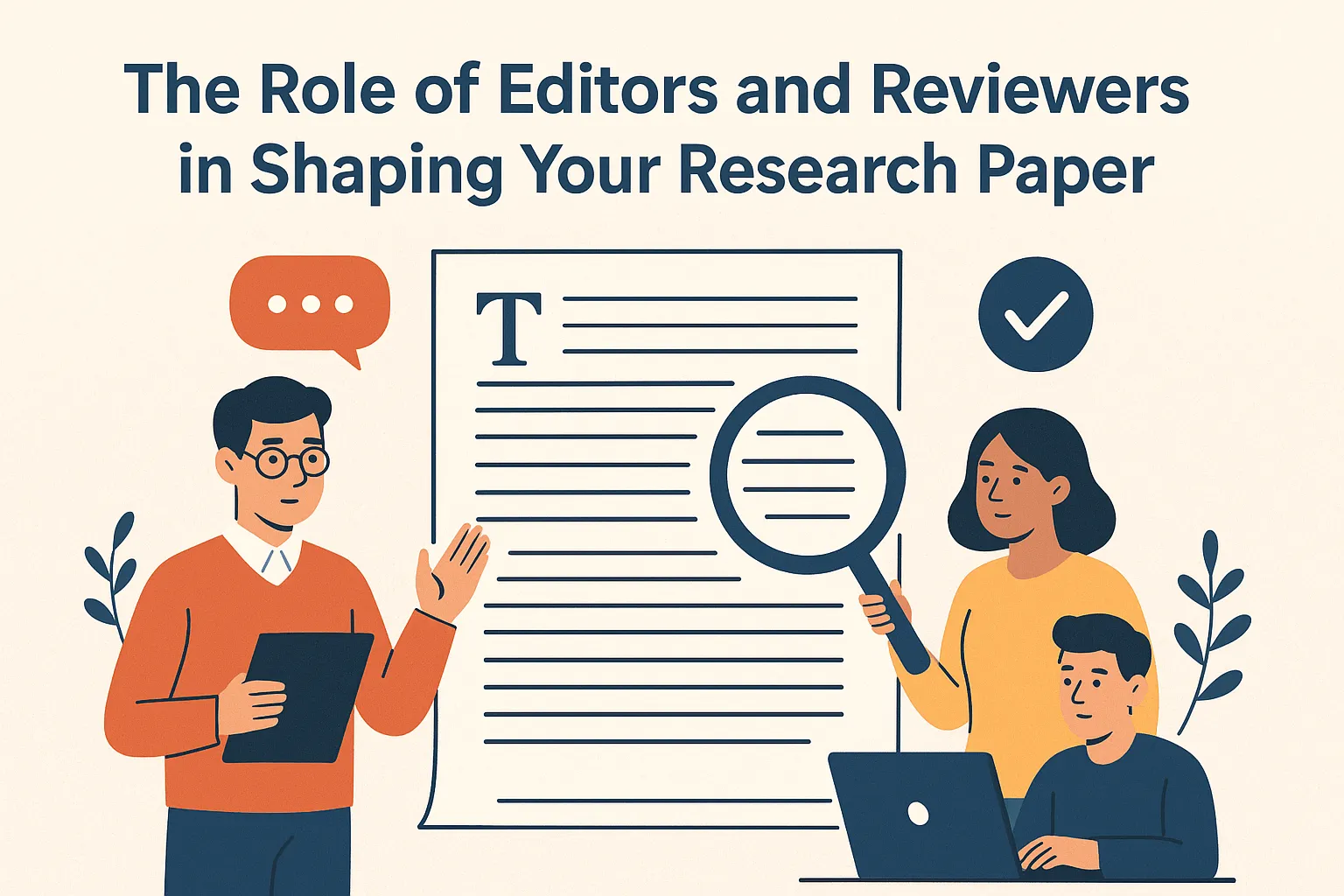
The quality of the research is determined in the planning stage and not in the writing stage. The editors and reviewers first consider the methodological rigour of your study. Poor design, inappropriate statistics, or an ungrounded sample size may prompt immediate desk rejection, no matter how polished the prose is. It is possible to produce Fast Publications by beginning with statistically sound, highly planned methods.
Scientific and Technical Editing could transform a boring method description into an eloquent demonstration of the validity of your study.
What Is Study Design in Research?
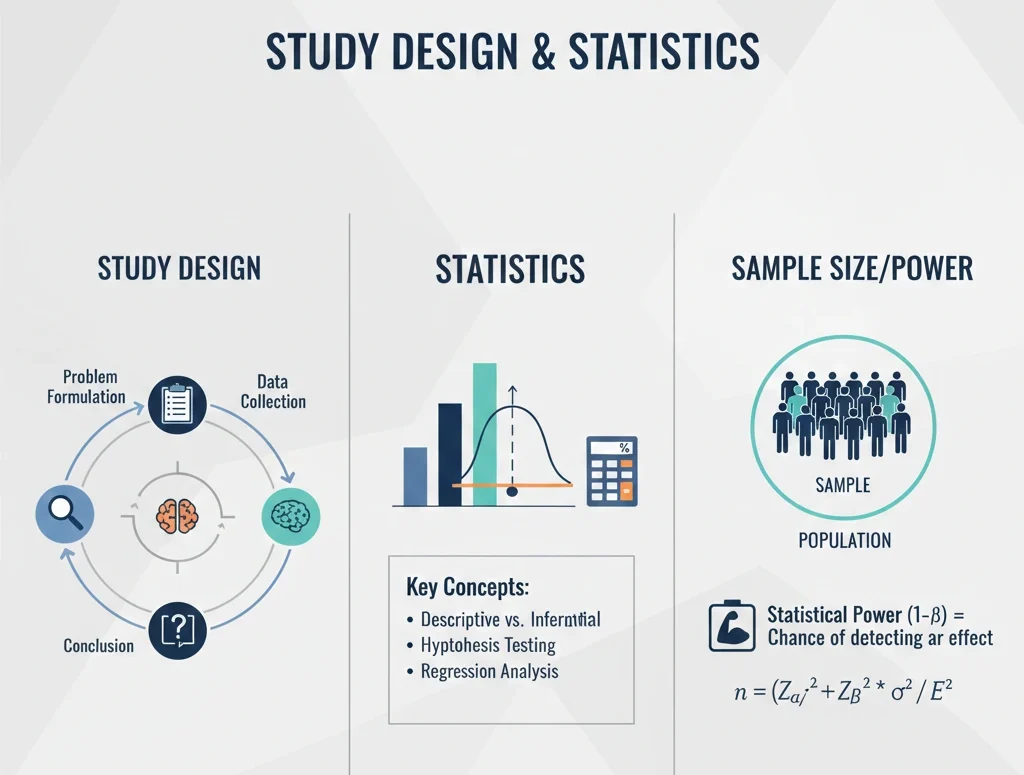
Research design is the blueprint of your study. The planned structure is the one that defines your plans for how to collect, measure, and analyse information to answer your research question. A sound design minimises bias, maximises validity and makes certain that what you are doing perfectly fits your goals. This is the first part to be reviewed by reviewers, since a bad design cannot be rescued by advanced analysis. All credible findings are based on it.
Types of Study Designs That Editors Accept
The selection of the appropriate design is a research strategic choice that would support your research question and available resources.
- Experimental Studies (e.g., Randomised Controlled Trials): Best support the cause-and-effect relationships. They are the best of clinical and intervention research and need a lot of control.
- Observational Studies (Cohort, Case Control, Cross-Sectional): No intervention on subjects. Most commonly used in epidemiology and social sciences, come in handy when it comes to determining associations and risk factors in a real-world environment.
- Analytic/ Survey Designs: Questionnaires or secondary data to analyse trends and relationships.
Choosing a rigorous, yet workable design is a major step to developing a manuscript to a level that fulfils the efficiency standards of Fast Publications.
Mistakes in Study Designs that produce rejection
Avoid these fatal flaws:
- Inappropriate Sample: Too small, biased, or non-representative.
- Missing Control/Comparison Group: Could not control the effect of your intervention.
- Graphic lacking Definitions: Imprecise independent/dependent variables or confounder factors.
- Lack of Methodological Detail: Impossible replication.
- Hype: The plan of analysis does not align with the design or purpose.
Such mistakes are indicative of poor rigour. Professional Scientific and Technical effectively defines and addresses these gaps, and turns a weak methods section into a strength.

Essentials of Research Statistics (What Reviewers Expect)
The reviewers anticipate a definite and justifiable statistical method. Your data is characterised by descriptive statistics (mean, median, standard deviation). Inferential statistics (p-values, confidence interval) enable you to make your predictions or generalisations of a population using your sample. It is critical to develop a basic idea about hypothesis testing: to declare a null hypothesis and to conclude whether you have sufficient data to prove it is not true.
Any miscalculation or incorrect use of statistics kills credibility immediately, as it nullifies your outcomes. Readability and transparency in reporting are an absolute requirement.
Selecting the Right Statistical Tests
Whatever type of data is the key to your test. Compare means of two groups (t-test), three or more groups (ANOVA), categorical data (chi-square), and three or more relationships (regression). The determination of the use of parametric (normal distribution) and non-parametric tests is essential.
Excessively complex models should be avoided when simple models can be used; complexity where it is not necessary creates doubts among those reviewing them. The idea is to fit the simplest suitable test with your design and data and make the selection clear in the manuscript.
Sample Size: Why Larger Is not necessarily Better
Adequacy rather than maximisation is the issue of sample size. A sample that is too large would waste resources and could identify non-significant effects, whereas a small sample would miss significant ones, making the study unethical. The objective is a sample that is representative of the population and is large enough to give credible responses.
The main misconception that bigger is best does not take into consideration the concept of power and precision, which are what reviewers actually examine.
An Explanation of Power Analysis (Simple and Practical)
Statistical power is how likely your test is to identify the effect should it be there. It protects against Type II errors (false negatives). The conventional cut-off point is 80% power. You can perform a power analysis, which can be made before data collection, and can estimate the required sample size depending on your desired power, expected significance level (aka alpha, usually 0.05) and expected effect size.
This is made easy through tools such as GPower. This is a justification that journals are getting more and more specific. The critical calculation is to be reported with clarity and precision, with the help of Expert Scientific and Technical Editing, meeting their expectations as reviewers.
How to Report Statistics the Right Way (Formatting Matters)
Rigour includes presentation. Specific report p-values (e.g., p = 0.032, not p < 0.05). Check the use of clear tables and figures with description legends and like units. Follow the reporting guidelines of the statistical reporting of the target journal (e.g. APA, CONSORT).
A structured methods and results section with a clear format minimises the confusion of the reviewers and accelerates the process of evaluation. This level of detail is what has made the operations of Fast Publications smooth.
The Strengthening of Study Design Sections
Scientific and Technical Editing improves your methodology by providing statistical consistency, refining language, and structuring descriptions to be reviewed by the reviewer. This pre-submission audit finds logic holes, closes objectives with analysis and significantly shortens revisions initiated by methodological inquiries, producing a submission-ready manuscript.
Fast Publications Advantage
Trust opens the Fast Publications advantage. A methodologically bulletproof manuscript receives instant editorial self-confidence, opens fewer and less complex reviewer questions, and experiences less back-and-forth. The fastest way to submission to acceptance is through clean, justified statistics.
Conclusion
Months of revision are saved by investing in a good study design and statistical planning. Also, it is the real competitive advantage of your manuscript, the non-negotiable basis of a credible, publishable and effective research.