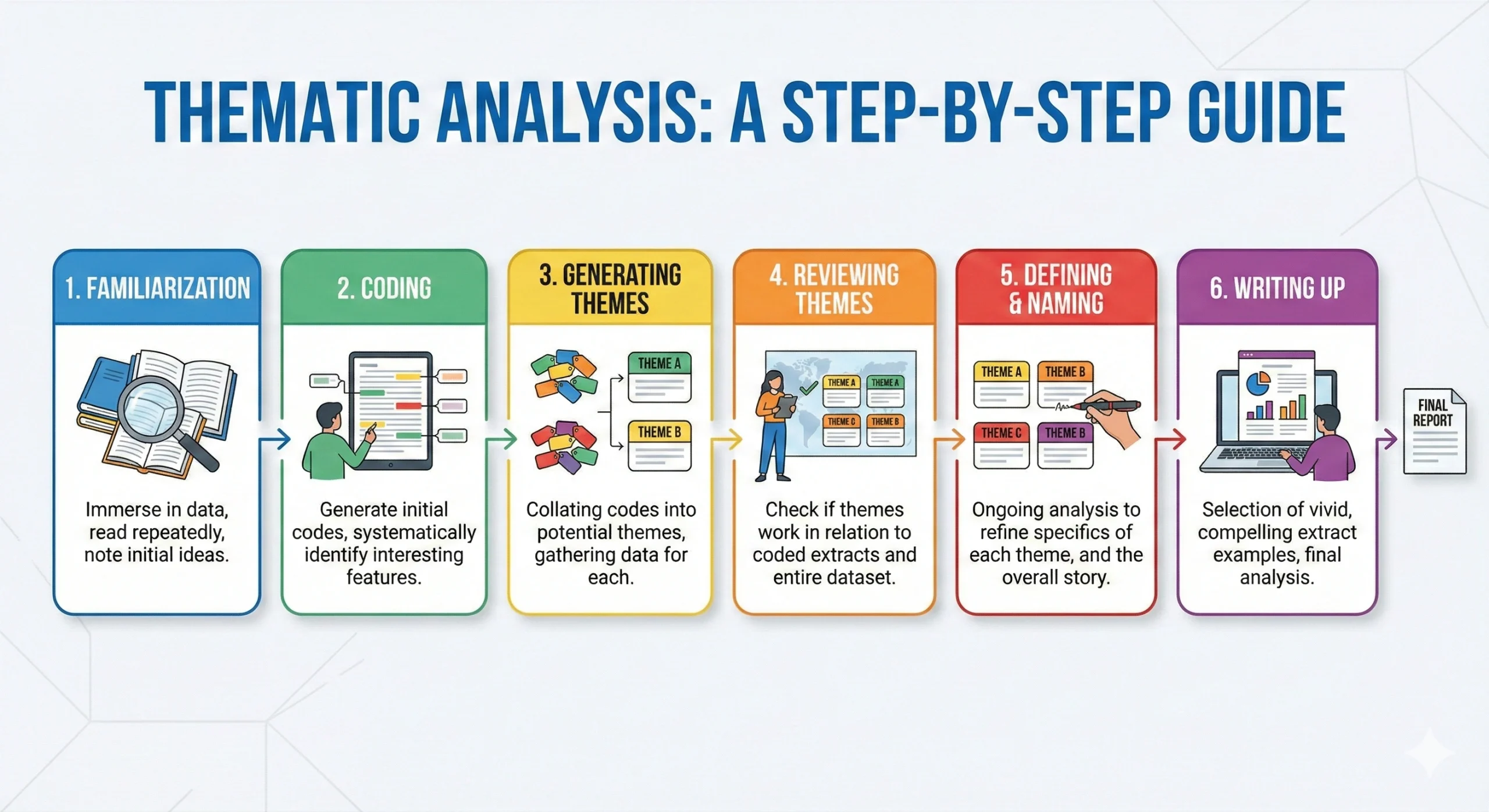
Thematic analysis is an open-ended, user-friendly approach to identifying themes of meaning in qualitative data. It is used by researchers to analyse interviews, focus groups, open-ended surveys, and even posts on forums, in case of ethical approval. The reason it is popular is its adaptability: it is used in social science studies of human behaviour, and in increasing volumes of qualitative work in Computer Science, including human-computer interaction and user experience research. With such rigour, the results are peer-reviewable, and our reporting of the results in the Fast Publications style offers an opportunity to meet editorial demands.
What Thematic Analysis Is?
- Thematic analysis uncovers patterns in qualitative data.
- Allows group comparison, theory construction or insight application.
- Works with diverse types of data and research questions, and is therefore extensively applied.
And it is not counting words. It needs interpretation, not automation. It contrasts with grounded theory, which tries to construct a new theory, and content analysis, which tends to quantify categorical frequencies. Knowing these differences is important when locating your work in the traditions of the social sciences.
Thematic Analysis Process in Steps
Step 1: Prepare Your Dataset and Context Notes
Choose what will be your unit of analysis for each interview, response or post. Clean the transcripts and delete subject matter. Begin a reflexive memo documenting assumptions, expectations and first impressions; it goes on to your audit trail. This step applies to user interviews or usability transcripts equally to the use in computer science research.
Step 2: Acquaint Thyself with the Data
Read and re‑read the data. Mark’s first impressions, surprises and contradictions. Do not code just now; let the data stew in your head.
Step 3: Generate Initial Codes
Codes mark the meaning in very tiny pieces of data. Adopt an inductive (allowing the codes to arise) or deductive approach (implementing theory-based codes). Code for meaning, not grammar. Minimise and maintain definitions. Triple‑check a sample with an associate to ensure consistency.
Step 4: Codes to Group Themes
Convert codes into categories to themes. A theme consists of a pattern, meaning and definite limits. Do not use very broad topics (e.g., Challenges): this will put vastly different ideas together, and it must not use a topic with just one quote. Powerful themes shall convey something meaningful in your research question.
Step 5: Compare Themes to Data
Test the internal cohesion of each theme. Inquire about the possibility of the quotes belonging together and whether thematic segregations remain. Conduct a validity test: Does the structure predict most data? See what doesn’t fit and what that means.
Step 6: Define and Name Themes
Write two to three sentences of a definition of each theme, leaving out what it contains and what it does. Assign each theme a concise descriptive key that describes it. These definitions will direct your writing.
Step 7: Write Up with Evidence
The quotes or snippets are to be used briefly to back every theme. Discuss how each of the themes responds to your research question. Connect themes to have a complete picture of the story. Write-ups with a focus on publication enjoy well-defined content and selected snipping.
Rigour and Trustworthiness
- Audit Trail and Transparency: Save versions of codebooks, decision memo files and coded extracts. Reviewers appreciate a clear indication of the way you achieved the conclusions. This openness is satisfactory to both social science and computer science publications.
- Reliability vs Reflexivity: In general, agreement checks with a second coder increase analysis, although reflexivity is equally of importance. Write about how you view your background and assumptions. Explicit definitions contribute to the reliability checks as well as reflexive awareness.
- Common Quality Upgrades: Apply triangulation, e.g. several sources of data or researchers. Use member checking where necessary, revisiting participants to check on interpretations. Blind spots are caught through peer debriefing with colleagues. The adverse analysis of data that does not match the patterns reinforces assertions.
Misunderstandings and Band-Aid Solutions
- Theme Dumping Without Interpretation: Introducing themes without clarifying the meaning or purpose does not satisfy the reader. Fix it by providing boundaries, stating relevance and connecting each theme with your research question.
- Excessive Quotation or evidence: Big blocks of quotes with very little synthesis dilute your argument. Revise by choosing sharper passages and composing more intense passages that interpret.
- Baffling When One of the Other: There is a difference between the thematic analysis and the content analysis. In case you measure theme frequencies, explain how. Do you mix things? Why or why not? Transparency of the methodology is an editorial priority at Fast Publications.
Conclusion
Gather the information and begin a reflexive memo. Get to know about it. Come up with preliminary codes and sort them out into potential themes. Comparison of themes with the entire dataset. Define each theme clearly. Evidence-based with interpretation. Note decisions in all documents and match the write-up to your research question. After this workflow, your thematic analysis is well-founded and is ready to review and publish.