
The process of submitting a SAGE journal is quite tricky and it is crucial to have a clear vision about the requirements of submitting to this journal in particular to the methodology and data section. These elements are more than formalities; they form the foundation on which the research credibility and reproducibility lie. A clear methodology section is an in-depth roadmap to your research, whereas a clear data availability statement brings your research into line with the emerging standards of open science. This paper will take you through the main points of how to prepare these important areas of a SAGE submission.
The Methodology Part: Your Research Construction Manual
Your methodology section must be an elaborate and clear account of how you conducted research so that your study would be replicated by another researcher. As a result of many academic publishers, SAGE values the clarity and rigor of this section very much. Start by clearly explaining your research design, either qualitative, quantitative or a mixed-method design and explain why this particular design was the best choice in answering your research question. In the case of quantitative research, describe the type of design (e.g., experimental, correlational), whereas in the case of qualitative, specify the methodology (e.g., ethnography, case study).
After the design, give a comprehensive account of your study subjects or participants, as well as the way of sampling you are going to use and explain why you have chosen such a large number. In case your research will involve human subjects you must remember to provide a statement indicating that it was ethically approved by the appropriate institutional review board (IRB) or ethics committee, and explain how informed consent was secured and what happened to protect the confidentiality of the participants.
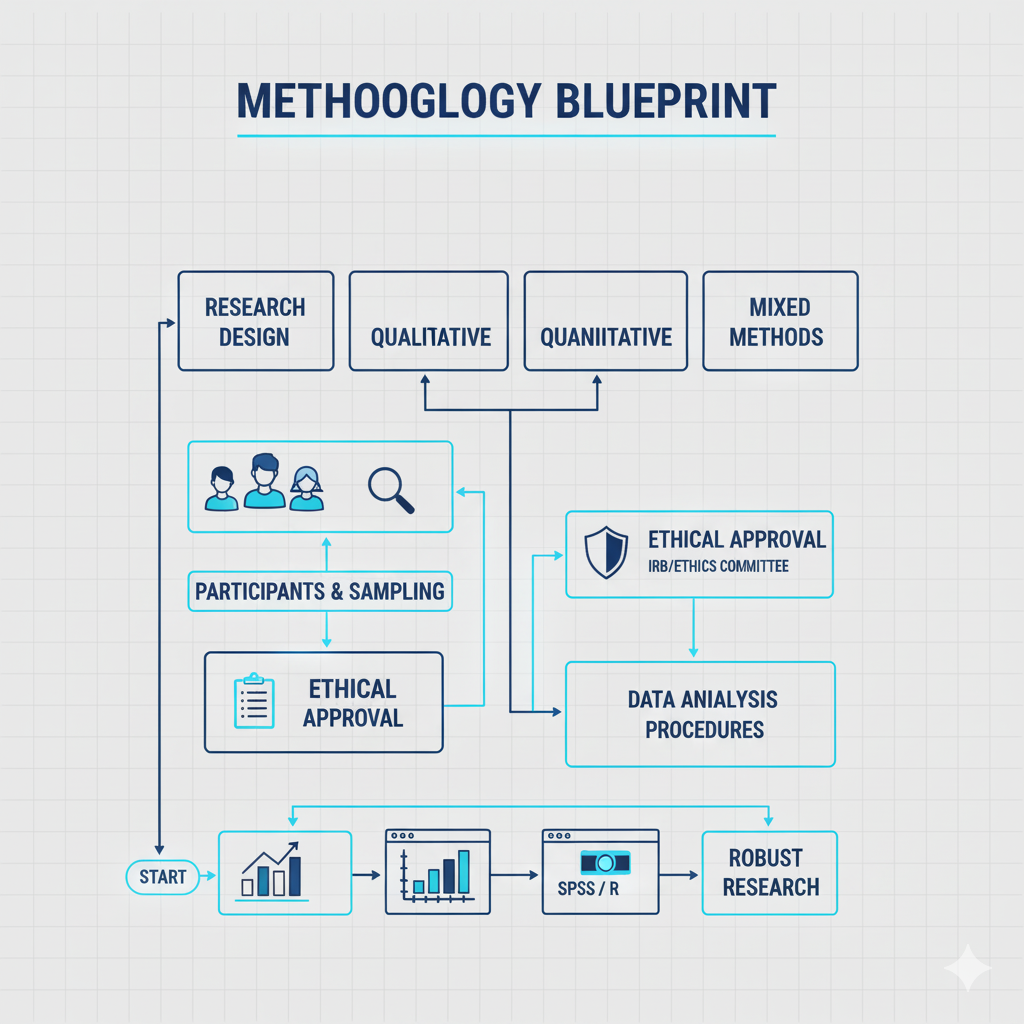
Then, describe the data collection procedure. In the case of quantitative research, list and describe all instruments, surveys or equipment. On qualitative work, explain your procedures like interviews, focus groups or observations and how the data was documented. At the end of this section, explain your methods of data analysis. In quantitative research, explain the statistical software and tests used, giving justification of this. As to qualitative work, describe how you are going to analyze your data, i.e. using thematic or content analysis, what you did to determine the patterns and themes in your data.
Data Requirements and Data Availability Statement
Data sharing has become a common activity in academic publishing due to the growing focus on open science. The policy of the SAGE Publishing on the research data has this tendency, however, its particular demands may be different depending on the journal. This is aimed at making the information that supports your conclusions in your article as open as possible.
A Data Availability Statement (DAS) is a brief text, which informs the readers of the location and method of accessing your research data. This should be written at the end of your paper, under the reference list. It may also ensure that every single bit of information is present in the article and the additional files or, vice versa, provide the reasons as to why data cannot be disclosed under ethical or legal limitations.
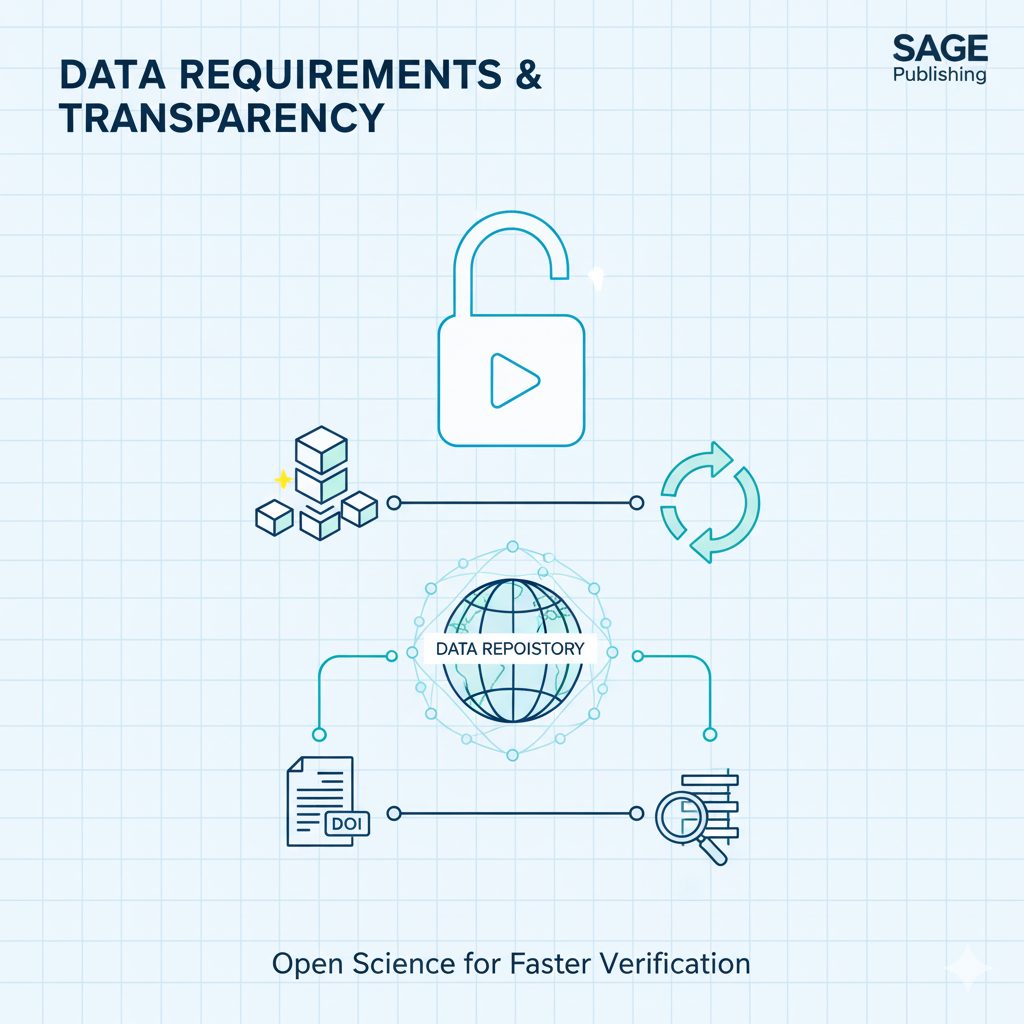
Be straightforward and clear in designing your DAS. In case your data is in a public repository, you should cite the repository name and a persistent identifier such as Digital Object Identifier (DOI). In the case of data provided in the article per se, a plain statement will be sufficient. When you have no possibility to share data, then you have to give a clear and reasonable justification, including, but not limited to, the presence of sensitive or personally identifiable data, or a third-party agreement.
Lastly, keep in mind that upon placing your data in a repository you should consider it a referenceable intellectual work. This implies that you should refer to your dataset in your reference list, and its persistent identifier. Such a practice would not only make your data more accessible but also has a greater effect and credit to your research and would create a more transparent and collaborative scientific community. A complete methodological and data standards will make your submission a credible, comprehensive and replicable piece of scholarship.
Collaborate with Fast Publications to have a smooth process of submitting
Fast Publication has years of experience in academic publishing and presence of knowledge in journal submission procedures including that of SAGE Publishing. My aim is to make researchers like yourself to sail through the hassles of the publication process as smooth and as possible.
Do you worry that your target journal has stringent requirements both in terms of methodology and data? Would you like to hasten the time of publication? We at Fast Publications are ready to assist you. Our services will be tailored to help you have a perfect fit with your target journal requirements, in your first draft and final submission.
We can assist you with:
- Manuscript Review and Editing: Making sure that your methodology is solid, well-written and meets journal requirements.
- Creation of Data Availability Statement: A clear and consistent statement that satisfies publisher requirements and enhances open science needs to be written.
- Strategic Submission Support: You need to complete your submission, up to responding to the reviewer feedback, in order to get your publication ready quicker?
Fast Publications is aware of the delays that are usually encountered in the submission process. We prevent the traps that cause desk rejections and offer you good strategic advice that will enhance your possibility of successful and fast peer review. We enable you to concentrate on your research and we do the tedious information of submitting your research to the academic. Contact Fast Publications to discover how our special research services can put you on the path of getting your work published at a faster rate and with more confidence. You are ready to make your next submission to SAGE successful!