At Fast Publication, we realise that a venue used in research is as important as the research itself. The current academic context is highly competitive. Tenure, funding, and reputation depend on quantifiable impact. Researchers must go beyond indexing and learn alternative metrics of journal quality. The most commonly used, and usually institutionalized, measure of journal quality is the SCOPUS Journal Quartile. These four quartiles, Q1, Q2, Q3, and Q4, are not random ranks. They exhibit different levels of influence and prestige in specific subject categories.
Incorrectly interpreting these titles can result in inappropriate publication selections. This stalls career advancement and reduces the visibility of excellent work. This is the complete SCOPUS quartile breakdown guide. Fast Publication explains what the quartiles mean and how they are calculated. Most importantly, it details how properly interpreting each level can help you modify your publication strategy. This maximizes your career outcome.
Learning about the SCOPUS Quartile System

The journal quartile ranks all journals within a SCOPUS Subject Category based on a key performance indicator, typically CiteScore.
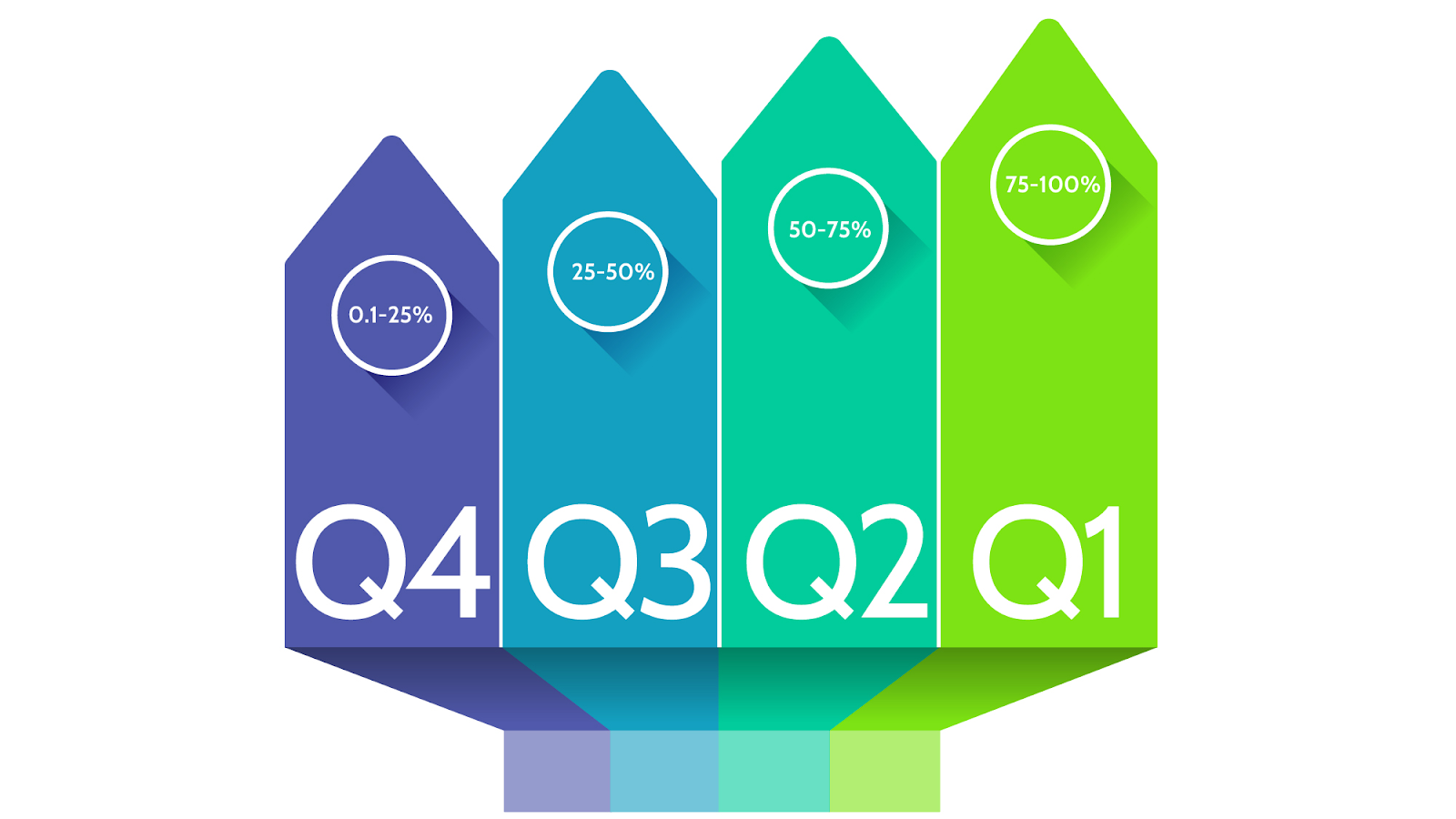
Journals are then divided into four equal quartiles, each representing 25% of the list. Importantly, a quartile reflects a journal’s position only relative to its category; for example, a Q1 journal in a specialised field like Marine Archaeology may have a lower absolute CiteScore than a Q2 journal in a broad field like Clinical Medicine. Therefore, comparing quartiles across different categories can be misleading—the ranking only holds meaning within each subject area.
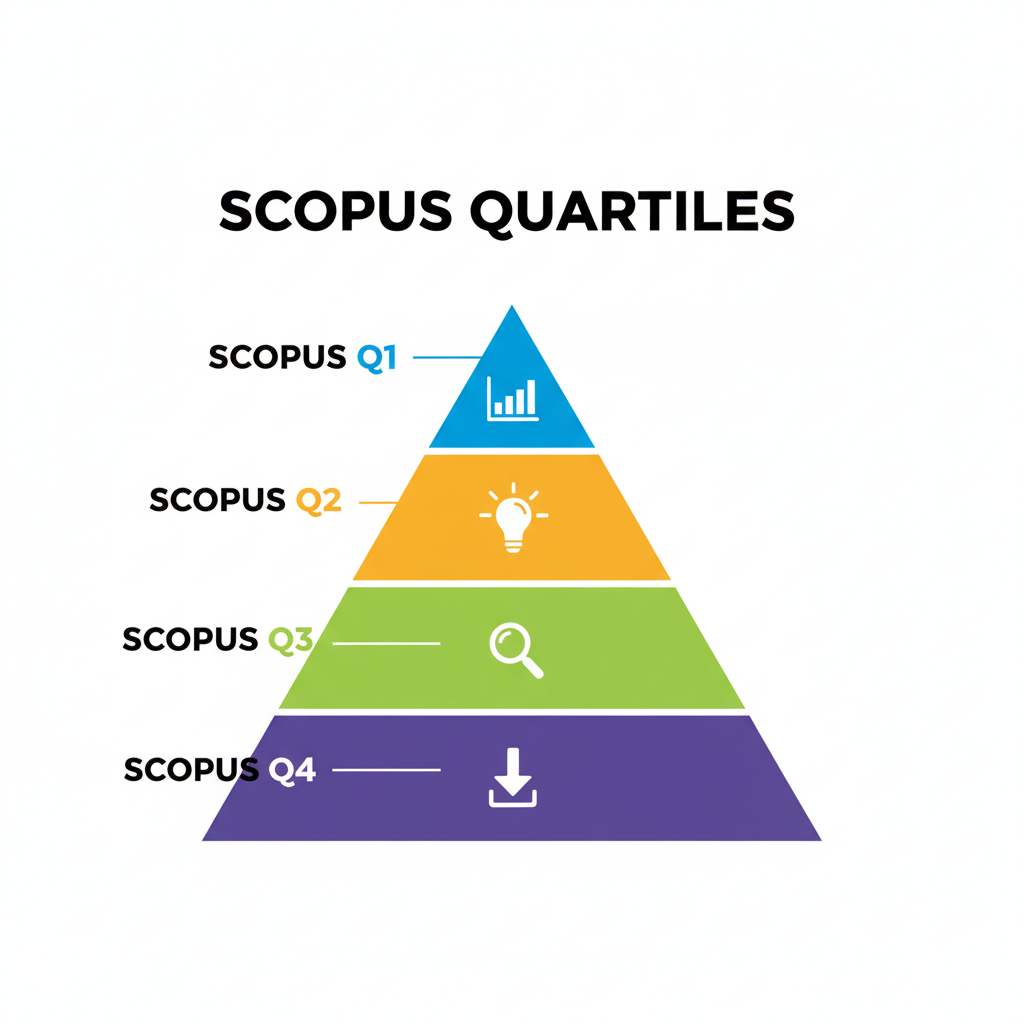
Each quartile indicates a distinct level of journal prestige and influence within its category.
Q1 journals are the top 25% and are considered the most prestigious. Q2 journals fall between the 25th and 50th percentile, Q3 between the 50th and 75th percentile, and Q4 represents the bottom 25% of journals in the category.
Moving from Q1 to Q4 means a decrease in visibility and perceived impact within that subject area.
The SCOPUS Methodology: Cited Score and Category of the Subject
Elsevier owns SCOPUS, which uses the CiteScore metric as its primary basis in determining its quartile ranking system. CiteScore offers a broader and more stable perspective, unlike the Journal Citation Reports (JCR), which uses the Journal Impact Factor (JIF).
The calculation starts by counting a journal’s citations in the current year. It looks at publications from the previous four complete years. First, the system divides the number of citations by the number of citable documents. These documents include articles, reviews, conference papers, and data papers published during the same four-year period. Lastly, normalisation establishes the journal’s ranking. It compares the obtained CiteScore with all other journals under the same SCOPUS Subject Category. The system can list a journal in several subject categories, and notably, its quartile ranking can vary among those categories. For instance, a journal specializing in Computational Biology might rank Q1 in “Bioengineering” but Q2 in “Computer Science (Miscellaneous).” This context is important.
A Deep-Seated Strategy Analysis of every Quartile Level
Knowing how to build a reputation and the strategic value of each tier is the most crucial to building a successful research career and maximising your impact on research.
Q1: The Elite Tier (Top 25%)
Strategic Value: Preeminence, Key to the Highest Appointments and Finances
Scholars consider Q1 journals the best for scholarly communication in their fields. They are extremely selective, with acceptance rates usually below 10−15%. Publishing in a Q1 journal signals that your accomplishment is fundamental and new. It will likely influence future research.
Focusing on Q1 is critical. Most institutions directly demand a set of these publications for tenure. They also require them for promotion to a higher rank, like Associate or Full Professor.
Moreover, this history closely links to funding success. Granting agencies use Q1 records as a proxy for a Principal Investigator’s research quality and ability. A Q1 ranking guarantees international recognition of your work. Readers worldwide read, cite, and and discuss these journals. This ensures you maximize the readership and influence of your discoveries. Fast Publication will always recommend using Q1 when doing research that has groundbreaking results or a paradigm shift.
Q2: The Highly Reputable Tier (25% – 50%)
Value: Strategic, Superior Quality, Intense Influencer in the Field
Do not consider Q2 journals a backup; they are excellent journals. They maintain extremely high levels of peer review and editorial rigour. They might cover a wider area or a more advanced field than Q1. Yet, they remain very respected and effective platforms.
Q2 is often a preferred point for researchers. They choose it for higher research quality and faster reviewing. In some cases, Q2 journals offer a quicker path to publication than the highly saturated Q1 journals.
Leading niche journals in a sub-discipline are naturally classified as Q2. These highly specialized journals offer focus and a readership of experts in your specific work. Consistently publishing in Q2 journals shows high reliability and quality of scholarly output. This is a good attribute for advancing your career.
Q3: The Mid-Range Tier (50% – 75%)
Strategic Value: Strong Indexing, Works well on Niche/Regional, Entry Point for new Researchers
Q3 journals have an essential role within the academic ecosystem by providing a platform with adequate indexing, peer-reviewing, and adding credibility to the scholarly record. They usually concentrate on local matters, very interdisciplinary, or new fields of study, before they are properly incorporated into the mainstream. A Q3 journal can be the best place to publish niche results in case your research is highly analytical but has a highly localized issue.
Q3 also presents the opportunity to create journals. Researchers can make a Q3 journal–one that has been well-vetted and indicates improving metrics–a calculated, early strategic submission as it travels on the road to Q2. For early-career researchers, people can view a Q3 publication as a mandatory goal that measures the volume of output and the confidence in the publication process. However, they can employ Q3 journals strategically, and these journals should not overtake a comprehensive tenure portfolio.
Q4: The Lowest Tier (75% – 100%)
Strategic Value: Caution Required, Only Applicable to Particular Situations
Q4 journals fall within the bottom quarter of their category of subjects according to CiteScore. Although most of the journals in Q4 are legitimate, indexed, and peer-reviewed, this level demands maximum precaution on the part of the researcher. The indexing of work can sometimes be a last resort in Q4, the reason being highly specific or exploratory pilot studies that have been critically reviewed and rejected by the higher-level journals, so that at least the work will be permanently indexed and referable. Conversely, most new journals tend to begin in Q4 just because they have not had enough citations to jump up the ranks in terms of CiteScore. This may be a risk worth taking in case the publisher and the editorial board are very reputable.
Nevertheless, a warning sign still remains: the proliferation of predatory and low-quality journals often prefers to place themselves in the Q4 category, and that is where SCOPUS temporarily indexes them. Always conduct due diligence on Q4 journals to ensure that you properly check and verify the editorial board, frequency of publication, and reputation of the publisher before you send any manuscript.
Final Thoughts
The SCOPUS Quartile is a strong tool that reflects the influence and reception rate, which in many cases is closely connected with the quality. But it is a faulty measure; it does not directly measure the historical merit of each individual paper. With a quartile-conscious publication approach, you will make the choice of which journals to follow a computed career-building move, rather than a wishful dice throw. Allow the Q-rankings to take you to journals that give the greatest impact to your work and present your results to the greatest audience you can. Contact Fast Publication today and plan your way to the highest academic success.