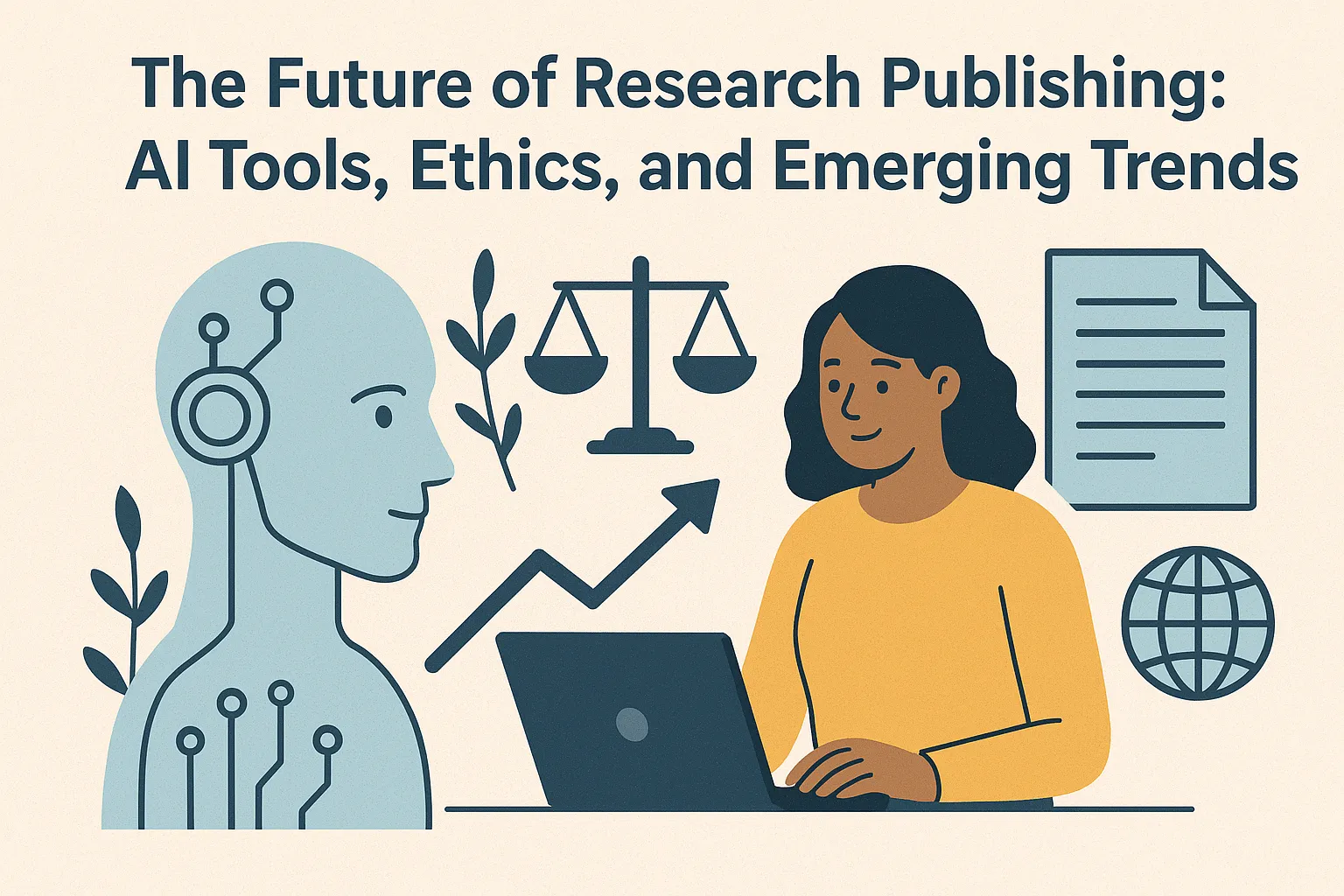
Academic publishing is a rapidly evolving world. Artificial Intelligence (AI) is transforming the way scientists write, review, edit, and share their work. AI applications assist with grammar, journal selection, plagiarism detection, and publishing, making the process faster and easier. However, new technology comes with new responsibilities. The closer AI is to research, the more questions arise concerning who receives credit, whether the work is original, and how ethical publishing is. At Fast Publications, we ensure that researchers can use technology efficiently within a short period of time, without compromising the ethical practices of publishing, so that innovation does not undermine academic honesty.
Artificial Intelligence Taking Ground in Research and Publishing
Previously, publishing was time-consuming, involved numerous individuals to peer review and involved a lot of manual formatting. Nowadays, AI does all these steps and therefore, publishing is quicker, smarter and more precise. Here’s how it works:
AI Writing Helpers
Grammarly, QuillBot, and Trinka are the tools that can help to improve academic writing by correcting grammar, simplifying sentences, and selecting better words. They assist non-native English speakers to write more understandable and tonally improved papers, thus making them ready to submit.
Smart Plagiarism Checkers
In the current plagiarism detection systems, like iThenticate or Turnitin, many new researchers submit the paper to massive databases across the world using AI. They identify even the smallest overlaps, similarities, or omissions in the citations in order to safeguard the authors against unintentional plagiarism.
AI Journal Matchmakers
The selection of the journal is important. Artificial intelligence (AI) tools such as the Journal Finder by Elsevier and the Journal Suggester by Springer search the abstract and keywords of a paper and find the most suitable journals in Scopus or the Web of Science.
Automatic Metadata and Formatting
AI has the ability to automatically format references, citations and metadata to fit the rules of a journal. This saves time from manual labour and reduces the possibility of a paper rejectionat the desk. Fast Publications provides services with sophisticated AI, and metadata verifies Scopus and ISI compliance.
AI in Peer Review
Peer review is now possible by some publishers with the help of AI. AI is able to evaluate the quality of manuscripts, discover issues with data, and identify ethical concerns, which allows editors to make more equitable and quicker judgments.
Ethical Implications: How to use AI in publishing?

AI tools have the potential to increase productivity, though they need extra caution by researchers. Allowing AI to write entire papers or generate false citations is detrimental to science and may cause severe ethical issues.
The most important ethical guidelines to keep in mind:
Be transparent: never fail to mention when you applied AI tools in your practices or credits.
Human control: AI must assist, not supersede human judgment. Research content should be under the control of the authors.
Make data confidential: Be cautious about uploading unpublished data to AI sites; abide by the data policies of your institution and publisher.
Faking nothing: never use AI to generate false data, references, or results of experiments. This is academic misconduct.
Fast Publications places much emphasis on ethical support. Our specialists demonstrate to authors how AI can be used in a responsible way, increasing efficiency and preserving honesty.
Trends that Will Shape Publishing
Innovation, openness and international collaboration in publishing will only increase over the next decade. The following are some of the trends already in place:
AI-Driven Peer Review
The AI can filter a paper for originality, new discoveries and trustworthy information before it is sent to human editors. This reduces the workload of reviewers and simplifies the review process.
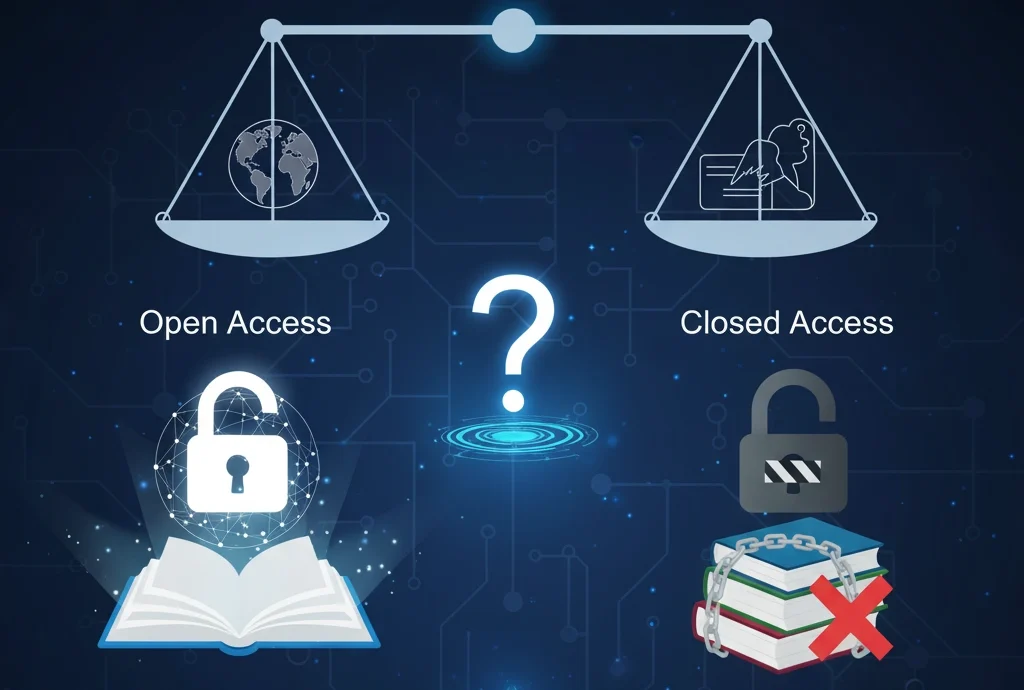
Open Access and Preprints Increase
The AI analytics-based open-access models enable researchers to share the results faster and reach a larger audience. The use of AI also monitors the citation and measurement of articles in real-time.
Research Integrity in Blockchain
Blockchain could be employed in the near future to store research data, track versions and prevent tampering of data.
Individualised Paper Recommendations
Similar to Netflix recommending shows, AI will recommend research articles that are relevant to a field of a reader, promoting collaboration and cross-field concepts.
Automating Office Tasks
AI is able to accelerate submissions, send invitations to reviewers, and verify whether a paper is within journal guidelines, which saves time on the part of the editors and authors.
Striking a Balance between Tech and Human Skill

AI is powerful, yet it cannot substitute human creativity, critical thinking, and ethical decisions. That is why future publishing requires technology and human resources.
Fast Publications fills this gap by integrating our support services with editorial opinion. Our specialists will help researchers apply AI in a responsible manner and make sure that the papers are of the highest quality without losing their originality.
Fast Publications’ services include:
- AI plagiarism and similarity checks.
- Assist in selecting the appropriate journal and fulfil indexing criteria.
- Metadata and citation formatting.
- Language and technical editing.
- Publishing ethics advice.
We combine AI with professional guidance to ensure that your study is published and considered a credible, well-structured, and ethical research.
Conclusion
AI will always be involved in publishing, and it will only be successful when used responsibly. Scientists who are aware of the capabilities and limitations of AI will be more successful in the new era of scientific communication.
Fast Publications assist researchers to be innovative at Research Publishing without compromising integrity. You might require support services, advice on AI tools, or ethical publishing. Our experts are prepared to assist you in publishing smarter, faster, and more confidently. You have done a good piece of research, and you should be respected and recognised.