In a contemporary academic environment, scholars and institutions not only appreciate originality but also require it. All journal editors, reviewers, and academic institutions use similarity or plagiarism detection tools. Turnitin, iThenticate, or Grammarly are commonly used to determine the authenticity of submitted research papers. It is important to know how to act upon such similarity reports without facing desk rejection and ensuring the integrity of the research work. This is what we do at Fast Publications, guiding scholars on the similarity reports and adopting measures to minimise them.
Knowledge of Similarity Reports
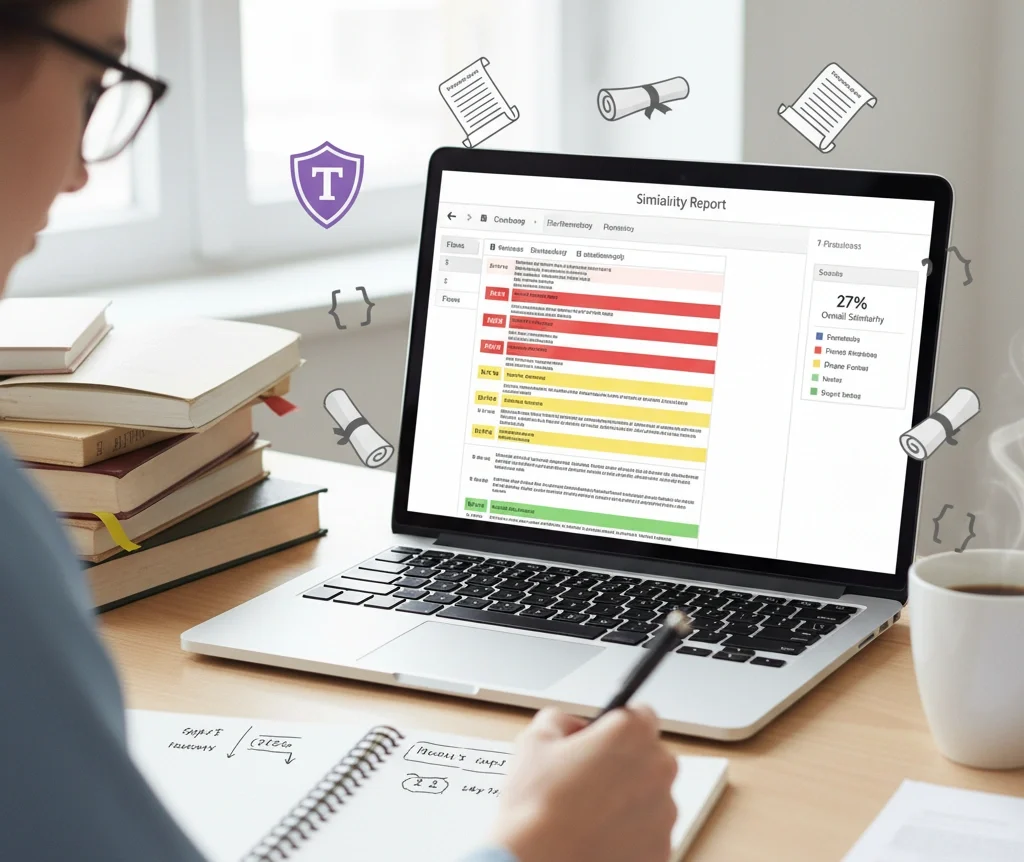
Software creates a similarity report by checking a manuscript against a huge database of published papers, websites, and student submissions. The report identifies areas of text that have been closely related to existing text with a similarity percentage which shows the level of similarity.
Researchers should note that a high score in similarity does not necessarily imply that the work has been plagiarised, whereas a low score does not necessarily imply originality. The researchers have to interpret the report.
Distinguishing between Type of Matches
Matches do not all turn out to be problematic. The similarity reports are normally indicative of:
- Quotations and Citations: Correctly quoted quotations can be used as matches, but they are legal.
- Common Phrases: There are phrases or technical terms that are common in a field that will result in a match.
- Paraphrased Content: Paraphrasing that is done closely without proper citation can raise scores of similarity.
- Self-Plagiarism: It can also be found in the report when you are using some of your earlier published pieces.
The researcher can understand the nature of the matches and hence know areas that need attention.
Assessing the Percentage of similarity
Various journals possess varied acceptable similarity levels. Most journals accept up to 10-20% of similarity but some journals are more that are rigid on some parts particularly the abstract or conclusion. It does not matter so much the number but where the similarities lie. Similarities in method, sources or even terminology are not a significant issue as compared to the main body of argument or discussion.
Similarity Minimisation Strategies

After interpreting a similarity report, you should take the next step to minimise unneeded overlap while ensuring the integrity of your research is preserved. These are some of the effective strategies:
1. Adequate Citation and Reference
You can easily solve most of the overlaps by making sure that you reference all the ideas, quotes, and paraphrases you borrow. Also, always apply the citation style to use throughout your manuscript (APA, MLA, Chicago, etc.). Both proper citations will help to minimise the chances of plagiarism, as well as prove academic rigour.
2. Paraphrasing Effectively
Paraphrasing is not only a case of substituting words. It entails paraphrasing the sentence, synthesizing, and coming up with it in your style by crediting the source of the initial message. This makes them less similar and does not affect the information accuracy.
3. The Problems of Overdependence on the Source Texts
Although literature reviews may demand the summarization of the already existing studies, over quoting or copying of phrases may swell similarity scores. Rather, instead of using direct words of the source, concentrate on extracting ideas and concepts behind findings and incorporate them into your thesis.
4. Self-Check and Software Tools
Via plagiarism detecting software, check your manuscript before its submission to detect problematic sections. This will enable you to update parts on the proactive and make sure you are adhering to journal standards. Plagiarism checkers such as iThenticate, Turnitin or even the plagiarism checker of Grammarly are common and used to do a pre-submission check.
5. Consolidate and Refactor Redundant Sections
Such parts of the paper as the introduction or literature review may have a high likelihood of similarity since most papers refer to the same background research. Think about rewriting sentences, working on your personal vision and approach to the literature. Not only does it make it less similar but it also makes your original manuscript stronger.
6. Focus on Tables, Figures and Appendices
Non-textual content may have similarity when someone reproduces the descriptions or legends word-for-word. Make sure that you compose captions, figure labels, and table notes in your own words with proper references.
The way Fast Publications Can Help
The experience of navigating the similarity-reports may be overwhelming, particularly in case of novice researchers. We can assist thoroughly in interpreting similarity reports and we can put into operation powerful strategies to minimize overlap: at Fast Publications.
- Expert Review: Our team determines the areas of high risks and recommends the rewriting or paraphrasing.
- Citation Support: We make sure that we cite as required by the journal standards.
- Pre-Submission Checks: We assist you to do the plagiarism checks and revise the work actively in order to get the work published in the journal.
Our method not only decreases the scores of similarity but also makes the research paper clearer, coherent, and original, which gives it a better chance of being accepted.
Conclusion
A similarity report is not a barrier but a diagnosis tool that enables researchers to revise their manuscripts. To ensure publication and to avoid overlaps in the papers, to differentiate between problematic and benign matches, as well as to understand the report, with systematic strategies to reduce overlap is important.
Through careful consideration and proactive tendency toward similarity reports, researchers are able to make sure that what they do is original and adds value to knowledge. Throughout Fast Publications, we also take researchers through this very important phase where we assist them to use similarity reports as a guide to creating a good research that will not only be a source of stress but will also provide them with the path to a better and publishable research.