
The gold of academic achievement is citation. They identify the impact of research, influence funding, and career. They too are the returns on the investment (ROI) of your academic work.
However, the current inundation of world literature can overlook good research. To be noticed, you must make your work interesting by being clear, accessible, and visible.
We have a successful framework that we apply at Fast Publication to assist researchers in enhancing their influence in terms of quality, openness, and active publicity.
Strategy 1: Build Your Foundation with Professional Editing
The greatest obstacle to successful publication is poor writing. The weak language or the unclear structure of the paper is a common reason why editors reject them. When people who read and review your work do not understand it, they are not able to value it. The outcome is either delay, revision or rejection.
Professional Scientific and Technical Editing can prevent this. Professional editors enhance content correctness, fluency and reasoning. They simplify the complex concepts and eliminate redundancy.
Editing does not simply deal with grammar. Editors can identify Gaps, lack of logic or inconsistency in your argument. This helps to make your paper more credible and clear.
Research confirms this benefit. A study in the discipline of economics discovered that editing enhanced perceived writing quality by 0.40 standard deviations. It boosted the acceptance rates by 4.1 percentage points and 11.1 points in case of weaker drafts.
Editing also reduce the review process. Swifter acceptance results in timelier publication and timelier referencing. Shorter editorial timelines directly increase citation frequency, research indicatyes.
Action: thinking of editing as an investment, and not a cost. It enhances the acceptance rate of your paper as well as raising long-term visibility.
Strategy 2: Reach More by Open Access (OA)?
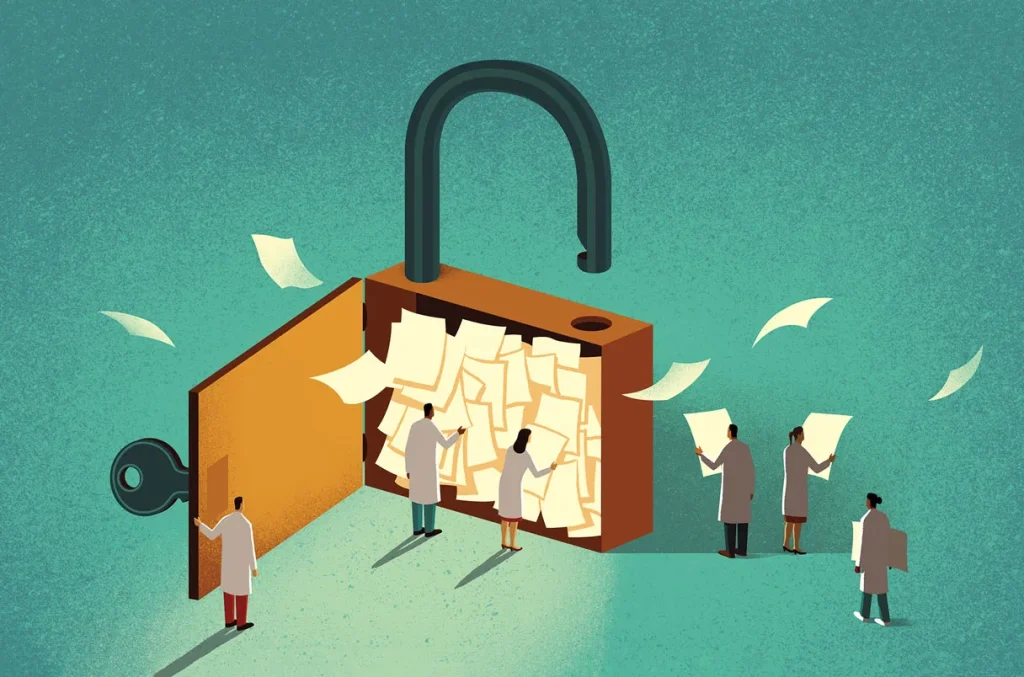
When your paper is clean and refined then it becomes accessible. There is a close correlation between Open access (OA) publishing and increased citation.
Green OA as well as Gold OA provide quantifiable advantages. In Gold OA, publishers make your article instantly accessible, which anticipates a 5.21 citation gain and an increment in altmetric scores of 25.7 points. The average addition to the number of citations is 2.70 in Green OA, where you post your paper in a repository.
OA also makes your work more diverse in terms of its citing. It increases the scope within nations, fields, and organizations. Gold OA makes as much as possible visible. Green OA makes your work more accessible in the long run and increases your readership.
Action: Use both models. Publish in journals of gold OA when you can and always upload your piece of writing in an institutional or disciplinary repository. This guarantees high visibility as well as a wide reach.
Strategy 3: Optimize Academic Search Engines
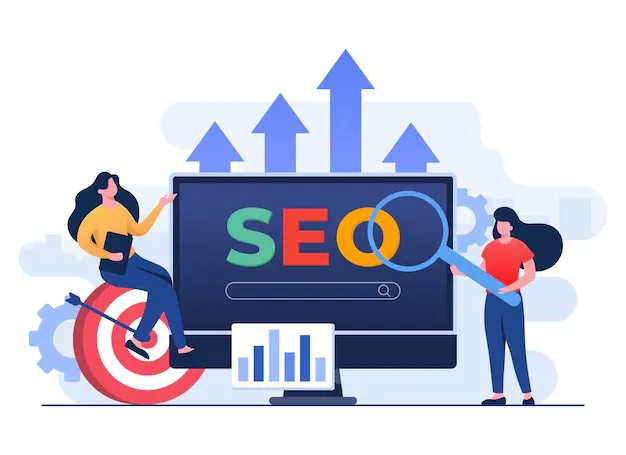
When the readers cannot find your work, they cannot cite it. Academic search engine optimization (SEO) is the way to guarantee that your paper goes to the top of Google Scholar, PubMed, and other search engines.
Discoverability measures to be improved:
- Select 3-4 powerful keywords that align with what a scholar will search.
- Insert such keywords in your title and abstract, and metadata.
- Have clear and descriptive titles. Avoid jargon.
- Build backlinks. Publish your paper on your university page or your blog or on ResearchGate. Good links are indicators of credibility to the search engines.
Researchers have found that authors who have an active ResearchGate profile receive up to 5x more reads. A full profile containing professia onal photo and educational information is 3 times more viewed. People read photo-equipped profile papers half as often.
Action: You should decide and make your academic profiles functional.. Easy Internet marketing tricks can increase your exposure many times.
Strategic Plan 4: Advertise Your Research
It is not just a matter of visibility. You have to transform discovery into interaction. We need to actively promote to facilitate the downloads and citation.
One study indicates that blogging and tweeting about your research can increase downloads. The number of downloads is a direct prediction of citations (r = 0.450).
Ways to promote effectively:
- Compose a brief conclusion of your research using simple terms.
- Emphasize practical real-world applications in order to reach an interdisciplinary audience.
- Explain complicated concepts using visuals, like charts, infographics or brief videos.
- Provide DOI links so that they can be easily accessed and cited.
- Your audience can be reached with the help of hashtags, such as #AcademicTwitter, #PhDChat, or #ResearchImpact.
- Engage in discussion. Requesting clarification, responding to one of the comments, and interacting with other scholars.
Action: Promotion should be regarded as research. Any tweet, blog, or post makes your paper more likely to be read and quoted.
Strategy 5: Develop Network for organic Citations
Organic citations are usually caused by personal associations. Networking broadens your perspective over your own sphere.
Send your article to scholars who could be interested in it. Forge it in professional groups or working teams. Participate in conferences and provide your findings.
A presentation can also not qualify as a citation, yet it raises awareness. When colleagues recollect your work, they would tend to refer to it in the future.
Action: Merchandise digital presence and physical presence. Form networking in which the relationship naturally results in collaboration and citation.
Be in Control of Your Research Impact
The large number of citations is not random, it is due to a deliberate move. Integrate quality, accessibility, discoverability and promotion in order to enhance your academic influence.
Professional editing is what gets you grounded. Open Access expands reach. SEO makes it possible to be discovered. Long-term growth is maintained with the help of promotion and networking.
We assist researchers to develop and implement this high-ROI structure at Fast Publication.
Elevate your manuscript today.
Discover our Technical and Scientific Editing Packages and book your Research Impact Strategy Session now.