You have dedicated your heart and soul to your research. You have months of hard work in the form of a manuscript. Furthermore, you are willing to offer it to the world and make a lasting impact in your field. However, in your inbox, there is a letter about the possibility of a quick publication in a so-called world-class journal. You can hear temptation in it, and yet there is a question at the back of his mind. Is it a legitimate journal, or is this a trap?
This is the new world of academia, and predatory journals are around every corner and are happy to use the ambitions of researchers against them. You may lose your money, reputation, and the efforts that you have worked hard to achieve, falling into their tricks. The given guide will provide you with the knowledge on how to identify these scams. We will discuss which journals are trustworthy and are placed in databases such as Web of Science (WoS) and Scopus.
What Are Predatory Journals?
To use simple words, predatory journals are rogue journals that put greed over academic honesty. They take advantage of the open-access model, in which the author has to pay an Article Processing Charge (APC) to access an open-access journal.
They operate by:
- Freezing researchers with pushy email requests.
- Offering fast-tracked acceptance on a guaranteed basis with minimal to no peer evaluation.
- Faking the construction of impact factors and editorial boards.
The damage is no longer theoretical: you spend excessive amounts of money on a publication that means absolutely nothing to you, damages your reputation, and will not help you in degree applications, promotion, or funding applications. Your precious research will simply fall off the face of the earth.
Signs to be wary of a predatory journal
Before you submit, check this list. Then you see even one or two of these warnings, and you can only proceed with great care.
1- Tactless and Unsolicited Emails
There are poorly written emails which flatter your expertise and request submission urgently.
2- Guaranteed Rapid Publication
The peer review of the articles is not only a rigorous process but a time-consuming one. No actual review is often indicated by the promises of its acceptance in 48 hours or in a week.
3- Inscrutable or Way-out Fees
APCs are not stated in the frontline or said mysteriously or unreasonably.
4- False or Stolen Measures
Fake measures of impact, such as the so-called “Universal Impact Factor”, the Global Impact Factor, or the Index Copernicus Value.

5- Fake or Non-Existent Editorial Board
Board members either not listed by the publishers or not even aware of it, are fictitious, or belong to irrelevant areas. Determine the presence of reputable scholars in your profession.
6- Low Website Quality
The websites are full of misspelt words, broken links and are removed with unprofessional design.
7- Misleading Scope
The scope of the journal is unjustifiably wide (e.g., the topics of science and humanities in general), which the journal strives to cover in the most significant part possible.
Rationale behind the goals of Web of Science and Scopus
Having a journal published in these databases is a career achievement. Here’s why:
- Strict Quality Control: Membership of WoS or Scopus is not automatic. The journals also need to undergo a stringent analysis of publishing standards, editorial content, and international diversity. This is an effective filter of quality.
- Worldwide Recognition and Exposure: Your study will be distributed on sites with millions of researchers, institutions and librarians across the globe. This relationship gives instant credibility to your work.
- Increased Citation Potential: Articles in such indexed journals are more detectable, resulting in an increased probability of reading, citation, and construction by your colleagues.
- Career Advancement: PhD applicants, faculty and researchers frequently have winning degrees, grants, and tenure largely pegged on the requirement of publications in required WoS/Scopus indexed journals.
Guide to Breakthrough Publication into a Noteworthy Journal
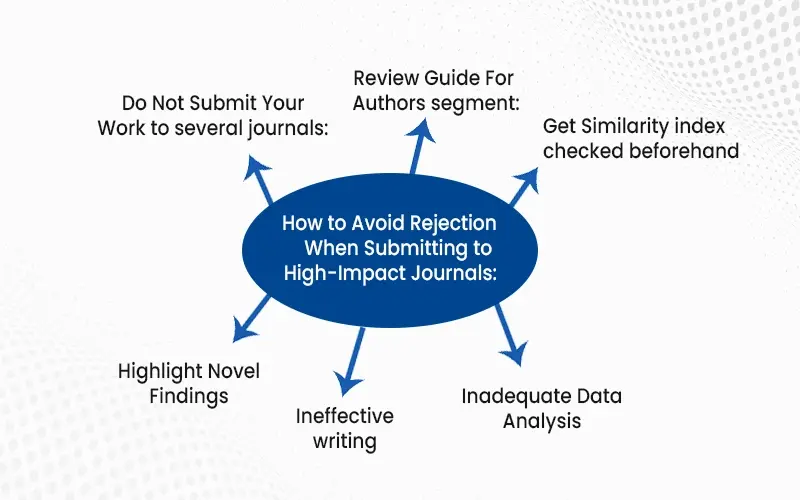
Publishing in a high-level journal is not easy, and yet it is possible with a plan of action.
- Choose the Right Target: The most important and first thing to do. Go to such resources as Jane (Name to Journal Author Estimator) or your database (find journals) and identify some fitting journals to your subject and scope of the manuscript. Check the date of publication of the papers used by you.
- Write an Excellent Paper: your research must be original, properly organised, and characterised. The most important thing is the presence of a strong discussion section and an appealing abstract.
- Ethics: Each journal possesses a format of the reference, figures and structuring. Being able to follow them is professional and a sign of respect to the time that belonged to the editors.
- Write a Convincing Cover Letter: You should call the editor by his name, you should briefly illustrate why your study is important, and you need to clearly explain why it suits their journal.
- Go Gracefully through Peer Review: It is normal to have revision requests from peer reviewers. Address the comments of the reviewers within a point-by-point, polite and extensive manner. A rejection is not a failure; take the feedback and put it in other places.
Last ideas to remain safe in the area of predation traps
- Check and Double-Check: Despite an email being sent by what appears to be a publisher that you recognise (e.g. Springer Nature and Allied Publications), find the journal using the official site of the publisher, not through the one that the email gives you.
- Create Profiled Selections: Selecting known publishers such as Elsevier, Springer Nature, Wiley, and Taylor and Francis. The indexing of this particular journal is always to be checked, though.
Conclusion
Credible publications help someone build a way up to academic recognition. Predatory journals represent the shortest route to nowhere, harming careers and draining the scientific discourse. You invest in your credibility and impact in the long run by educating yourself. Notice the red flags they present, and trust the platforms that have experience in their work and prove to be reliable.