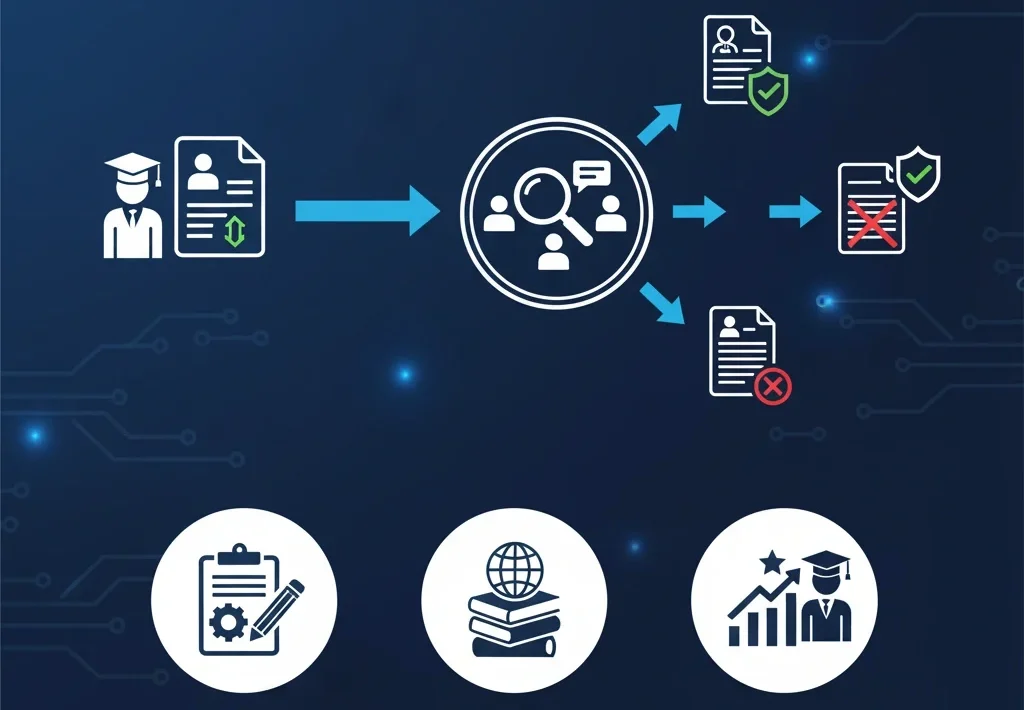
It is now officially outdated that this easy access to pluralism of academic publication serves easily. Publishers in all fields are progressively applying editorial pressures in a rhythm that many scholars were not ready to follow. Submission of manuscripts faces scrutiny before peer review, policy compliance examination, and scope validation. This is an industry revolution that states the increased tendency of researchers to use Publication Strategy Services to stay competitive. Reactive submission strategies that are passive and reactive are progressively leading to desk rejection. However, for scholars who aim at publication, the new reality requires an active, strategically minded model based on broad knowledge.
The Paradox Editorial Standards
Editorial processes are a calculated move of publishers to achieve a higher degree of consistency and secure long-term effectiveness. Also, this has been in the form of a stricter and more systematic act of filtering at the editorial desk.
The major changes that editors are currently implementing are:
- Desk screening, a more aggressive filtering traffic control approach to submission levels and reviewer resources.
- Compulsory ethics checks, disclosure procedures, which involve strict verification of approvals, conflict of interest, and the availability of data.
- Increased methodological clarity, which requires transparent, replicable research designs and compliance with reporting standards like CONSORT and PRISMA.
- Reduced scope congruence, causing publication of manuscripts that are only related to the topic of a journal to be dismissed.
- No tolerance for mistakes in presentations, and no tolerance for bad formatting, wrong metadata, or absent author details.
Even the best quality of manuscripts does not necessarily make it through this gate-keeping stage without a proper framework established by the known professional Publication Strategy Services.
Why the Major Publishers are now heightening the stakes
This narrowing tendency is driven by systemic forces in the whole publishing ecosystem, and not by individual journal practices. There are a number of convergent forces that are changing editorial behaviour.
Core drivers include:
- Over-submission after the opening up of open-access has also resulted in a bottleneck, with the consequence that publishers are more cautious at the source.
- Reviewer burnout and delays cause the protection of limited reviewer resources by submitting only the most appropriate, refined manuscripts to review.
- Citation-quality effects, which motivate a strategic emphasis on publishing papers more likely to be cited, have a direct impact on the journal impact measures.
- AI-based manuscript detection can allow proactive screening to maintain the integrity and originality of research in the face of new technologies.
- Increased attention of indexing organisations indexing journals, like Scopus and Web of Science, regularly review journals, prompting even more stringent quality management measures on journal internal quality.
Also, to researchers, it means that it is now important to get the first draft to conform to these publisher interests to see rapid publications.

New Inefficiency of Desk Rejections
Large percentages of writers never make it to peer review as their manuscripts do not pass one of the many technical or strategy tests.
Such common triggers of desk rejection now include:
- Inappropriate journal choice, the most common of the difficulties, which results in an immediate rejection.
- Poor problem framing, inability to eloquently define the gap of the research and its importance, both in the abstract and introduction.
- Incomplete reporting criteria, like some elements omitted from designing the study, indicate reduced methodological rigour.
- Lapses in ethical approval, which include poor or absent statements on studies involving human/animal subjects or data.
- Unconvincing, generic cover letters which do not put the manuscript in the right place in front of the editor.
It is in these territories that Publication Strategy Services pay off by avoiding the need to submit in vain, as well as the time wasted by knowing these traps to avoid.
Editorial Tightening on Early-Career Researchers
The researchers at the beginning of their career (ECRs) often suffer the greatest effects of the shift. Having low exposure to the opaque reasoning of editorial judgment, they are more prone to downtrodden loops of rejection.
The major problems encountered by ECRs have been of the following nature:
- Lack of rejection feedback, where standard template letters give little useful guidance on what can be done to improve.
- Incorrect interpretation of journal priorities, which results in supporting a belief that sufficient technical soundness is present, and underestimating the significance of narrative and scope.
- Strong outcomes, assuming that good data will make up for weaknesses in presentation or strategy.
Professional Publication Strategy Services is useful in this vital experience gap to offer mentorship and a strategic plan that saves unnecessary delays in the career path.
Publication Strategy in the New Editorial Landscape
The increasing editorial requirements raise strategic planning to the same level as scholarly merit. Above all, the success of the publishing industry is based on three factors: conformity, compliance and timing.
Good contemporary publishing concepts should include:
- Journal tier mapping the realism of the appropriate targets corresponding to the novelty and contribution of the manuscript.
- Scope and audience analysis, a direct discussion of the narrative with the readership of a particular journal.
- Submission sequencing, the order of target journals planned to effectively handle rejection risk.
Here, in this stratum, the individual Publication Strategy Services places researchers in a less reactive and more proactive position, and it becomes a lot less of a lottery and much more of a process.
The way Fast Publications is Assisting Researchers
In such a challenging environment, Fast Publications will provide Publication Strategy Services that are equipped with a team of specialists, precisely designed to meet the needs of the less tolerant editorial landscape. Also, we introduce researchers to the updated rules of the game.
The problems that are tackled with our support are:
- Multi-stage selection of journals, with the selection of targets that are concordant with contracting editorial priorities.
- Pre-submission quality checks which involve adherence to the recent ethical, methodological, and formatting prevailing standards.
- Positioning, setting the story of the manuscript in such a way that it exceeds increased expectations of meaningfulness and brightness.
- Open, ethical workflow, with total adherence to the publisher policy on authorship and other assistance.
Conclusion
The narrowing of editorial policy between major publishers is a structural-permanent change and not a short-lived fashion. It is a logical reaction of industries to the pressure of volume, integrity and quality. Those researchers who adapt and change by incorporating strategies that are clear and informed into their work processes will survive as well as prosper. Moreover, Individuals who continue to operate on a business-as-usual basis will face growing frustration and lateness. By clever planning and working with experienced guides like Fast Publications, publishing efficiency and scholarly impact are congruent results of a more intelligent, strategic practice of sharing research with the global community.